THE ADVENTURE COLLECTIVE® · Independent discovery and booking for outdoor travel

Walk the Magnificent Mile with a certified guide and discover how Pine Street became Chicago’s premier avenue of shops, hotels, and landmark façades. This 90-minute tour blends architectural history, engineering stories, and local color—ideal for first-time visitors and architecture enthusiasts.
Walk the Magnificent Mile with a certified guide and discover how Pine Street became Chicago’s premier avenue of shops, hotels, and landmark façades. This 90-minute tour blends architectural history, engineering stories, and local color—ideal for first-time visitors and architecture enthusiasts.
You step off the curb and the city rearranges itself around you: glass reflecting a blue lake sky, limestone and terra cotta stacked in vertical rhythm, the river daring you to look down at its engineered banks.
Verified experiences and guided adventures in the surrounding area.
You step off the curb and the city rearranges itself around you: glass reflecting a blue lake sky, limestone and terra cotta stacked in vertical rhythm, the river daring you to look down at its engineered banks.
This 90-minute walk follows North Michigan Avenue’s transformation from a muddy Pine Street to the commercial spine called the Magnificent Mile — a street that earned the nickname "Paris on the Prairie" as early 20th-century developers layered Parisian, Gothic, neoclassical and Art Deco details into modern frames.
Geologically the avenue sits on a flat, glacial plain; Chicago’s shoreline and the river were reshaped by engineering projects that reclaimed land and rerouted water, the physical groundwork for the city’s vertical ambitions.
Culturally the Mile is a study in commerce meeting civic pride: grand hotels, vertical malls, and façades that advertise not just products but a city identity. The tour highlights landmarks like the Wrigley Building, Tribune Tower fragments courtyard, and the John Hancock building, pointing out how architecture doubled as brand and civic theater.
Practical guidance: meet at the Chicago Architecture Center at 111 E Wacker Drive 15 minutes early; the route is primarily flat, paved sidewalk with frequent stops. Wear comfortable walking shoes, carry a water bottle, and plan for variable building access — interiors and special exhibits can close without notice. Public transit and accessible options are nearby, and proof of COVID-19 vaccination is currently required to participate.
This walk is brief but dense: expect interpretive storytelling, a steady urban pace, and repeated opportunities to step into galleries or peek into landmark lobbies when available.
easy.
1–2 hours.
Suitable for most people who can walk on flat city sidewalks for 90 minutes with short stops
The tour departs from the Chicago Architecture Center at 111 E Wacker Drive; plan to arrive 15 minutes early to check in.
Yes — the route is on paved city sidewalks and is wheelchair accessible, though some interior stops may have limited access.
The tour runs in light rain; heavy storms may cancel—check cancellation policy and bring rain gear for comfort.
Yes, current redemption instructions require proof of COVID-19 vaccination to participate—carry physical or digital documentation.
North Michigan Avenue evolved through deliberate urban planning and private development over the last century, shifting from Pine Street into a concentration of commercial architecture reflecting changing styles from Beaux-Arts to Modernism.
The corridor faces typical urban impacts—stormwater runoff and high pedestrian traffic—so guides encourage using public transit, disposing of trash properly, and respecting building rules to minimize wear.
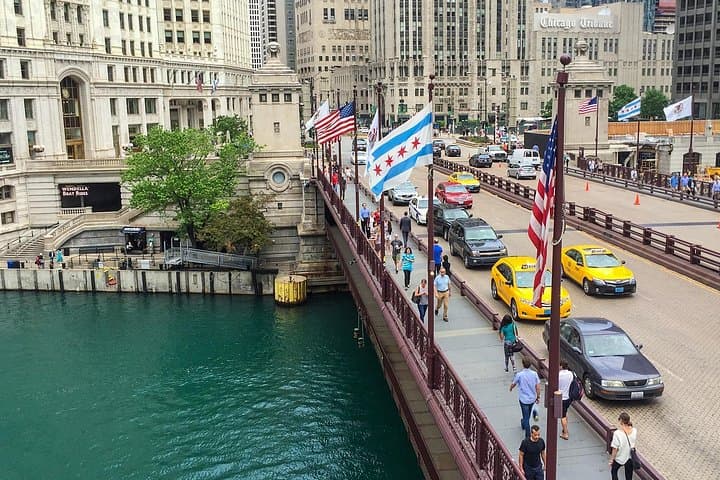
You step off the curb and the city rearranges itself around you: glass reflecting a blue lake sky, limestone and terra cotta stacked in vertical rhythm, the river daring you to look down at its engineered banks.
You step off the curb and the city rearranges itself around you: glass reflecting a blue lake sky, limestone and terra cotta stacked in vertical rhythm, the river daring you to look down at its engineered banks.
This 90-minute walk follows North Michigan Avenue’s transformation from a muddy Pine Street to the commercial spine called the Magnificent Mile — a street that earned the nickname "Paris on the Prairie" as early 20th-century developers layered Parisian, Gothic, neoclassical and Art Deco details into modern frames.
Geologically the avenue sits on a flat, glacial plain; Chicago’s shoreline and the river were reshaped by engineering projects that reclaimed land and rerouted water, the physical groundwork for the city’s vertical ambitions.
Culturally the Mile is a study in commerce meeting civic pride: grand hotels, vertical malls, and façades that advertise not just products but a city identity. The tour highlights landmarks like the Wrigley Building, Tribune Tower fragments courtyard, and the John Hancock building, pointing out how architecture doubled as brand and civic theater.
Practical guidance: meet at the Chicago Architecture Center at 111 E Wacker Drive 15 minutes early; the route is primarily flat, paved sidewalk with frequent stops. Wear comfortable walking shoes, carry a water bottle, and plan for variable building access — interiors and special exhibits can close without notice. Public transit and accessible options are nearby, and proof of COVID-19 vaccination is currently required to participate.
This walk is brief but dense: expect interpretive storytelling, a steady urban pace, and repeated opportunities to step into galleries or peek into landmark lobbies when available.