THE ADVENTURE COLLECTIVE® · Independent discovery and booking for outdoor travel

Trace the footsteps of athletes, apostles and pilgrims on a private shore excursion from Kuşadası. This full-day tour links Magnesia’s stadium, panoramic views of Ephesus, and the shrine of the House of the Virgin Mary with local lunch and handicraft stops.
Trace the footsteps of athletes, apostles and pilgrims on a private shore excursion from Kuşadası. This full-day tour links Magnesia’s stadium, panoramic views of Ephesus, and the shrine of the House of the Virgin Mary with local lunch and handicraft stops.
A low hill above olive groves, a breeze carrying salt from the Aegean, and a driver who knows every narrow village road—this private shore excursion stitches together three very different layers of western Anatolia. Guests move from the broad sweep of the Meander plain to the marble streets of Roman Ephesus and up to the quiet stone house on a pine-scented slope where pilgrims still pause.
Verified experiences and guided adventures in the surrounding area.
Operated by Samyeli Travel · Selçuk, İzmir
A low hill above olive groves, a breeze carrying salt from the Aegean, and a driver who knows every narrow village road—this private shore excursion stitches together three very different layers of western Anatolia. Guests move from the broad sweep of the Meander plain to the marble streets of Roman Ephesus and up to the quiet stone house on a pine-scented slope where pilgrims still pause.
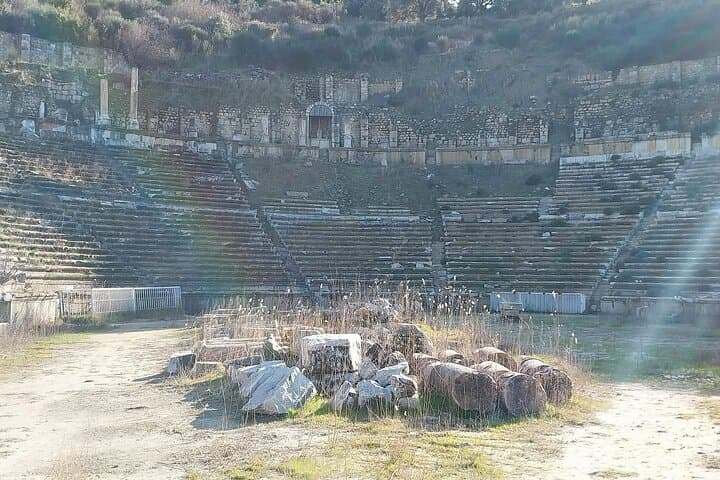
Magnesia on the Meander was founded by Magnetes and earned the nickname “city of races” for its large stadium and athletic culture; its stones still wear the imprints of human competition. Ephesus, by contrast, is Roman spectacle—library façades, marble avenues and terrace houses whose mosaics survive like fingerprints. The House of the Virgin Mary rests higher, quieter, a place turned shrine after 19th-century discoveries and a papal visit in 1967.
Geology here is visible: uplifted limestone ridges carve the coastline, while the Büyük Menderes (Meander) has laid down alluvial plains that fed ancient agriculture. Local culture threads through the day—stops at a handicraft cooperative and a traditional Turkish lunch bring contemporary life into the ruins.
Practical guidance: expect 6–7 hours on a private minivan with short drives between sites and 1–2 hours of walking at archaeological zones; surfaces include uneven marble, packed dirt and some stairs. Wear sturdy shoes, sun protection, and carry water; mornings are cooler and best for photography, afternoons bring harsher light. The tour is suitable for most fitness levels but includes standing and short uphill stretches at viewpoints. Plan for on-time return to the cruise port and bring modest clothing for the House of the Virgin Mary.
moderate.
6–7 hours.
Light-to-moderate fitness: able to walk 1–3 miles on uneven ground and climb stairs.
Yes—pickup and drop-off at Kuşadası cruise port are included and the tour guarantees on-time return to the ship.
The tour description indicates some admissions are not included; verify whether skip-the-line tickets or site fees are added at booking.
The operator lists wheelchair access, but many ruins have uneven surfaces and stairs—contact the provider ahead to confirm accessibility at each stop.
Yes—the itinerary includes a visit to a handicrafts cooperative and an optional leather outlet; purchases are optional and unpressured.
Magnesia was settled by the Magnetes and became known for athletic games; Ephesus later grew into a major Roman metropolis, and the House of the Virgin Mary became a pilgrimage site after 19th-century identification.
Archaeological sites are sensitive to foot traffic and erosion—follow marked paths, avoid touching frescoes and support local conservation by using designated paths and licensed guides.
Samyeli Travel operates guided outdoor trips and adventures with an emphasis on safety, stewardship, and memorable experiences.



A low hill above olive groves, a breeze carrying salt from the Aegean, and a driver who knows every narrow village road—this private shore excursion stitches together three very different layers of western Anatolia. Guests move from the broad sweep of the Meander plain to the marble streets of Roman Ephesus and up to the quiet stone house on a pine-scented slope where pilgrims still pause.
A low hill above olive groves, a breeze carrying salt from the Aegean, and a driver who knows every narrow village road—this private shore excursion stitches together three very different layers of western Anatolia. Guests move from the broad sweep of the Meander plain to the marble streets of Roman Ephesus and up to the quiet stone house on a pine-scented slope where pilgrims still pause.
Magnesia on the Meander was founded by Magnetes and earned the nickname “city of races” for its large stadium and athletic culture; its stones still wear the imprints of human competition. Ephesus, by contrast, is Roman spectacle—library façades, marble avenues and terrace houses whose mosaics survive like fingerprints. The House of the Virgin Mary rests higher, quieter, a place turned shrine after 19th-century discoveries and a papal visit in 1967.
Geology here is visible: uplifted limestone ridges carve the coastline, while the Büyük Menderes (Meander) has laid down alluvial plains that fed ancient agriculture. Local culture threads through the day—stops at a handicraft cooperative and a traditional Turkish lunch bring contemporary life into the ruins.
Practical guidance: expect 6–7 hours on a private minivan with short drives between sites and 1–2 hours of walking at archaeological zones; surfaces include uneven marble, packed dirt and some stairs. Wear sturdy shoes, sun protection, and carry water; mornings are cooler and best for photography, afternoons bring harsher light. The tour is suitable for most fitness levels but includes standing and short uphill stretches at viewpoints. Plan for on-time return to the cruise port and bring modest clothing for the House of the Virgin Mary.