THE ADVENTURE COLLECTIVE® · Independent discovery and booking for outdoor travel

Spend two days camping by Trnovačko Lake and summiting Maglić, Bosnia and Herzegovina’s highest peak. This guided multi-day tour through Sutjeska National Park pairs a primeval forest walk with a high-alpine climb.
Spend two days camping by Trnovačko Lake and summiting Maglić, Bosnia and Herzegovina’s highest peak. This guided multi-day tour through Sutjeska National Park pairs a primeval forest walk with a high-alpine climb.
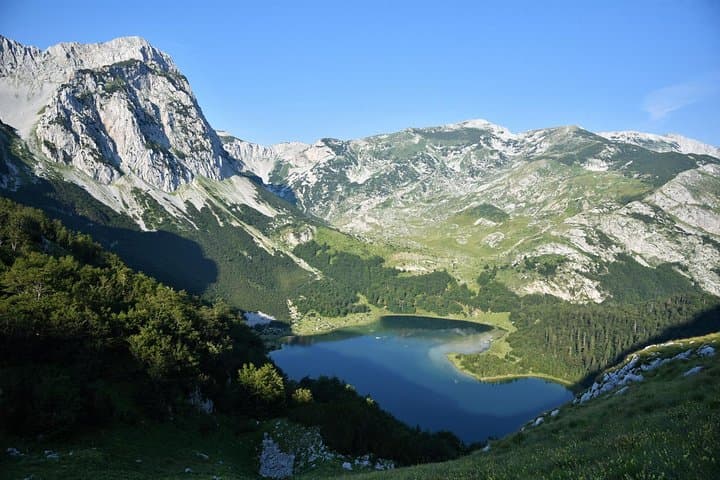
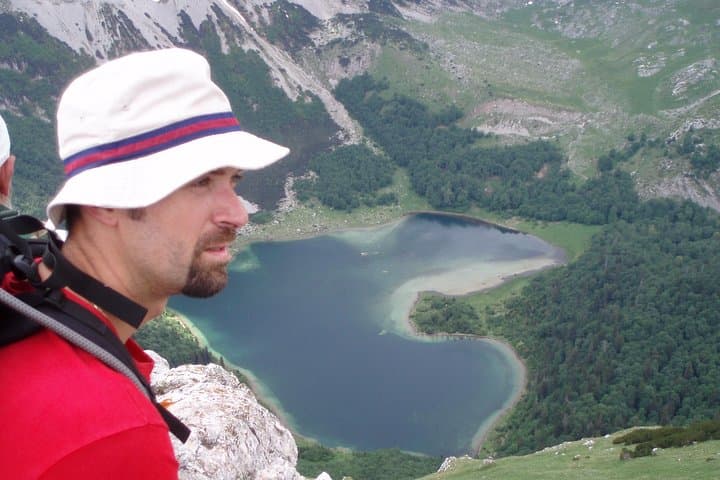
A cold wind moves across the shoulder of Maglić as the group crests a rib of scree; below, Trnovačko Lake gathers the light like a green heart. The first day begins on a quiet road out of Mostar, through villages and the war memorial at Tjentište, then into Sutjeska National Park where Perućica—one of Europe's last primeval forests—presses close and a waterfall prowls the slope.
Verified experiences and guided adventures in the surrounding area.
Operated by Herzegovina Hiking Adventure · Mostar, Herzegovina-Neretva Canton
A cold wind moves across the shoulder of Maglić as the group crests a rib of scree; below, Trnovačko Lake gathers the light like a green heart. The first day begins on a quiet road out of Mostar, through villages and the war memorial at Tjentište, then into Sutjeska National Park where Perućica—one of Europe's last primeval forests—presses close and a waterfall prowls the slope.
Geology here is raw: limestone ridgelines carved by glaciation and steep cirques that feed the lake at 1,517 m. Maglić's summit at 2,386 m straddles the Bosnia–Montenegro border, offering panoramic views of the Dinaric Alps on a clear day. Culturally, the area bears layers of history from Ottoman pastoralism to World War II battles commemorated near Tjentište; shepherds still summer their flocks on these high pastures.
Practically, the itinerary is a two-day alpine outing: a moderate hike through Perućica, a 2-hour ascent to Trnovačko Lake with overnight camping or shelter, then a 3‑hour summit push the next morning followed by descent and transfer back to Mostar. Expect rocky trails, steep switchbacks, and exposed ridgelines where weather can flip fast. Hydration, layered clothing, and sturdy boots are essential; pack for rain and for chilly nights even in summer. Navigation is straightforward on marked paths but a guide makes the route efficient and safer.
This trip is part wilderness immersion, part summit challenge—perfect for hikers who want an overnight mountain experience with dramatic views and a taste of Bosnia's high-country culture.
challenging.
2 days.
Good aerobic fitness with experience on multiday hikes and steep ascents; comfortable carrying a daypack or small overnight pack.
The summit day is a sustained ascent of roughly 3 hours on steep, rocky terrain—physically demanding but non-technical when guided; expect steady uphill hiking and some exposed sections.
Options include camping by Trnovačko Lake in tents or staying in a mountain shelter when available; bookings specify your preference and local availability can vary.
Entrance fees to Sutjeska National Park may apply; the tour operator typically handles park access as part of logistics—confirm on booking.
Children aged 12–15 must be accompanied by an adult; fitness and experience levels must still meet the guide’s requirements.
Sutjeska National Park was established in 1962; the nearby Tjentište monument commemorates the Battle for Sutjeska in World War II.
This alpine area is sensitive—stick to marked trails, pack out all waste, and avoid disturbing grazing lands and fragile alpine vegetation.
Herzegovina Hiking Adventure operates guided outdoor trips and adventures with an emphasis on safety, stewardship, and memorable experiences.
A cold wind moves across the shoulder of Maglić as the group crests a rib of scree; below, Trnovačko Lake gathers the light like a green heart. The first day begins on a quiet road out of Mostar, through villages and the war memorial at Tjentište, then into Sutjeska National Park where Perućica—one of Europe's last primeval forests—presses close and a waterfall prowls the slope.
A cold wind moves across the shoulder of Maglić as the group crests a rib of scree; below, Trnovačko Lake gathers the light like a green heart. The first day begins on a quiet road out of Mostar, through villages and the war memorial at Tjentište, then into Sutjeska National Park where Perućica—one of Europe's last primeval forests—presses close and a waterfall prowls the slope.
Geology here is raw: limestone ridgelines carved by glaciation and steep cirques that feed the lake at 1,517 m. Maglić's summit at 2,386 m straddles the Bosnia–Montenegro border, offering panoramic views of the Dinaric Alps on a clear day. Culturally, the area bears layers of history from Ottoman pastoralism to World War II battles commemorated near Tjentište; shepherds still summer their flocks on these high pastures.
Practically, the itinerary is a two-day alpine outing: a moderate hike through Perućica, a 2-hour ascent to Trnovačko Lake with overnight camping or shelter, then a 3‑hour summit push the next morning followed by descent and transfer back to Mostar. Expect rocky trails, steep switchbacks, and exposed ridgelines where weather can flip fast. Hydration, layered clothing, and sturdy boots are essential; pack for rain and for chilly nights even in summer. Navigation is straightforward on marked paths but a guide makes the route efficient and safer.
This trip is part wilderness immersion, part summit challenge—perfect for hikers who want an overnight mountain experience with dramatic views and a taste of Bosnia's high-country culture.