THE ADVENTURE COLLECTIVE® · Independent discovery and booking for outdoor travel

Watch vendors fold their stalls back from the rails as a train passes, then swap the market bustle for a relaxed bicycle ride through village orchards. This full-day trip mixes an unusual market spectacle with gentle cycling and local food.
Watch vendors fold their stalls back from the rails as a train passes, then swap the market bustle for a relaxed bicycle ride through village orchards. This full-day trip mixes an unusual market spectacle with gentle cycling and local food.
A tin-roof market folds back like a living curtain when the train rumbles through — vendors yank awnings, baskets scrape rail ties, and seconds later the carts return as if nothing happened. Standing on the narrow platform or pedaling a bicycle down a shaded lane, you feel the town’s tempo: quick, pragmatic, and oddly theatrical.
Verified experiences and guided adventures in the surrounding area.
Operated by SiamRise Travel · Maeklong, Samut Songkhram
A tin-roof market folds back like a living curtain when the train rumbles through — vendors yank awnings, baskets scrape rail ties, and seconds later the carts return as if nothing happened. Standing on the narrow platform or pedaling a bicycle down a shaded lane, you feel the town’s tempo: quick, pragmatic, and oddly theatrical.
Maeklong Railway Market grew where commerce met track; sellers first arranged stalls along the line in the early 20th century and adapted as trains continued to pass. The surrounding plain is alluvial, fed by the Mae Klong River, which shaped local orchards and a culture built around seafood, fruit cultivation, and river transport. Baan Bang Phlap village nearby keeps a quieter pace—mango trees, narrow lanes, and canals that still carry cargo on longtail boats.
Practical guidance: the full experience runs about 7–8 hours with hotel pickup available in Bangkok. Expect short, flat cycling on paved and packed-dirt roads through orchards; basic bike handling is required but routes are suitable for most riders. Time your visit around scheduled train passages (morning and mid-afternoon are common) to see the market-in-motion. Bring cash for fresh seafood and snacks, wear closed-toe shoes for narrow aisles, and carry sun protection and a lightweight rain layer during monsoon months.
Respect vendor space when the train passes, follow your guide’s directions for safe photo spots, and enjoy the contrast: a bustling open-air market that lives with a train, and a peaceful village ride that showcases everyday rural Thailand.
easy.
7–8 hours.
Basic cycling fitness and ability to walk short distances on uneven surfaces; suitable for most people.
Trains typically pass several times daily, often in the morning and mid-afternoon; your guide will confirm exact times for that day.
Routes are mostly flat and short—basic bike handling is enough, and guides keep the pace relaxed for less experienced riders.
Lunch at a local restaurant and snacks are included in the tour price as noted in the itinerary.
Yes, but the provider notes a minimum of two people per booking; children should be supervised in crowded market aisles and while cycling.
The market developed alongside the Mae Klong railway in the early 20th century; vendors learned to retract awnings and goods whenever trains came through.
Bring reusable containers and avoid single-use plastics; stay on designated paths and be mindful of vendors’ space to reduce waste and disturbance.
SiamRise Travel operates guided outdoor trips and adventures with an emphasis on safety, stewardship, and memorable experiences.
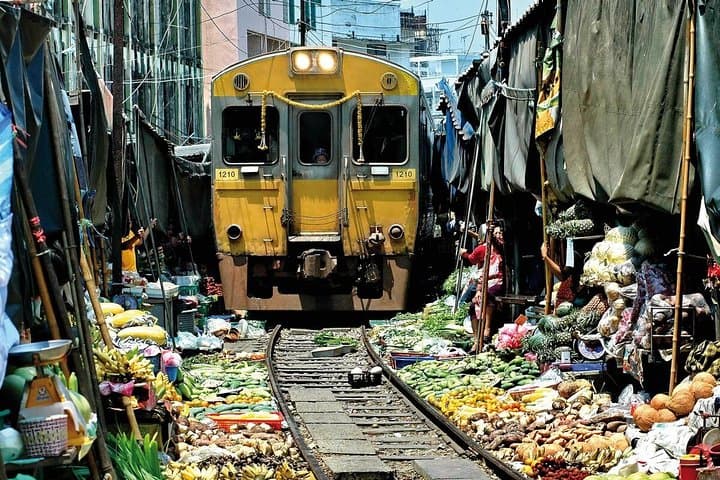
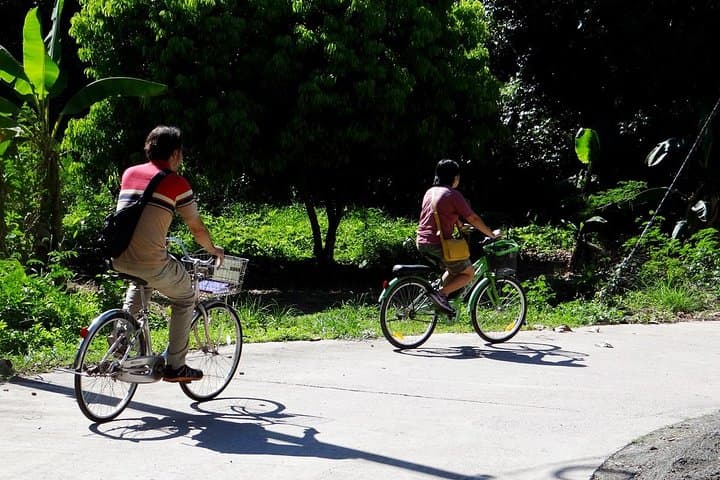
A tin-roof market folds back like a living curtain when the train rumbles through — vendors yank awnings, baskets scrape rail ties, and seconds later the carts return as if nothing happened. Standing on the narrow platform or pedaling a bicycle down a shaded lane, you feel the town’s tempo: quick, pragmatic, and oddly theatrical.
A tin-roof market folds back like a living curtain when the train rumbles through — vendors yank awnings, baskets scrape rail ties, and seconds later the carts return as if nothing happened. Standing on the narrow platform or pedaling a bicycle down a shaded lane, you feel the town’s tempo: quick, pragmatic, and oddly theatrical.
Maeklong Railway Market grew where commerce met track; sellers first arranged stalls along the line in the early 20th century and adapted as trains continued to pass. The surrounding plain is alluvial, fed by the Mae Klong River, which shaped local orchards and a culture built around seafood, fruit cultivation, and river transport. Baan Bang Phlap village nearby keeps a quieter pace—mango trees, narrow lanes, and canals that still carry cargo on longtail boats.
Practical guidance: the full experience runs about 7–8 hours with hotel pickup available in Bangkok. Expect short, flat cycling on paved and packed-dirt roads through orchards; basic bike handling is required but routes are suitable for most riders. Time your visit around scheduled train passages (morning and mid-afternoon are common) to see the market-in-motion. Bring cash for fresh seafood and snacks, wear closed-toe shoes for narrow aisles, and carry sun protection and a lightweight rain layer during monsoon months.
Respect vendor space when the train passes, follow your guide’s directions for safe photo spots, and enjoy the contrast: a bustling open-air market that lives with a train, and a peaceful village ride that showcases everyday rural Thailand.