THE ADVENTURE COLLECTIVE® · Independent discovery and booking for outdoor travel

Experience three sides of central Thailand in one long day: boat markets where vendors row and sell, a railway market that folds for passing trains, and the ruined palace-temples of Ayutthaya. Expect early start times, plenty of walking, and unforgettable photo moments.
Experience three sides of central Thailand in one long day: boat markets where vendors row and sell, a railway market that folds for passing trains, and the ruined palace-temples of Ayutthaya. Expect early start times, plenty of walking, and unforgettable photo moments.
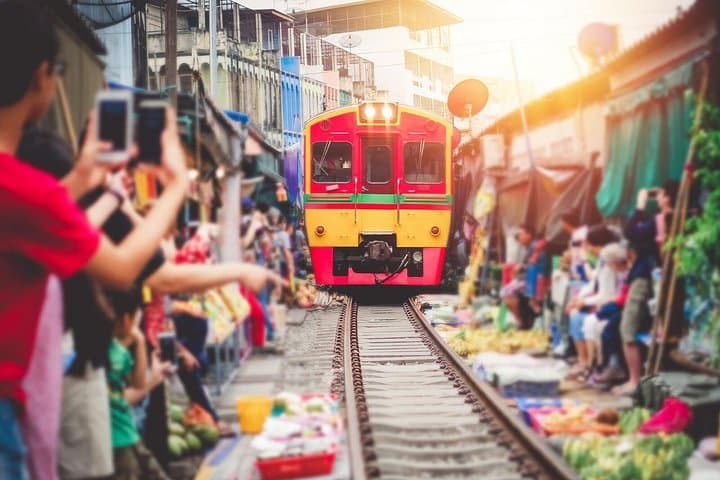
Before the sun lifts over Bangkok's skyline, a coach eases out of MBK Center and the city gives way to roadside palms and rice paddy edges. Within an hour the rhythm changes: wooden boats bob in narrow canals, vendors call, and a railway becomes a market aisle where awnings are folded back as a train threads through like a living seam.
Verified experiences and guided adventures in the surrounding area.
Operated by MyProGuide Thailand · Bangkok, Bangkok
Before the sun lifts over Bangkok's skyline, a coach eases out of MBK Center and the city gives way to roadside palms and rice paddy edges. Within an hour the rhythm changes: wooden boats bob in narrow canals, vendors call, and a railway becomes a market aisle where awnings are folded back as a train threads through like a living seam.
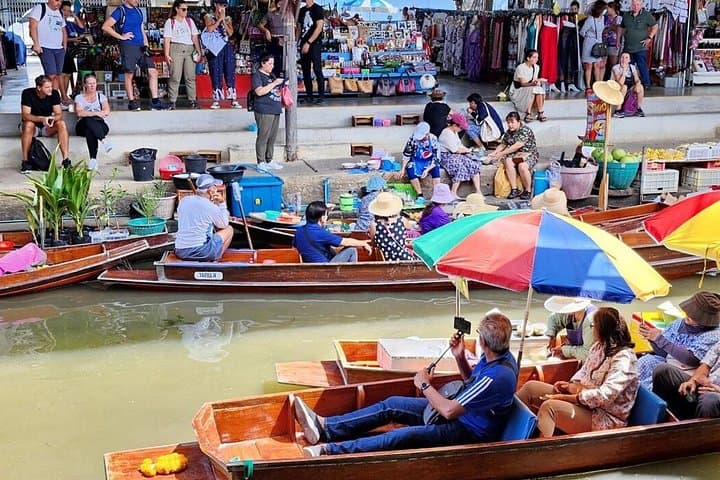
This one-day route stitches three distinct chapters of central Thailand. Damnoen Saduak’s canals speak of the country’s waterborne trades—boats pushed by paddles, piles of herbs and shredded coconut, and the scent of frying seafood. Maeklong Railway Market stages a practical drama: stalls collapse, colors compress and the train claims its path. Ayutthaya then opens a different register — brick and laterite prangs, Buddha heads entwined in fig roots, and the placid scale of Wat Phra Si Sanphet where royal rites once played out.
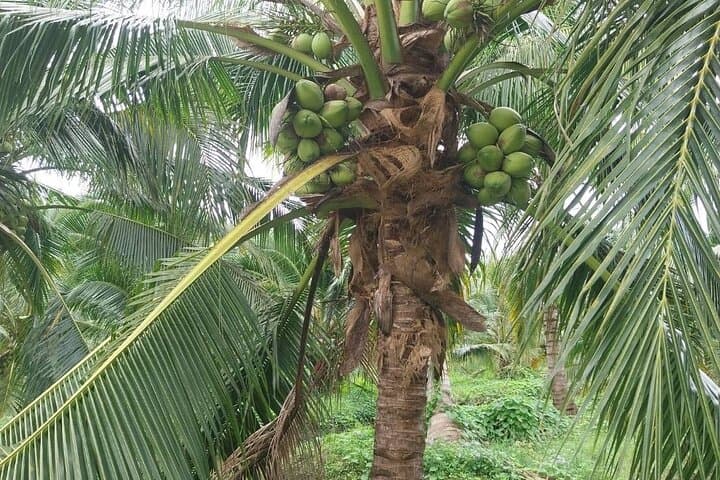
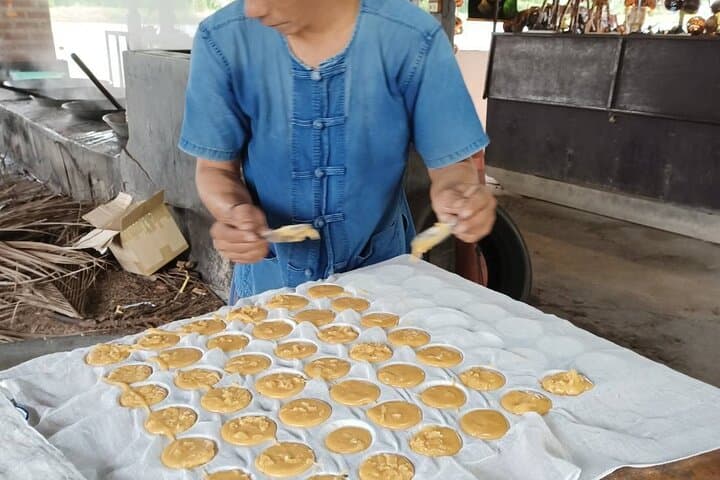
Geology and history surface together: river sediments made the fertile plain that fed the old Siamese capital, and centuries of floods shaped temple foundations and trade routes. Along the way, a coconut farm offers a hands-on look at local agriculture and small-scale production.
Practical edge: the day is long (expect early departure and back in the evening), so wear sturdy, quick-dry shoes for boats and temple grounds, bring sun protection and water, and carry cash for market purchases — many vendors don’t accept cards. Respect temple dress codes (shoulders and knees covered) and watch the train cues at Maeklong; vendors retract awnings at the last minute. For photography, keep gear secure on boats and be ready for sudden crowds at the floating market.
easy.
10–12 hours.
Suitable for most travelers; requires standing and short walks on uneven surfaces and boarding small boats.
The tour is a full-day trip (about 10–12 hours) departing from MBK Center in central Bangkok; exact pickup location and times are confirmed at booking.
Some temple admissions listed in the itinerary are included; check the booking details for specifics on which sites cover entry fees.
Yes — the boat ride through the floating market is provided as part of the day's activities.
The tour is generally suitable for all ages, but it involves long days, boat boarding and some uneven walking; those with mobility issues should review accessibility before booking.
Ayutthaya was the capital of the Siamese kingdom from the 14th to the 18th century and its ruins reflect centuries of religious and royal architecture.
Floating markets generate significant single-use plastic; bring reusable bags and refuse single-use utensils when possible, and support vendors using local produce.
MyProGuide Thailand operates guided outdoor trips and adventures with an emphasis on safety, stewardship, and memorable experiences.
Before the sun lifts over Bangkok's skyline, a coach eases out of MBK Center and the city gives way to roadside palms and rice paddy edges. Within an hour the rhythm changes: wooden boats bob in narrow canals, vendors call, and a railway becomes a market aisle where awnings are folded back as a train threads through like a living seam.
Before the sun lifts over Bangkok's skyline, a coach eases out of MBK Center and the city gives way to roadside palms and rice paddy edges. Within an hour the rhythm changes: wooden boats bob in narrow canals, vendors call, and a railway becomes a market aisle where awnings are folded back as a train threads through like a living seam.
This one-day route stitches three distinct chapters of central Thailand. Damnoen Saduak’s canals speak of the country’s waterborne trades—boats pushed by paddles, piles of herbs and shredded coconut, and the scent of frying seafood. Maeklong Railway Market stages a practical drama: stalls collapse, colors compress and the train claims its path. Ayutthaya then opens a different register — brick and laterite prangs, Buddha heads entwined in fig roots, and the placid scale of Wat Phra Si Sanphet where royal rites once played out.
Geology and history surface together: river sediments made the fertile plain that fed the old Siamese capital, and centuries of floods shaped temple foundations and trade routes. Along the way, a coconut farm offers a hands-on look at local agriculture and small-scale production.
Practical edge: the day is long (expect early departure and back in the evening), so wear sturdy, quick-dry shoes for boats and temple grounds, bring sun protection and water, and carry cash for market purchases — many vendors don’t accept cards. Respect temple dress codes (shoulders and knees covered) and watch the train cues at Maeklong; vendors retract awnings at the last minute. For photography, keep gear secure on boats and be ready for sudden crowds at the floating market.