THE ADVENTURE COLLECTIVE® · Independent discovery and booking for outdoor travel

Spend a full day tracking elephants in Maduru Oya National Park, then visit a Vedda village to learn traditional forest skills. This private 4x4 safari from Pasikuda blends wildlife viewing and cultural exchange on a remote Eastern Province route.
Spend a full day tracking elephants in Maduru Oya National Park, then visit a Vedda village to learn traditional forest skills. This private 4x4 safari from Pasikuda blends wildlife viewing and cultural exchange on a remote Eastern Province route.
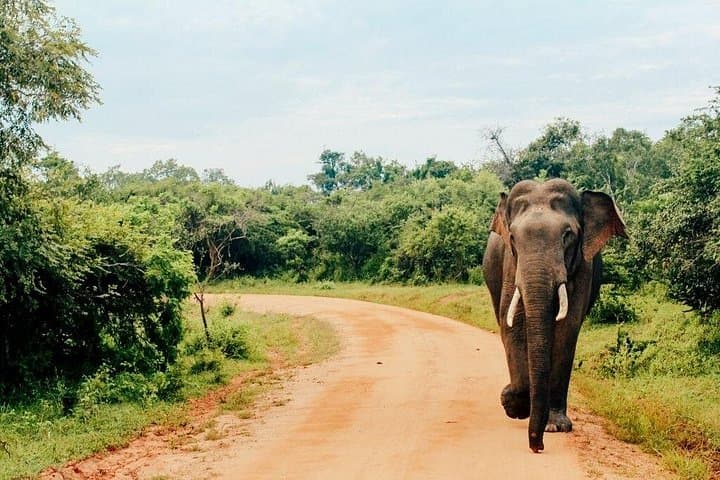
Morning light splits over red-dusted tracks as the 4x4 stirs toward Maduru Oya National Park. The jeep bumps along dry-zone scrub; distant trunks hunch like slow guards and the reservoir’s rim flashes like a watchful eye. Animal calls—probing trumpets, a grunt from farther in the bush—pull you forward.
Verified experiences and guided adventures in the surrounding area.
Operated by Ceylon Travel Dream · Pasikuda, Eastern Province
Morning light splits over red-dusted tracks as the 4x4 stirs toward Maduru Oya National Park. The jeep bumps along dry-zone scrub; distant trunks hunch like slow guards and the reservoir’s rim flashes like a watchful eye. Animal calls—probing trumpets, a grunt from farther in the bush—pull you forward.
Declared a national park in 1983, Maduru Oya protects 8,849 hectares of lowland dry-forest and the reservoir that created a seasonal mosaic of shoreline, reed beds, and thorny scrub. Geologically this is a worn landscape of ancient gneiss and schist, cut by seasonal streams that draw elephants to salt-enriched banks. Culturally, the area sits at the edge of Eastern Province communities; in the afternoon you meet a Vedda group, one of Sri Lanka’s indigenous peoples, whose knowledge of forest plants and tracking dates back generations.
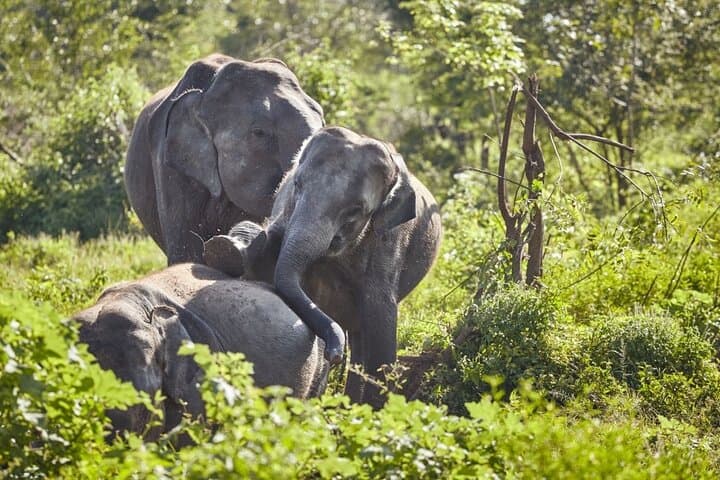
Expect long, vehicle-based game drives across dusty tracks with stops to scan reservoir margins—elephants often gather at dawn or dusk—while leopards and sloth bears remain secretive. The Vedda visit is conversational and hands-on: traditional crafts, a simple village lunch, and a chance to learn about foraging practices.
Practical notes: leave early from Pasikuda and plan a full day (12–14 hours). Bring refillable water, sun protection and a mid- to long-telephoto lens or binoculars. Respect distances from wildlife—do not feed animals—and ask permission before photographing people. The day combines wildlife viewing with cultural exchange; prepare for bumpy roads, strong sun, and rich, unhurried encounters.
moderate.
12–14 hours.
Moderate fitness for long vehicle time, short standing walks, and some uneven terrain when visiting village sites.
Expect roughly 3–4 hours each way by private air-conditioned vehicle depending on traffic and road conditions; the full excursion is a day trip (about 12–14 hours).
No sighting is guaranteed—Maduru Oya is a wild habitat—but elephants frequently visit reservoir banks at dawn and dusk, and guides know productive routes and times.
Yes with permission—ask your guide to request consent first; many visitors buy crafts or offer small tips as a courtesy when photographing villagers.
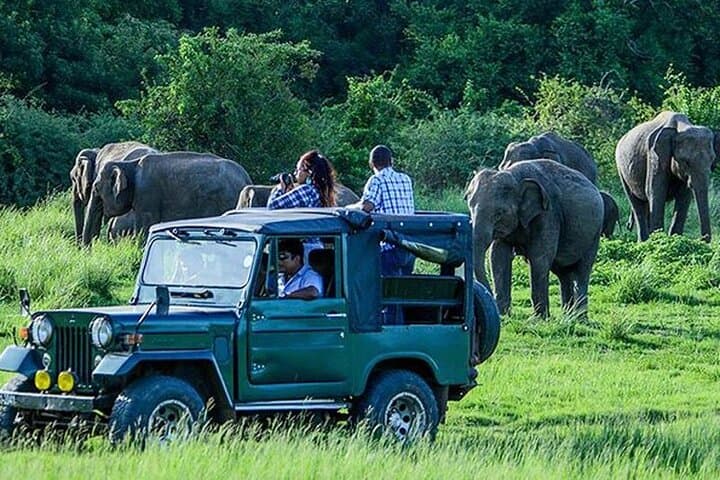
Tours use 4x4 jeeps with raised seating; vehicles may be open-sided for viewing. Your operator will confirm the exact vehicle type at booking.
Maduru Oya was designated a national park in 1983 to protect dry-zone forests and the corridor connecting elephant populations in eastern Sri Lanka.
The park helps maintain elephant migration corridors and shore habitats; visitors should minimize disturbance, avoid single-use plastics, and follow guides’ rules to reduce impact.
Ceylon Travel Dream operates guided outdoor trips and adventures with an emphasis on safety, stewardship, and memorable experiences.
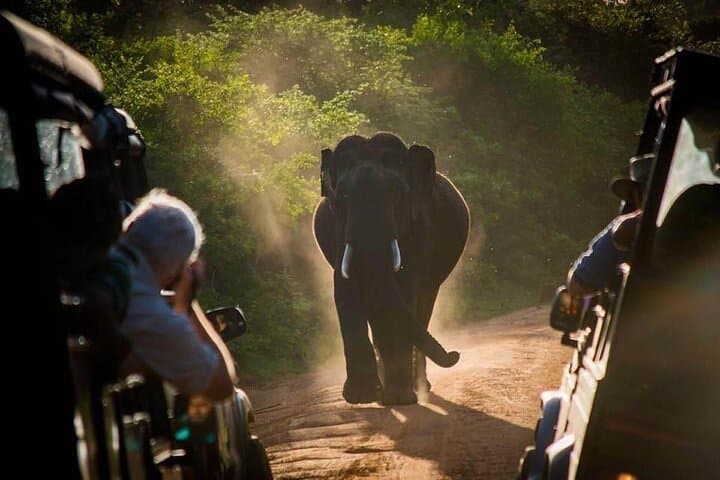
Morning light splits over red-dusted tracks as the 4x4 stirs toward Maduru Oya National Park. The jeep bumps along dry-zone scrub; distant trunks hunch like slow guards and the reservoir’s rim flashes like a watchful eye. Animal calls—probing trumpets, a grunt from farther in the bush—pull you forward.
Morning light splits over red-dusted tracks as the 4x4 stirs toward Maduru Oya National Park. The jeep bumps along dry-zone scrub; distant trunks hunch like slow guards and the reservoir’s rim flashes like a watchful eye. Animal calls—probing trumpets, a grunt from farther in the bush—pull you forward.
Declared a national park in 1983, Maduru Oya protects 8,849 hectares of lowland dry-forest and the reservoir that created a seasonal mosaic of shoreline, reed beds, and thorny scrub. Geologically this is a worn landscape of ancient gneiss and schist, cut by seasonal streams that draw elephants to salt-enriched banks. Culturally, the area sits at the edge of Eastern Province communities; in the afternoon you meet a Vedda group, one of Sri Lanka’s indigenous peoples, whose knowledge of forest plants and tracking dates back generations.
Expect long, vehicle-based game drives across dusty tracks with stops to scan reservoir margins—elephants often gather at dawn or dusk—while leopards and sloth bears remain secretive. The Vedda visit is conversational and hands-on: traditional crafts, a simple village lunch, and a chance to learn about foraging practices.
Practical notes: leave early from Pasikuda and plan a full day (12–14 hours). Bring refillable water, sun protection and a mid- to long-telephoto lens or binoculars. Respect distances from wildlife—do not feed animals—and ask permission before photographing people. The day combines wildlife viewing with cultural exchange; prepare for bumpy roads, strong sun, and rich, unhurried encounters.