THE ADVENTURE COLLECTIVE® · Independent discovery and booking for outdoor travel

Cruise the winding channels of the Madu Ganga to visit cinnamon-processing isles, a Buddhist island temple and a playful fish foot‑massage pond. This two‑hour boat safari is an accessible, wildlife-rich window into Sri Lanka’s coastal mangrove ecology.
Cruise the winding channels of the Madu Ganga to visit cinnamon-processing isles, a Buddhist island temple and a playful fish foot‑massage pond. This two‑hour boat safari is an accessible, wildlife-rich window into Sri Lanka’s coastal mangrove ecology.
The boat eases from a narrow channel into a cathedral of mangrove roots, branches dipping to touch the brown, brackish water that pushes and pulls at the hull. Kingfishers perch like small, blue punctuation marks; a water monitor slips along a shadowed bank. You glide past mangrove-framed islands—about 64 in the estuary—each one a private world of birds, villagers and cinnamon trees.
Verified experiences and guided adventures in the surrounding area.
Operated by Suduhansa Tours · Balapitiya, Southern Province
The boat eases from a narrow channel into a cathedral of mangrove roots, branches dipping to touch the brown, brackish water that pushes and pulls at the hull. Kingfishers perch like small, blue punctuation marks; a water monitor slips along a shadowed bank. You glide past mangrove-framed islands—about 64 in the estuary—each one a private world of birds, villagers and cinnamon trees.
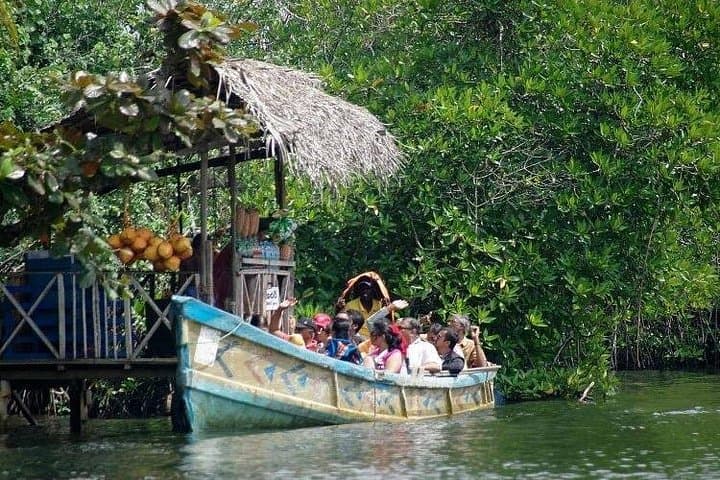
This estuary has shaped culture and economy: boats have threaded these channels for generations, and Cinnamon Island preserves local craft traditions and small Buddhist communities. Geologically the Madu Ganga is a coastal lagoon-estuary system where riverine sediment meets tidal flow, building mudflats that feed dense mangrove thickets and rich fish nurseries. Monks on one island keep palm-leaf manuscripts and still cook on open cinnamon-wood fires; nearby villagers maintain a shallow pond stocked with fish that nibble at bare feet for a playful “fish massage.”
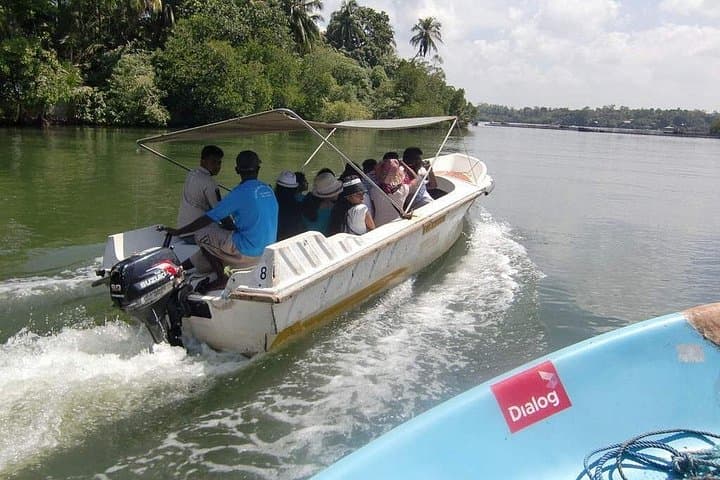
Expect calm, low‑swell cruising through narrow waterways, short stops at an island temple and a cinnamon processing patch, plus a chance to try the fish foot‑massage. Wildlife viewing is best early; mid-day heats the canopy and draws shade. Practicalities: trips run about two hours, are wheelchair accessible on many operators, and require no special fitness—bring sun protection, insect repellent and a waterproof bag for cameras. Support local guides, avoid single‑use plastics, and keep voices low to improve bird and wildlife sightings. The ride is quick to learn and slow to leave—an easy, sensory dive into Sri Lanka’s coastal mangrove life.
easy.
2 hours.
Suitable for most fitness levels—trips are boat-based with short, flat island walks if any.
Most operators run a two‑hour cruise that includes short stops at a cinnamon island and a temple island.
Yes—standard itineraries include brief, guided landings at an island temple and the cinnamon demonstration area; follow crew instructions.
The fish nibbling is a light novelty performed in shallow, contained ponds; avoid if you have open wounds or skin infections.
Many boats and operators are stroller and wheelchair accessible for boarding, and the cruise itself requires no special fitness.
Local communities have used the Madu Ganga for transport and spice processing for centuries; the estuary’s islands host small Buddhist shrines and traditional cinnamon drying yards.
The mangrove system is ecologically sensitive—avoid litter, choose operators that limit engine idling near nesting sites, and support community conservation initiatives.
Suduhansa Tours operates guided outdoor trips and adventures with an emphasis on safety, stewardship, and memorable experiences.
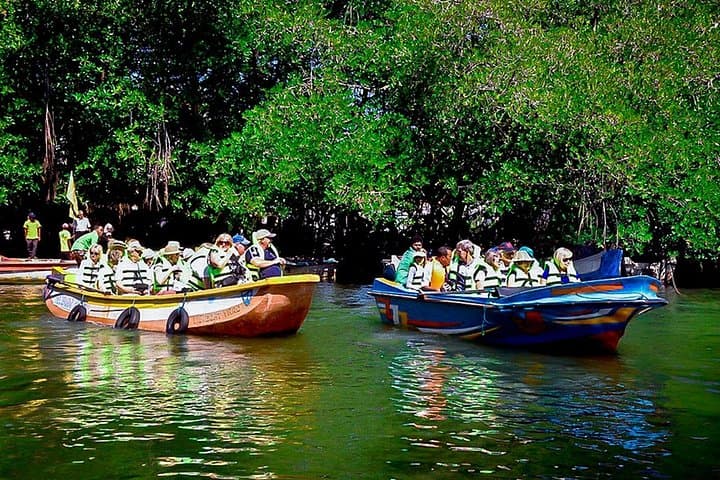
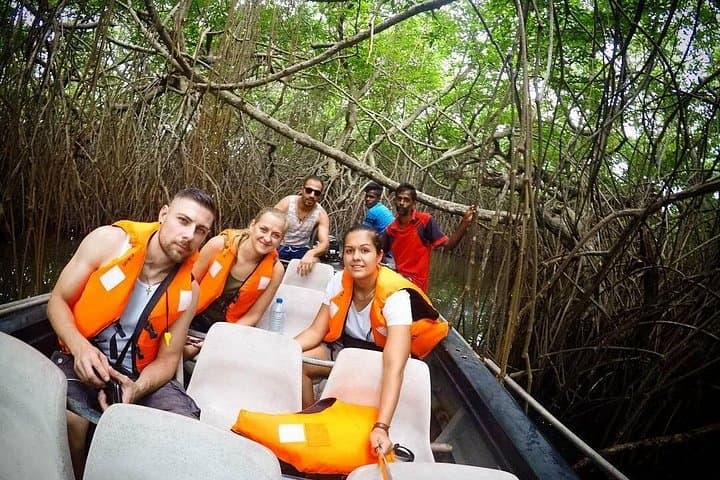
The boat eases from a narrow channel into a cathedral of mangrove roots, branches dipping to touch the brown, brackish water that pushes and pulls at the hull. Kingfishers perch like small, blue punctuation marks; a water monitor slips along a shadowed bank. You glide past mangrove-framed islands—about 64 in the estuary—each one a private world of birds, villagers and cinnamon trees.
The boat eases from a narrow channel into a cathedral of mangrove roots, branches dipping to touch the brown, brackish water that pushes and pulls at the hull. Kingfishers perch like small, blue punctuation marks; a water monitor slips along a shadowed bank. You glide past mangrove-framed islands—about 64 in the estuary—each one a private world of birds, villagers and cinnamon trees.
This estuary has shaped culture and economy: boats have threaded these channels for generations, and Cinnamon Island preserves local craft traditions and small Buddhist communities. Geologically the Madu Ganga is a coastal lagoon-estuary system where riverine sediment meets tidal flow, building mudflats that feed dense mangrove thickets and rich fish nurseries. Monks on one island keep palm-leaf manuscripts and still cook on open cinnamon-wood fires; nearby villagers maintain a shallow pond stocked with fish that nibble at bare feet for a playful “fish massage.”
Expect calm, low‑swell cruising through narrow waterways, short stops at an island temple and a cinnamon processing patch, plus a chance to try the fish foot‑massage. Wildlife viewing is best early; mid-day heats the canopy and draws shade. Practicalities: trips run about two hours, are wheelchair accessible on many operators, and require no special fitness—bring sun protection, insect repellent and a waterproof bag for cameras. Support local guides, avoid single‑use plastics, and keep voices low to improve bird and wildlife sightings. The ride is quick to learn and slow to leave—an easy, sensory dive into Sri Lanka’s coastal mangrove life.