THE ADVENTURE COLLECTIVE® · Independent discovery and booking for outdoor travel

Learn the basics of furnace glassblowing in a supervised 90-minute studio session in Madison. Through guided demos and hands-on shaping you’ll create an ornament, pendant, or watering globe while the studio handles annealing and finishing.
Learn the basics of furnace glassblowing in a supervised 90-minute studio session in Madison. Through guided demos and hands-on shaping you’ll create an ornament, pendant, or watering globe while the studio handles annealing and finishing.
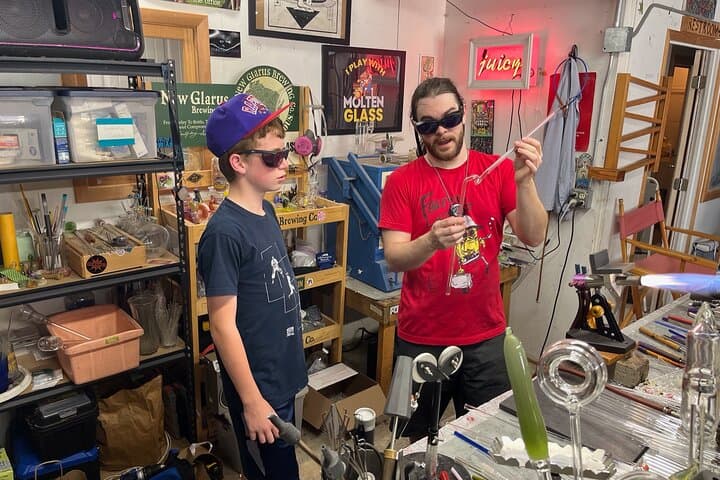
Step into a studio where the furnace hums and an orange blossom of molten glass hangs at the end of a blowpipe, waiting for hands to shape it. The room is warm, the floor scatters tiny glass beads, and the instructor’s voice cuts through the heat with calm, exact directions — an intense, tactile welcome to a very old craft.
Verified experiences and guided adventures in the surrounding area.
Operated by Gurn Glass · Madison, Wisconsin
Step into a studio where the furnace hums and an orange blossom of molten glass hangs at the end of a blowpipe, waiting for hands to shape it. The room is warm, the floor scatters tiny glass beads, and the instructor’s voice cuts through the heat with calm, exact directions — an intense, tactile welcome to a very old craft.
Glassblowing’s basic technique goes back to the Roman era when artisans learned to shape molten silica into vessels; modern studio glass practice — which brought small furnaces and education into city workshops — expanded widely in the mid-20th century. The raw material itself is geological: silica sand and recycled glass (cullet) melted to 1,100–1,600°C to become workable glass. In Madison, a city with a lively arts scene anchored by the university and local studios, these classes sit alongside museum exhibits and craft shops that trace the city’s maker culture.
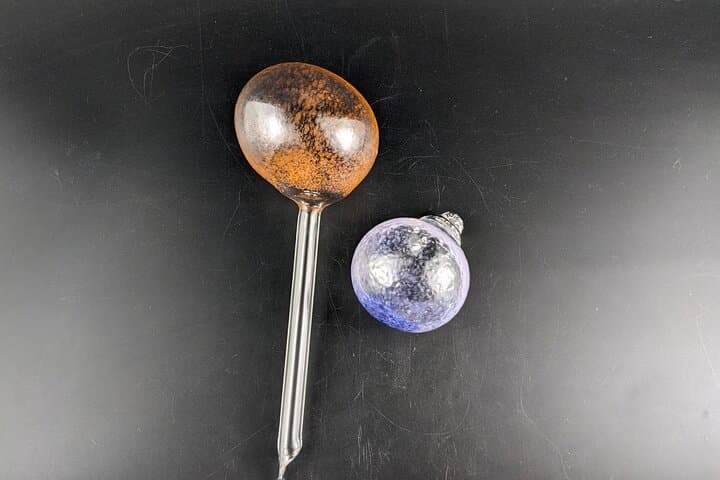
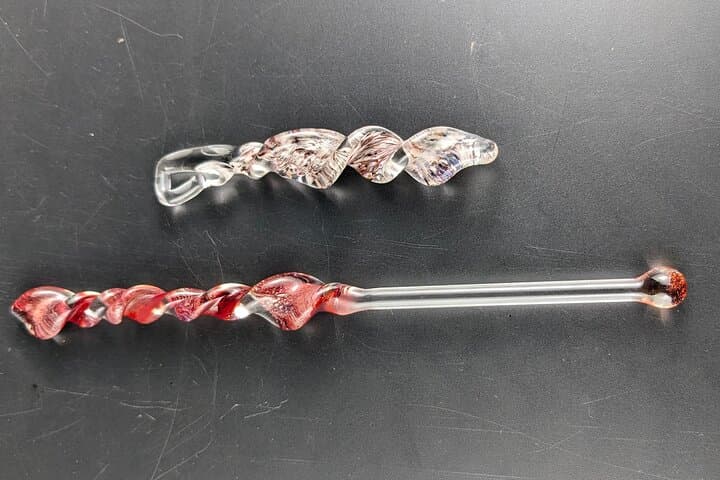
Expect a structured, 90-minute lesson aimed at beginners (ages 6+): safety briefing, demo, hands-on shaping with close supervision, and a finished piece. Projects often include ornaments, stirring rods, pendants, or small watering globes. Studios emphasize safety — closed-toe shoes, tied-back hair, and careful tool handling — and they anneal pieces after forming; pickup is typically later the same day or the following day depending on the studio’s schedule.
Practical tips: book ahead, arrive with appropriate clothing, hydrate before you enter the heat, and be ready for sensory intensity — bright light, furnace warmth, and the satisfying snap of annealed glass cooling into an object you made.
easy.
1.5 hours (90 minutes).
Light physical activity: standing and brief lifting; participants should be steady on their feet and able to follow safety instructions.
This class accepts participants ages 6 and up; children should be accompanied by an adult and follow instructor guidance.
Most studios anneal pieces after shaping to relieve stress in the glass; pickup is typically later the same day or the next day depending on annealer schedules.
Yes — studios run safety briefings, provide close supervision, and require protective behaviors (closed-toe shoes, tied-back hair); follow the instructor at all times.
Cancellation policies vary; this listing’s provider offers full refunds if you cancel at least 24 hours before the scheduled start time — confirm the studio’s policy when booking.
Glassblowing began as a technique in the ancient Roman world; the modern studio glass movement brought small-scale furnaces and teaching into cities like Madison in the 20th century.
Many studios minimize waste by using recycled cullet and controlled batching; be mindful that furnaces consume significant energy, so classes focus on efficiency and material reuse.
Gurn Glass operates guided outdoor trips and adventures with an emphasis on safety, stewardship, and memorable experiences.
Step into a studio where the furnace hums and an orange blossom of molten glass hangs at the end of a blowpipe, waiting for hands to shape it. The room is warm, the floor scatters tiny glass beads, and the instructor’s voice cuts through the heat with calm, exact directions — an intense, tactile welcome to a very old craft.
Step into a studio where the furnace hums and an orange blossom of molten glass hangs at the end of a blowpipe, waiting for hands to shape it. The room is warm, the floor scatters tiny glass beads, and the instructor’s voice cuts through the heat with calm, exact directions — an intense, tactile welcome to a very old craft.
Glassblowing’s basic technique goes back to the Roman era when artisans learned to shape molten silica into vessels; modern studio glass practice — which brought small furnaces and education into city workshops — expanded widely in the mid-20th century. The raw material itself is geological: silica sand and recycled glass (cullet) melted to 1,100–1,600°C to become workable glass. In Madison, a city with a lively arts scene anchored by the university and local studios, these classes sit alongside museum exhibits and craft shops that trace the city’s maker culture.
Expect a structured, 90-minute lesson aimed at beginners (ages 6+): safety briefing, demo, hands-on shaping with close supervision, and a finished piece. Projects often include ornaments, stirring rods, pendants, or small watering globes. Studios emphasize safety — closed-toe shoes, tied-back hair, and careful tool handling — and they anneal pieces after forming; pickup is typically later the same day or the following day depending on the studio’s schedule.
Practical tips: book ahead, arrive with appropriate clothing, hydrate before you enter the heat, and be ready for sensory intensity — bright light, furnace warmth, and the satisfying snap of annealed glass cooling into an object you made.