THE ADVENTURE COLLECTIVE® · Independent discovery and booking for outdoor travel

Head out from Funchal for a 2–3 hour marine-biologist-led cruise into Madeira’s deep coastal waters. Small groups, shore lookouts and live commentary give you one of the island’s best chances to see dolphins, whales and sea turtles.
Head out from Funchal for a 2–3 hour marine-biologist-led cruise into Madeira’s deep coastal waters. Small groups, shore lookouts and live commentary give you one of the island’s best chances to see dolphins, whales and sea turtles.
You stand on the rail with spray in your face as the harbor falls away — Funchal’s stone breakwater loosens, and the Atlantic opens, flat and alive. The boat finds a rhythm; binoculars lift and a marine biologist traces a line on the horizon. Moments later a dorsal fin cuts the water like a question, and the group leans forward as dolphins answer it.
Verified experiences and guided adventures in the surrounding area.
Operated by Rota dos Cetaceos - Whale & Dolphin Watching · Funchal, Madeira
You stand on the rail with spray in your face as the harbor falls away — Funchal’s stone breakwater loosens, and the Atlantic opens, flat and alive. The boat finds a rhythm; binoculars lift and a marine biologist traces a line on the horizon. Moments later a dorsal fin cuts the water like a question, and the group leans forward as dolphins answer it.
Madeira’s seas are shaped by volcanic slopes that plunge quickly to deep water, creating a nearshore corridor used by migratory whales and resident dolphins. Historically this stretch hosted whalers, but modern Madeira emphasizes observation and protection, with trained lookouts scanning cliffs and shore-based observers guiding boats to encounters.
Culturally, tours are part science and part local hospitality: crews on these trips are often bilingual, offer natural-history commentary, and operate from Funchal’s busy marina.
Practically, expect a 2–3 hour small-group cruise with on-board commentary and optional snorkeling gear. Seas can change fast; calm mornings are the best window for sightings. Wear wind-resistant layers, bring motion-sickness prevention if you’re prone, and keep cameras ready for quick, low-angle shots. Respect wildlife distances the crew sets — animals steer the experience, and patience pays off.
Whether you’re scanning for humpbacks out at depth, watching spinner dolphins ride the bow, or spotting turtles near the surface, the tour pairs accessible science with a real chance to see Atlantic megafauna within easy reach of Funchal’s harbor.
easy.
2–3 hours.
Suitable for most fitness levels; requires ability to board a small boat and stand or sit on uneven decks for the trip duration.
The tour lasts about 2–3 hours, with most operators quoting a fixed duration of 150 minutes including briefing and return to Funchal marina.
Sightings are common but not guaranteed; teams use shore lookouts and experienced crews to maximize chances, and morning departures often improve odds.
Some operators offer controlled swim-with-dolphin options; check in advance and be aware this requires following strict guidelines set by marine biologists and local regulations.
Tours are family-friendly and suitable for most ages, but they are not recommended for pregnant travelers or people with serious back or heart conditions—check health advisories before booking.
Madeira’s coastal communities moved from subsistence fishing and historic whaling to regulated whale watching in the late 20th century, aligning tourism with conservation.
Operators work with marine biologists and follow local codes to minimize disturbance; choose providers that use lookouts and maintain respectful approach distances to protect animals.
Rota dos Cetaceos - Whale & Dolphin Watching operates guided outdoor trips and adventures with an emphasis on safety, stewardship, and memorable experiences.
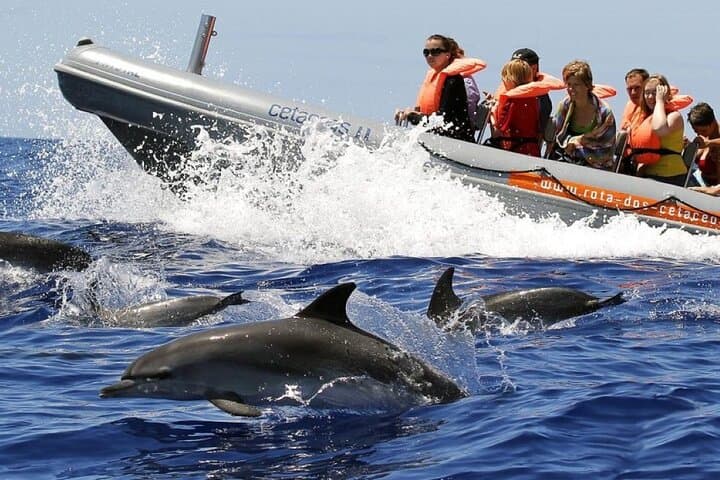
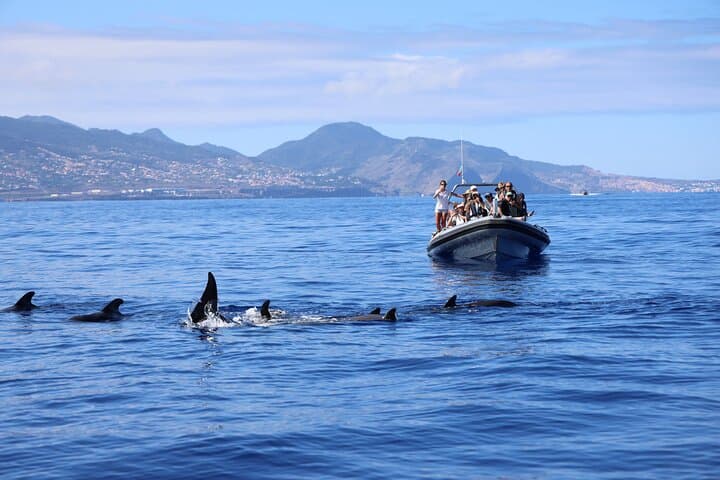
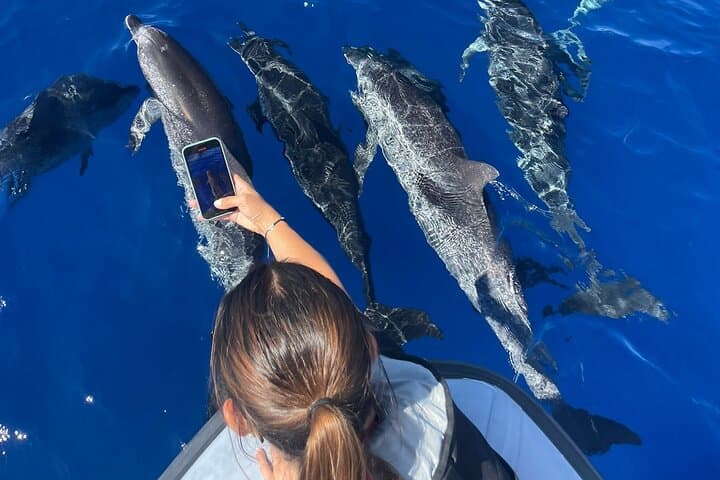
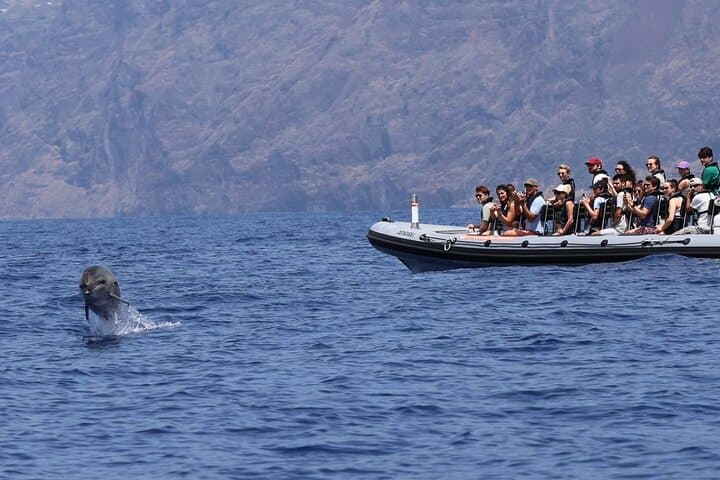
You stand on the rail with spray in your face as the harbor falls away — Funchal’s stone breakwater loosens, and the Atlantic opens, flat and alive. The boat finds a rhythm; binoculars lift and a marine biologist traces a line on the horizon. Moments later a dorsal fin cuts the water like a question, and the group leans forward as dolphins answer it.
You stand on the rail with spray in your face as the harbor falls away — Funchal’s stone breakwater loosens, and the Atlantic opens, flat and alive. The boat finds a rhythm; binoculars lift and a marine biologist traces a line on the horizon. Moments later a dorsal fin cuts the water like a question, and the group leans forward as dolphins answer it.
Madeira’s seas are shaped by volcanic slopes that plunge quickly to deep water, creating a nearshore corridor used by migratory whales and resident dolphins. Historically this stretch hosted whalers, but modern Madeira emphasizes observation and protection, with trained lookouts scanning cliffs and shore-based observers guiding boats to encounters.
Culturally, tours are part science and part local hospitality: crews on these trips are often bilingual, offer natural-history commentary, and operate from Funchal’s busy marina.
Practically, expect a 2–3 hour small-group cruise with on-board commentary and optional snorkeling gear. Seas can change fast; calm mornings are the best window for sightings. Wear wind-resistant layers, bring motion-sickness prevention if you’re prone, and keep cameras ready for quick, low-angle shots. Respect wildlife distances the crew sets — animals steer the experience, and patience pays off.
Whether you’re scanning for humpbacks out at depth, watching spinner dolphins ride the bow, or spotting turtles near the surface, the tour pairs accessible science with a real chance to see Atlantic megafauna within easy reach of Funchal’s harbor.