THE ADVENTURE COLLECTIVE® · Independent discovery and booking for outdoor travel

Learn to ride Madeira’s Atlantic waves with small-group surf classes that cover tides, safety and technique. Sessions are three hours (two in-water), include gear and photos, and adapt to daily sea conditions.
Learn to ride Madeira’s Atlantic waves with small-group surf classes that cover tides, safety and technique. Sessions are three hours (two in-water), include gear and photos, and adapt to daily sea conditions.
You step onto dark volcanic sand as the Atlantic breathes against the island — a cold, clear pull that asks you to move. In a small group you paddle out, the instructor at your shoulder, teaching how tides, wind and the reef dictate which wave will carry you forward.
Verified experiences and guided adventures in the surrounding area.
Operated by Calhau Surf School · Funchal, Madeira
You step onto dark volcanic sand as the Atlantic breathes against the island — a cold, clear pull that asks you to move. In a small group you paddle out, the instructor at your shoulder, teaching how tides, wind and the reef dictate which wave will carry you forward.
Madeira’s coastline is shaped by ancient lava flows and steep submarine shelves; that geology produces pockets of clean, punchy surf along sheltered coves and exposed points. Surfing here is as much about reading currents and tide windows as it is about balance. The island’s maritime culture leans practical: fishermen, boatmen and lifeguards have long adapted to a fast-changing sea, and modern surf schools build on that local seam of knowledge.
Expect a structured three-hour session (two hours in-water), tailored for beginners through advanced surfers. Groups are small — up to six — and instructors bring boards, wetsuits, liability insurance and often action photos. Meeting place and exact beach are confirmed by WhatsApp one day before, and locations may change with swell and tide.
Practical edge: arrive in swimwear under your wetsuit, bring a towel, reef booties if you have sensitive feet, and a full water bottle. Be ready for cool mornings and stronger wind in winter; summer brings calmer, more consistent conditions for beginners. The activity is wheelchair-accessible onshore but isn’t recommended for those with heart or spinal conditions. Listen to instructors, watch tide charts, and plan a buffer on your schedule — the sea sets the timetable here.
moderate.
3 hours (2-hour in-water lesson).
Suitable for those with basic swimming ability and general fitness; expect paddling, pop-ups and repeated falls.
No—classes are designed for beginners through advanced levels; instructors tailor drills to your skill and safety needs.
The booking includes surfboard, wetsuit, insurance and usually photos; instructors provide technical coaching and safety briefings.
Organizers confirm the exact beach and time 24 hours beforehand via WhatsApp to match tides and swell; beaches may change day-to-day.
Shore facilities are wheelchair accessible, but the in-water component requires mobility and isn’t recommended for certain medical conditions.
Madeira’s maritime history is rooted in 15th-century Atlantic navigation and fishing; modern surf culture arrived as islanders and visitors explored exposed reefs and beach breaks.
Respect local marine habitats by using reef-safe sunscreen, avoiding standing on reefs, and following instructor guidance to minimize disturbance to coastal ecology.
Calhau Surf School operates guided outdoor trips and adventures with an emphasis on safety, stewardship, and memorable experiences.
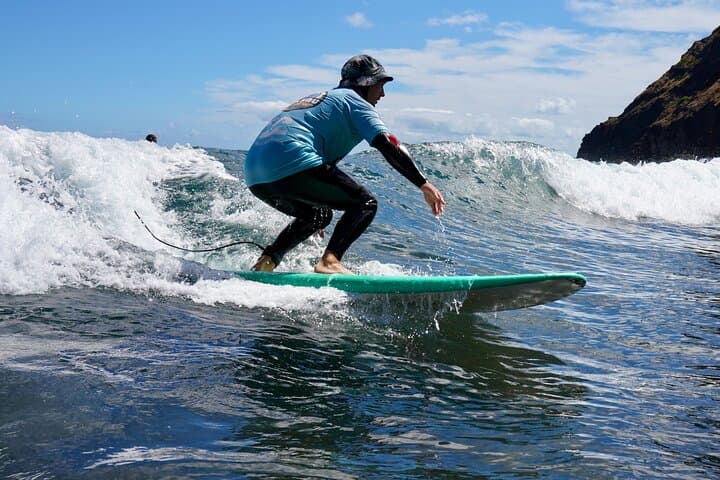
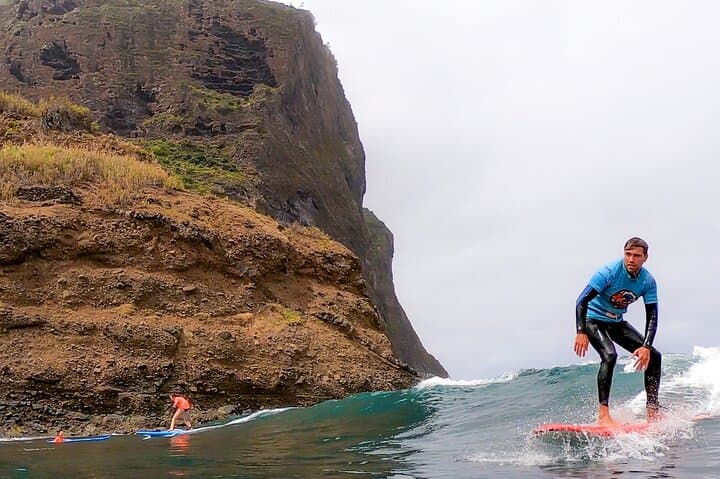
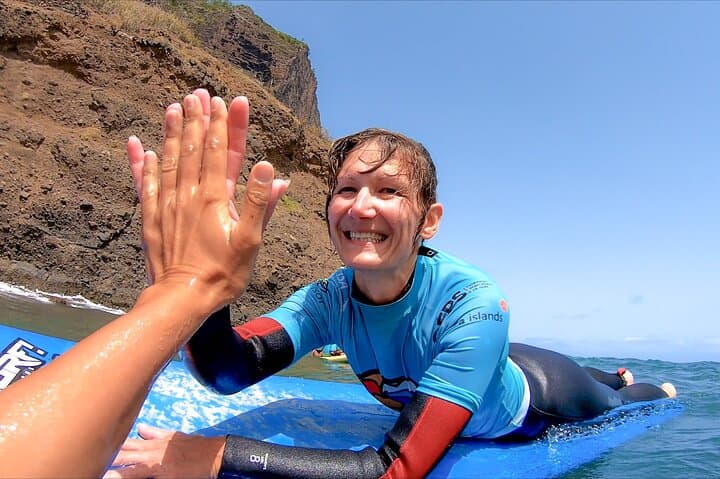
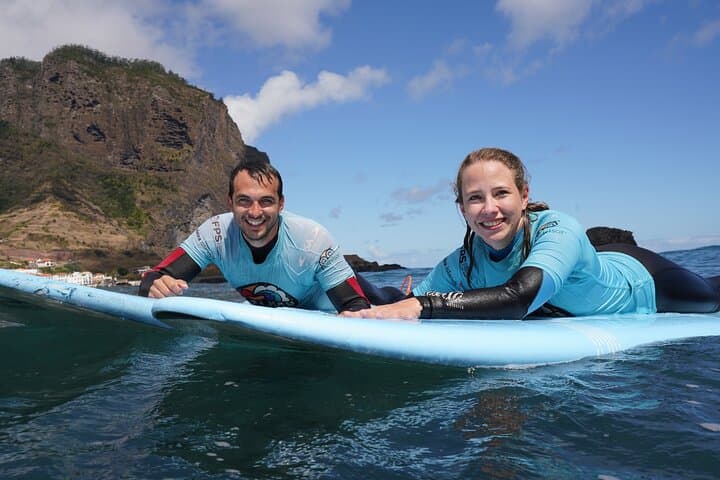
You step onto dark volcanic sand as the Atlantic breathes against the island — a cold, clear pull that asks you to move. In a small group you paddle out, the instructor at your shoulder, teaching how tides, wind and the reef dictate which wave will carry you forward.
You step onto dark volcanic sand as the Atlantic breathes against the island — a cold, clear pull that asks you to move. In a small group you paddle out, the instructor at your shoulder, teaching how tides, wind and the reef dictate which wave will carry you forward.
Madeira’s coastline is shaped by ancient lava flows and steep submarine shelves; that geology produces pockets of clean, punchy surf along sheltered coves and exposed points. Surfing here is as much about reading currents and tide windows as it is about balance. The island’s maritime culture leans practical: fishermen, boatmen and lifeguards have long adapted to a fast-changing sea, and modern surf schools build on that local seam of knowledge.
Expect a structured three-hour session (two hours in-water), tailored for beginners through advanced surfers. Groups are small — up to six — and instructors bring boards, wetsuits, liability insurance and often action photos. Meeting place and exact beach are confirmed by WhatsApp one day before, and locations may change with swell and tide.
Practical edge: arrive in swimwear under your wetsuit, bring a towel, reef booties if you have sensitive feet, and a full water bottle. Be ready for cool mornings and stronger wind in winter; summer brings calmer, more consistent conditions for beginners. The activity is wheelchair-accessible onshore but isn’t recommended for those with heart or spinal conditions. Listen to instructors, watch tide charts, and plan a buffer on your schedule — the sea sets the timetable here.