THE ADVENTURE COLLECTIVE® · Independent discovery and booking for outdoor travel

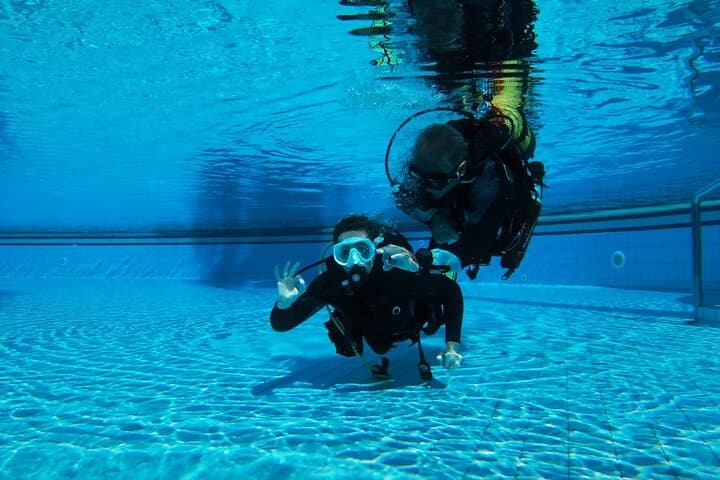
Learn the confined-water fundamentals of SSI or PADI Open Water certification in the sheltered salt pools by Madeira’s Whale Museum. This three-hour, small-group session covers gear, regulator breathing, mask clearing and buoyancy drills with experienced instructors.
Learn the confined-water fundamentals of SSI or PADI Open Water certification in the sheltered salt pools by Madeira’s Whale Museum. This three-hour, small-group session covers gear, regulator breathing, mask clearing and buoyancy drills with experienced instructors.
On a bright Atlantic morning the lava-black shoreline around Caniçal throws off spray while shallow saltwater pools beside the Museu da Baleia glint like practice arenas for breathing underwater. Students meet on a concrete platform; instructors unpack tanks and regulators and the ocean — patient, insistent — presses against the rocks as if urging newcomers forward.
Verified experiences and guided adventures in the surrounding area.
Operated by Summerboard · Caniçal, Madeira
On a bright Atlantic morning the lava-black shoreline around Caniçal throws off spray while shallow saltwater pools beside the Museu da Baleia glint like practice arenas for breathing underwater. Students meet on a concrete platform; instructors unpack tanks and regulators and the ocean — patient, insistent — presses against the rocks as if urging newcomers forward.
Madeira is volcanic rock honed by currents: cliffs that fall straight to deep water host nutrient-rich upwellings that draw dolphins and whales. Caniçal bears a living memory of the island’s whaling past, preserved in the small museum where you’ll sign in before the lesson. The geology is straightforward here — basalt shelves and man-made salt pools — so confined-water training is predictable and sheltered from open-sea surge.
This three-hour session focuses on confined-water skills: equipment familiarization, regulator breathing, buoyancy basics, mask clearing and shallow skill drills (typically under 5 m). Use of scuba equipment is included; instructors run small, personalized groups emphasizing safety and comfort. Full Open Water certification requires additional open-water dives, so treat this as the core pool component.
Practicalities: arrive with swimwear and a towel, expect water temperatures from about 18–23 °C through the year (a 5 mm wetsuit is common), and plan for roughly three hours total. Health questions are taken seriously — this tour isn’t recommended for pregnant people or those with certain cardiac or spinal conditions. With solid instruction and calm Atlantic conditions, this course turns the ocean from an intimidating force into a place that lets you breathe and move differently.
moderate.
3 hours.
Suitable for people in average physical condition who can swim and tolerate moderate exertion in water
No — this session teaches confined-water skills from the ground up; basic swimming ability and comfort in water are required.
This listing covers the confined-water (pool) portion in about three hours; full Open Water certification requires additional open-water dives on separate days.
Minimum age varies by agency; PADI and SSI generally require minimum age of 10–12 for junior certifications and 15 for full Open Water, so confirm at booking.
Yes — use of scuba equipment is included, but many divers prefer to bring a personal mask and snorkel for fit and hygiene.
Caniçal’s Museu da Baleia records Madeira’s 20th-century whaling history; the town transitioned from hunting to observation and conservation in recent decades.
Madeira waters are monitored and many operators follow no-touch and no-take policies; responsible buoyancy and reef awareness reduce impact on local ecosystems.
Summerboard operates guided outdoor trips and adventures with an emphasis on safety, stewardship, and memorable experiences.


On a bright Atlantic morning the lava-black shoreline around Caniçal throws off spray while shallow saltwater pools beside the Museu da Baleia glint like practice arenas for breathing underwater. Students meet on a concrete platform; instructors unpack tanks and regulators and the ocean — patient, insistent — presses against the rocks as if urging newcomers forward.
On a bright Atlantic morning the lava-black shoreline around Caniçal throws off spray while shallow saltwater pools beside the Museu da Baleia glint like practice arenas for breathing underwater. Students meet on a concrete platform; instructors unpack tanks and regulators and the ocean — patient, insistent — presses against the rocks as if urging newcomers forward.
Madeira is volcanic rock honed by currents: cliffs that fall straight to deep water host nutrient-rich upwellings that draw dolphins and whales. Caniçal bears a living memory of the island’s whaling past, preserved in the small museum where you’ll sign in before the lesson. The geology is straightforward here — basalt shelves and man-made salt pools — so confined-water training is predictable and sheltered from open-sea surge.
This three-hour session focuses on confined-water skills: equipment familiarization, regulator breathing, buoyancy basics, mask clearing and shallow skill drills (typically under 5 m). Use of scuba equipment is included; instructors run small, personalized groups emphasizing safety and comfort. Full Open Water certification requires additional open-water dives, so treat this as the core pool component.
Practicalities: arrive with swimwear and a towel, expect water temperatures from about 18–23 °C through the year (a 5 mm wetsuit is common), and plan for roughly three hours total. Health questions are taken seriously — this tour isn’t recommended for pregnant people or those with certain cardiac or spinal conditions. With solid instruction and calm Atlantic conditions, this course turns the ocean from an intimidating force into a place that lets you breathe and move differently.