THE ADVENTURE COLLECTIVE® · Independent discovery and booking for outdoor travel

Join a guided evening search for Madeira’s native bats using detectors and thermal cameras. This three‑hour rural night tour blends accessible fieldwork with wildlife observation and contributes to local conservation data.
Join a guided evening search for Madeira’s native bats using detectors and thermal cameras. This three‑hour rural night tour blends accessible fieldwork with wildlife observation and contributes to local conservation data.
The air cools as the sun drops behind terraced vineyards above Funchal and the first high-pitched squeaks begin to thread the evening. You stand on a quiet lane, bat detector in hand, and watch thermal sensors paint pale shapes as the island’s only native land mammals wheel and hunt. This is fieldwork and theater at once — hush, listen, and the night responds.
Verified experiences and guided adventures in the surrounding area.
Operated by Madeira Fauna Flora · Funchal, Madeira
The air cools as the sun drops behind terraced vineyards above Funchal and the first high-pitched squeaks begin to thread the evening. You stand on a quiet lane, bat detector in hand, and watch thermal sensors paint pale shapes as the island’s only native land mammals wheel and hunt. This is fieldwork and theater at once — hush, listen, and the night responds.
Madeira’s volcanic geology carves steep ravines and narrow valleys that funnel insects and, in turn, the bats that feed on them. Historically, bats are Madeira’s sole native land mammals, adapted to island rhythms long before tourism reshaped coastal towns. Local guides combine natural history with citizen science: readings from bat detectors and thermal cameras contribute to conservation databases while illustrating species behavior — foraging strategies, territorial skirmishes and social calls.
Expect a slow, observational pace rather than a strenuous trek. The tour typically heads into rural edges and laurel forest margins where bat activity concentrates. Bring a charged headlamp with a red filter, closed-toe shoes for uneven rural tracks, and a light windproof layer; evenings on the hills can be breezier than the coast.
Practical tips: arrive on time to catch twilight emergence, silence phones during listening sessions, and follow the guide’s positioning to avoid disturbing roosts. Photography of thermal images is possible but requires guidance. The experience is an accessible, low-impact way to encounter Madeira’s nocturnal life while supporting local research — a short, focused night that turns insect-hunting into a visible, audible adventure.
easy.
3 hours.
Suitable for all fitness levels; requires short, gentle walks on rural tracks at night
The tour lasts about three hours and departs around twilight when bats begin to emerge; exact start times vary by season and sunset time.
No; the tour is rated easy and suitable for most fitness levels, involving short, low‑grade walks on rural lanes.
Yes—bat detectors and thermal sensors are supplied by the operator; participants should bring personal lights and footwear.
Children are welcome but infants must sit on an adult’s lap; consider age and the child’s ability to remain quiet during observation periods.
Bats are Madeira’s only native land mammals; their island adaptations reflect a long isolation and the archipelago’s distinctive ecological history.
Tours collect acoustic and thermal data that support local monitoring; visitors are asked to minimize light and noise and stay on paths to protect roosts and habitat.
Madeira Fauna Flora operates guided outdoor trips and adventures with an emphasis on safety, stewardship, and memorable experiences.
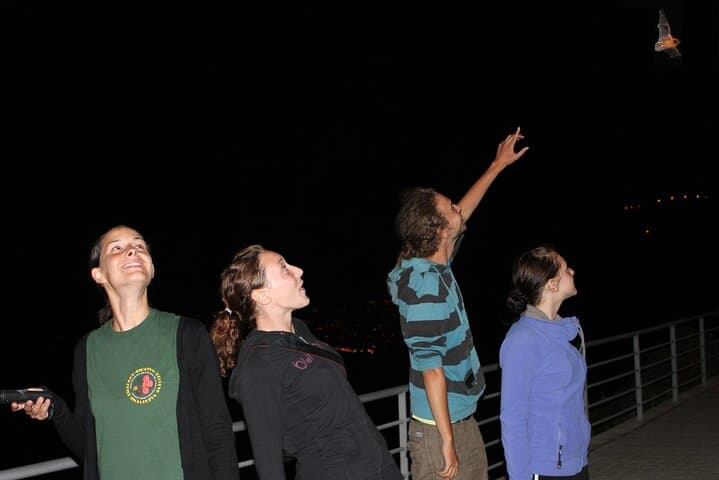
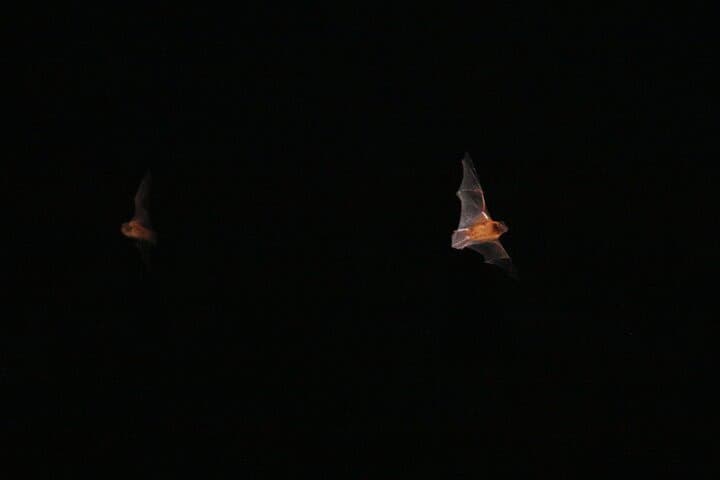
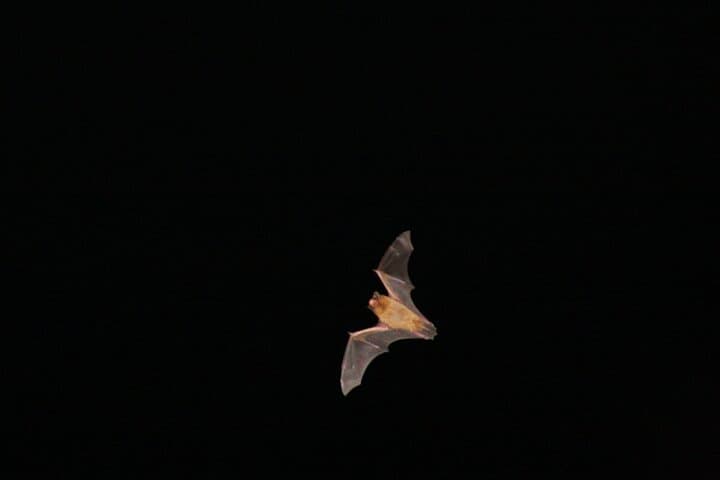
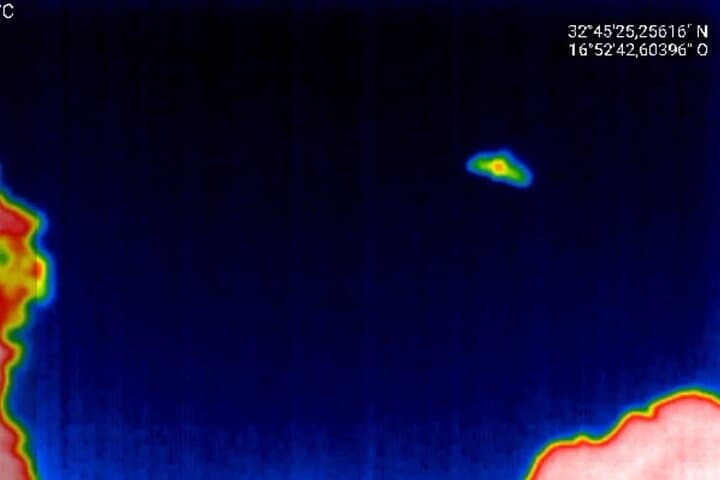
The air cools as the sun drops behind terraced vineyards above Funchal and the first high-pitched squeaks begin to thread the evening. You stand on a quiet lane, bat detector in hand, and watch thermal sensors paint pale shapes as the island’s only native land mammals wheel and hunt. This is fieldwork and theater at once — hush, listen, and the night responds.
The air cools as the sun drops behind terraced vineyards above Funchal and the first high-pitched squeaks begin to thread the evening. You stand on a quiet lane, bat detector in hand, and watch thermal sensors paint pale shapes as the island’s only native land mammals wheel and hunt. This is fieldwork and theater at once — hush, listen, and the night responds.
Madeira’s volcanic geology carves steep ravines and narrow valleys that funnel insects and, in turn, the bats that feed on them. Historically, bats are Madeira’s sole native land mammals, adapted to island rhythms long before tourism reshaped coastal towns. Local guides combine natural history with citizen science: readings from bat detectors and thermal cameras contribute to conservation databases while illustrating species behavior — foraging strategies, territorial skirmishes and social calls.
Expect a slow, observational pace rather than a strenuous trek. The tour typically heads into rural edges and laurel forest margins where bat activity concentrates. Bring a charged headlamp with a red filter, closed-toe shoes for uneven rural tracks, and a light windproof layer; evenings on the hills can be breezier than the coast.
Practical tips: arrive on time to catch twilight emergence, silence phones during listening sessions, and follow the guide’s positioning to avoid disturbing roosts. Photography of thermal images is possible but requires guidance. The experience is an accessible, low-impact way to encounter Madeira’s nocturnal life while supporting local research — a short, focused night that turns insect-hunting into a visible, audible adventure.