THE ADVENTURE COLLECTIVE® · Independent discovery and booking for outdoor travel

Explore Stone Town's workshops and markets on a half-day tour that brings kanga printing, leather sandal making, and women’s cooperative embroidery up close. Learn how local crafts are made, haggle respectfully, and leave with meaningful souvenirs.
Explore Stone Town's workshops and markets on a half-day tour that brings kanga printing, leather sandal making, and women’s cooperative embroidery up close. Learn how local crafts are made, haggle respectfully, and leave with meaningful souvenirs.
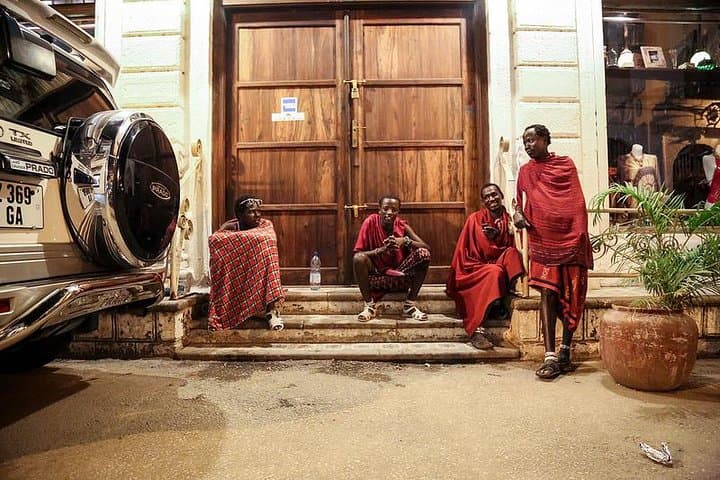
You step off the tuk-tuk into the hum of Stone Town: a narrow lane where wood dust hangs in the warm air and the sea breeze teases open shop doors. Craftsmen hammer, stitch, and paint while the guide points out proverbs printed on kanga cloth and the exact twist that makes a kanga hold.
Verified experiences and guided adventures in the surrounding area.
Operated by Bohobe Travels · Stone Town, Zanzibar
You step off the tuk-tuk into the hum of Stone Town: a narrow lane where wood dust hangs in the warm air and the sea breeze teases open shop doors. Craftsmen hammer, stitch, and paint while the guide points out proverbs printed on kanga cloth and the exact twist that makes a kanga hold.
Zanzibar's Old Town grew from Swahili trade and Omani influence; its buildings and workshops carry that history in carved doors and patterned textiles. The geology is coral-built — compact streets and lime-washed walls — and that compactness keeps markets tight and conversation immediate. The local culture prizes hand skills: leatherwork that’s been island-standard since 1976, makonde carvings, and the delicate hand embroidery produced by women's cooperatives.
On this half-day route you’ll visit a kanga bazaar, a leather sandal workshop, SASIK women’s cooperative, and small factories where coconut-wood furniture and kikoi fabric are made. Expect close-up demonstrations: henna painting at a gallery, a Tinga Tinga painter at work, and craftsmen carving door panels.
Practical guidance: carry small bills and handfuls of coins for bargaining; wear comfortable, closed-toe shoes for dusty workshops; plan the visit mid-morning to avoid the hottest hours and to catch artisans at work. Ask before photographing and favor purchases directly from makers to support local incomes. This is an accessible, low-impact cultural loop that turns shopping into a hands-on lesson in craft, history, and the real mechanics of Stone Town’s creative economy.
easy.
3–8 hours.
Light walking on mostly flat, paved or compacted streets; suitable for most fitness levels
Yes—this is a private half-day tour usually booked in advance; instant confirmation is often available but check seasonal availability.
Most small workshops prefer cash; larger cooperatives may accept card but bring TZS for most purchases.
Many areas in Stone Town are narrow but listed workshops may be wheelchair accessible; confirm with the operator about specific access needs.
Haggling is common for souvenirs and market goods; for cooperative items and studio work, prices are often set—ask before negotiating.
Stone Town evolved as a Swahili-Omani trading hub; its crafts reflect centuries of Arab, African, and Indian influences, especially in carved doors and textile patterns.
Buy from registered cooperatives and workshops that pay artisans fair wages; avoid products made from endangered species and ask about sustainable materials.
Bohobe Travels operates guided outdoor trips and adventures with an emphasis on safety, stewardship, and memorable experiences.


You step off the tuk-tuk into the hum of Stone Town: a narrow lane where wood dust hangs in the warm air and the sea breeze teases open shop doors. Craftsmen hammer, stitch, and paint while the guide points out proverbs printed on kanga cloth and the exact twist that makes a kanga hold.
You step off the tuk-tuk into the hum of Stone Town: a narrow lane where wood dust hangs in the warm air and the sea breeze teases open shop doors. Craftsmen hammer, stitch, and paint while the guide points out proverbs printed on kanga cloth and the exact twist that makes a kanga hold.
Zanzibar's Old Town grew from Swahili trade and Omani influence; its buildings and workshops carry that history in carved doors and patterned textiles. The geology is coral-built — compact streets and lime-washed walls — and that compactness keeps markets tight and conversation immediate. The local culture prizes hand skills: leatherwork that’s been island-standard since 1976, makonde carvings, and the delicate hand embroidery produced by women's cooperatives.
On this half-day route you’ll visit a kanga bazaar, a leather sandal workshop, SASIK women’s cooperative, and small factories where coconut-wood furniture and kikoi fabric are made. Expect close-up demonstrations: henna painting at a gallery, a Tinga Tinga painter at work, and craftsmen carving door panels.
Practical guidance: carry small bills and handfuls of coins for bargaining; wear comfortable, closed-toe shoes for dusty workshops; plan the visit mid-morning to avoid the hottest hours and to catch artisans at work. Ask before photographing and favor purchases directly from makers to support local incomes. This is an accessible, low-impact cultural loop that turns shopping into a hands-on lesson in craft, history, and the real mechanics of Stone Town’s creative economy.