THE ADVENTURE COLLECTIVE® · Independent discovery and booking for outdoor travel

Board the official shuttle from Aguas Calientes for a direct, eco-friendly climb to Machu Picchu’s main gate. Fast departures every 15 minutes make it the practical choice for timed park entries and sunrise visits.
Board the official shuttle from Aguas Calientes for a direct, eco-friendly climb to Machu Picchu’s main gate. Fast departures every 15 minutes make it the practical choice for timed park entries and sunrise visits.
A thin mist curls off the Urubamba watershed as the line of green-and-yellow Consettur buses idles against the steep switchbacks that climb from Aguas Calientes to the ruins of Machu Picchu. You step aboard for a 25-minute ascent; the valley folds open below and the cloud-shrouded peaks press close, as if the mountain is testing whether you belong here.
Verified experiences and guided adventures in the surrounding area.
Operated by Willka Travel · Aguas Calientes, Cusco
A thin mist curls off the Urubamba watershed as the line of green-and-yellow Consettur buses idles against the steep switchbacks that climb from Aguas Calientes to the ruins of Machu Picchu. You step aboard for a 25-minute ascent; the valley folds open below and the cloud-shrouded peaks press close, as if the mountain is testing whether you belong here.
The route follows a road cut into volcanic and sedimentary slopes shaped by millennia of tectonic lift—this is the eastern edge of the Andes where Inca ingenuity met raw geology. Machu Picchu itself sits on a granite ridge carved by rivers and time, a cultural high point built in the 15th century and later abandoned; the site remains one of Peru’s defining archaeological landscapes.
Local culture in Aguas Calientes is practical and transient: a town conditioned by train schedules, porters, and day-visitors, where Quechua and Spanish meet in markets selling coca leaves and alpaca scarves. The official shuttle gives visitors a reliable, regulated way to reach the park gate without adding wear to footpaths or local roads.
Practical guidance: bring your passport—the ticket requires a name match—and arrive early if you want sunrise light; buses run every 15 minutes but queues build quickly. Expect a short uphill wait to board, and a seated, eco-certified ride with window views. Bags are limited by park rules; plan your visit length and return time, and leave extra headroom for delays from high-season crowds or weather. Hydrate at low altitude; the climb and thin air can make steps feel steeper than on paper.
easy.
30–45 minutes.
Suitable for all fitness levels; minimal exertion for the ride itself but expect walking at the site at elevation.
Walk 3–5 minutes from the train station along the main pedestrian avenue to the organized Consettur bus lines—staff and signs mark the official boarding point.
Shuttles depart roughly every 15 minutes and the uphill ride takes about 25 minutes to the Machu Picchu entrance.
Large suitcases are impractical; the shuttle and park favor small daypacks—store large bags in Aguas Calientes or on the train if needed.
Yes—your ticket must match the passport or ID you present at boarding, so bring the same document used when booking.
Machu Picchu was built by the Inca in the 15th century and rediscovered in the early 20th century; the site's construction reflects sophisticated stone masonry adapted to steep Andean geology.
The official shuttle system reduces road traffic and erosion from unregulated vehicles; visitors should use designated transport and follow park rules to limit impact.
Willka Travel operates guided outdoor trips and adventures with an emphasis on safety, stewardship, and memorable experiences.
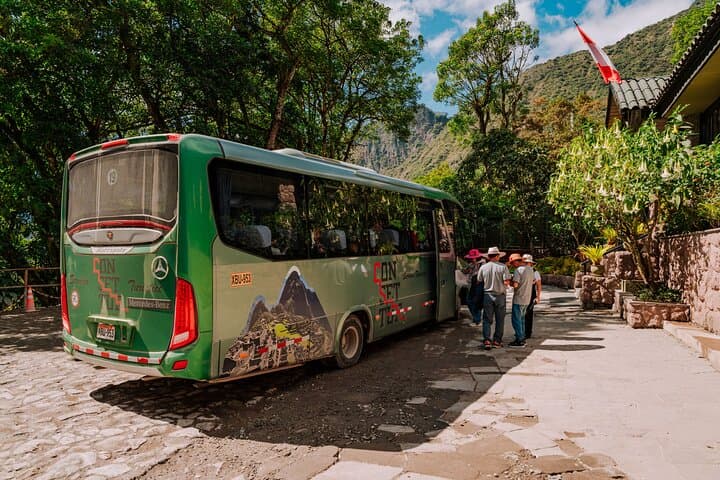
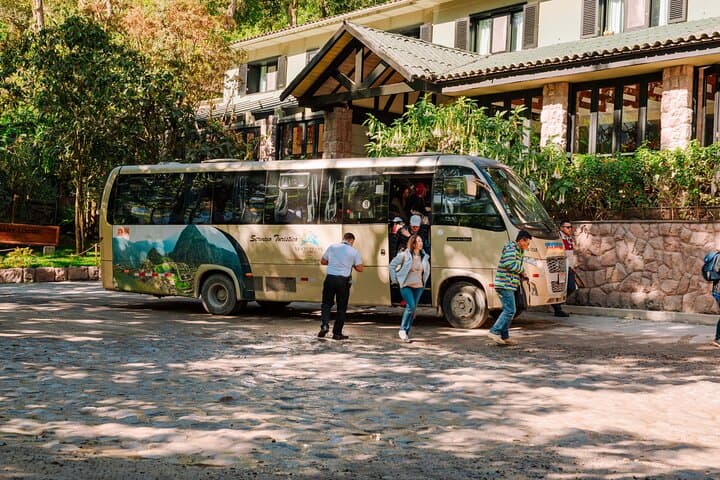
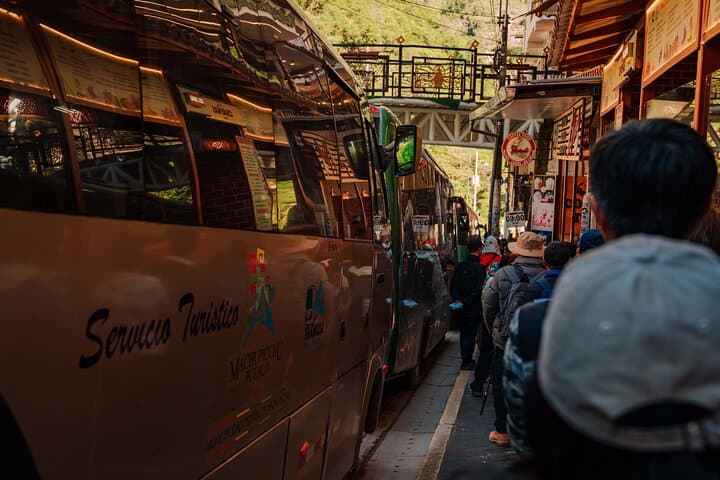
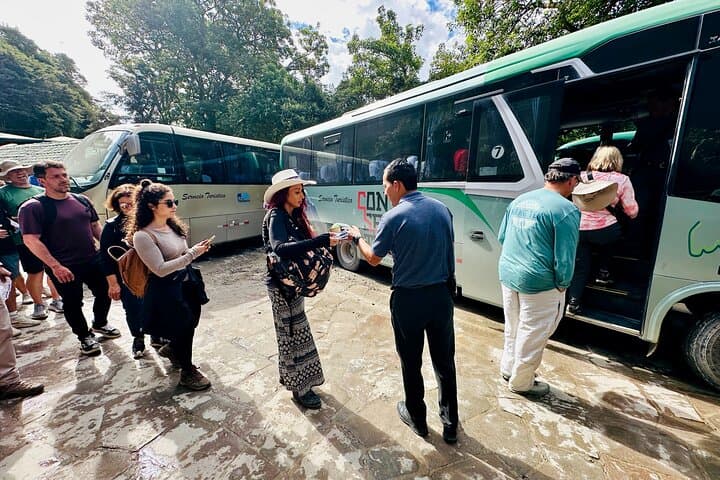
A thin mist curls off the Urubamba watershed as the line of green-and-yellow Consettur buses idles against the steep switchbacks that climb from Aguas Calientes to the ruins of Machu Picchu. You step aboard for a 25-minute ascent; the valley folds open below and the cloud-shrouded peaks press close, as if the mountain is testing whether you belong here.
A thin mist curls off the Urubamba watershed as the line of green-and-yellow Consettur buses idles against the steep switchbacks that climb from Aguas Calientes to the ruins of Machu Picchu. You step aboard for a 25-minute ascent; the valley folds open below and the cloud-shrouded peaks press close, as if the mountain is testing whether you belong here.
The route follows a road cut into volcanic and sedimentary slopes shaped by millennia of tectonic lift—this is the eastern edge of the Andes where Inca ingenuity met raw geology. Machu Picchu itself sits on a granite ridge carved by rivers and time, a cultural high point built in the 15th century and later abandoned; the site remains one of Peru’s defining archaeological landscapes.
Local culture in Aguas Calientes is practical and transient: a town conditioned by train schedules, porters, and day-visitors, where Quechua and Spanish meet in markets selling coca leaves and alpaca scarves. The official shuttle gives visitors a reliable, regulated way to reach the park gate without adding wear to footpaths or local roads.
Practical guidance: bring your passport—the ticket requires a name match—and arrive early if you want sunrise light; buses run every 15 minutes but queues build quickly. Expect a short uphill wait to board, and a seated, eco-certified ride with window views. Bags are limited by park rules; plan your visit length and return time, and leave extra headroom for delays from high-season crowds or weather. Hydrate at low altitude; the climb and thin air can make steps feel steeper than on paper.