THE ADVENTURE COLLECTIVE® · Independent discovery and booking for outdoor travel

A full-day, private guided visit that takes you from Cusco by train and bus to Machu Picchu’s stone plazas and terraces. Expect early starts, altitude adjustments, and a mix of engineered Inca architecture and cloud-forest scenery.
A full-day, private guided visit that takes you from Cusco by train and bus to Machu Picchu’s stone plazas and terraces. Expect early starts, altitude adjustments, and a mix of engineered Inca architecture and cloud-forest scenery.
You step off the bus into a thin, cool air and the stonework appears as if a city has been carved from the mountain itself. Morning mist peels away from terraces and ramps, revealing the citadel poised at 2,430 m above sea level—an architectural and ecological hinge between Andean peaks and the upper Amazon basin.
Verified experiences and guided adventures in the surrounding area.
Operated by Peru4Fun Servicios Turísticos EIRL · Aguas Calientes (Machupicchu Pueblo), Cusco
You step off the bus into a thin, cool air and the stonework appears as if a city has been carved from the mountain itself. Morning mist peels away from terraces and ramps, revealing the citadel poised at 2,430 m above sea level—an architectural and ecological hinge between Andean peaks and the upper Amazon basin.
The site was occupied by the Inca in the 15th century, likely under Pachacuti, and shows engineering adapted to steep terrain: dry-stone walls, agricultural terraces, and drainage systems that resist erosion. Geologically, Machu Picchu sits on fractured granite and volcanic intrusions shaped by uplift and persistent rain; the result is a mosaic of cliffs, cloud forest, and steep rivers that seem to push the landscape outward.
Culturally, the citadel reads like a classroom in Inca social organization—religious plazas, royal quarters, and agricultural sectors arranged to integrate cosmology and utility. Locals in the surrounding Cusco region maintain Quechua traditions and hospitality, and small Aguas Calientes (Machupicchu Pueblo) offers hot springs and markets that feel practical and lively rather than tourist-only.
Practical guidance: expect a long day (about 12–14 hours from Cusco), early departures, a train ride followed by a bus ascent, and a fair amount of walking on uneven stone. Acclimatize in Cusco for 24–48 hours if possible, bring layered clothing for rapid temperature shifts, a rain shell during the wet season, and ample water and snacks. The guided format usually includes priority admission and hotel transfers, so logistics are straightforward; still, move at your own pace on-site and respect site boundaries to protect fragile archaeology.
moderate.
12–14 hours.
Reasonable fitness for walking on uneven, sometimes steep stone paths at altitude; ability to stand and walk for several hours.
Door-to-door the day trip runs roughly 12–14 hours, including hotel pickup, train and bus transfers, time at Machu Picchu, and return to Cusco.
The itinerary is suitable for most fitness levels, but you should be able to walk uneven stone steps and stand for several hours; acclimatization reduces discomfort.
This guided private package typically includes train, bus, entrance fees and hotel transfers—confirm details with the operator and carry identification.
The dry season (June–August) offers the clearest views and safest walking conditions, while the shoulder months (Apr–May, Sept–Nov) balance fewer crowds with decent weather.
Built in the 15th century and likely abandoned during the Spanish conquest, Machu Picchu was brought to wider attention by Hiram Bingham in 1911 and remains an emblem of Inca engineering.
Visitor numbers are regulated and guided routes are enforced to protect fragile stonework and vegetation—stick to marked paths and minimize waste.
Peru4Fun Servicios Turísticos EIRL operates guided outdoor trips and adventures with an emphasis on safety, stewardship, and memorable experiences.

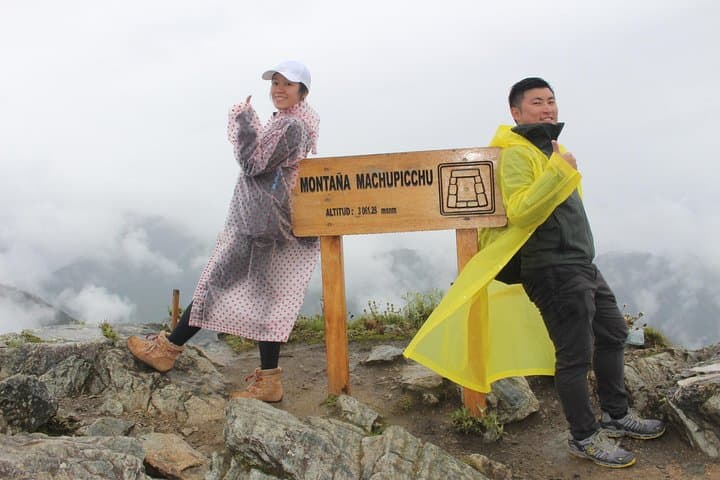


You step off the bus into a thin, cool air and the stonework appears as if a city has been carved from the mountain itself. Morning mist peels away from terraces and ramps, revealing the citadel poised at 2,430 m above sea level—an architectural and ecological hinge between Andean peaks and the upper Amazon basin.
You step off the bus into a thin, cool air and the stonework appears as if a city has been carved from the mountain itself. Morning mist peels away from terraces and ramps, revealing the citadel poised at 2,430 m above sea level—an architectural and ecological hinge between Andean peaks and the upper Amazon basin.
The site was occupied by the Inca in the 15th century, likely under Pachacuti, and shows engineering adapted to steep terrain: dry-stone walls, agricultural terraces, and drainage systems that resist erosion. Geologically, Machu Picchu sits on fractured granite and volcanic intrusions shaped by uplift and persistent rain; the result is a mosaic of cliffs, cloud forest, and steep rivers that seem to push the landscape outward.
Culturally, the citadel reads like a classroom in Inca social organization—religious plazas, royal quarters, and agricultural sectors arranged to integrate cosmology and utility. Locals in the surrounding Cusco region maintain Quechua traditions and hospitality, and small Aguas Calientes (Machupicchu Pueblo) offers hot springs and markets that feel practical and lively rather than tourist-only.
Practical guidance: expect a long day (about 12–14 hours from Cusco), early departures, a train ride followed by a bus ascent, and a fair amount of walking on uneven stone. Acclimatize in Cusco for 24–48 hours if possible, bring layered clothing for rapid temperature shifts, a rain shell during the wet season, and ample water and snacks. The guided format usually includes priority admission and hotel transfers, so logistics are straightforward; still, move at your own pace on-site and respect site boundaries to protect fragile archaeology.