THE ADVENTURE COLLECTIVE® · Independent discovery and booking for outdoor travel

Experience Machu Picchu by rail with a paced two-day itinerary through the Sacred Valley. Scenic train travel, an expert bilingual guide, and skip-the-line entry make this a practical way to visit the citadel without the logistics stress.
Experience Machu Picchu by rail with a paced two-day itinerary through the Sacred Valley. Scenic train travel, an expert bilingual guide, and skip-the-line entry make this a practical way to visit the citadel without the logistics stress.
The first light crests the Andean spine as the tourist train hums away from Ollantaytambo, river canyons shrinking into ribbons of silver below. You settle into the rhythm of the tracks — a slow reveal of terraces and snow-tipped peaks — heading toward Aguas Calientes and the ancient city above.
Verified experiences and guided adventures in the surrounding area.
Operated by Cosmo Expeditions · Aguas Calientes, Cusco
The first light crests the Andean spine as the tourist train hums away from Ollantaytambo, river canyons shrinking into ribbons of silver below. You settle into the rhythm of the tracks — a slow reveal of terraces and snow-tipped peaks — heading toward Aguas Calientes and the ancient city above.
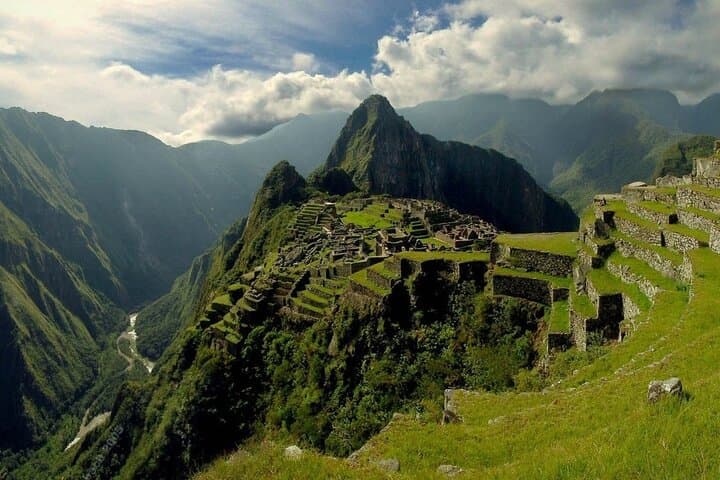
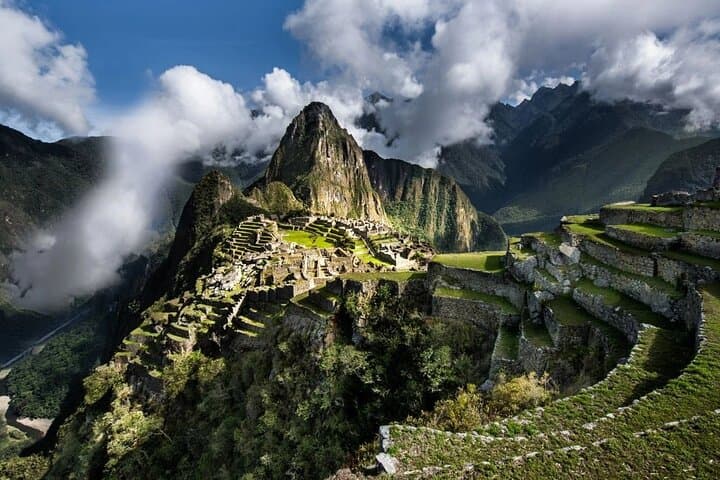
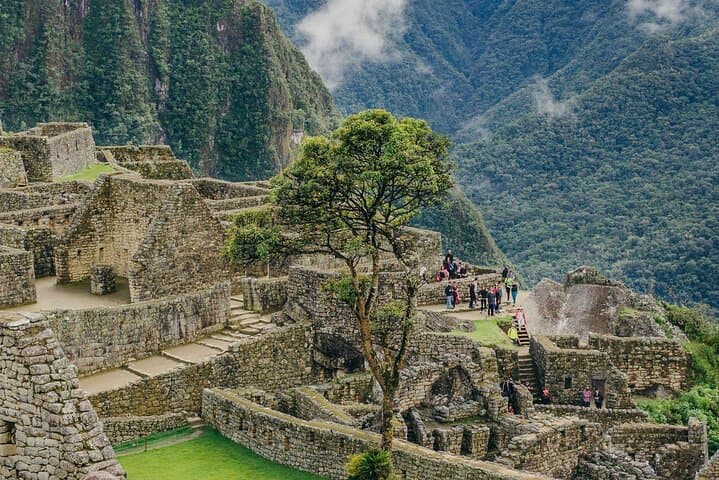
Machu Picchu sits at roughly 2,430 m on a steep limestone ridge carved by the Urubamba River. Built in the 15th century, the citadel’s stonework and agricultural terraces reflect Incan engineering adapted to seismic, mountainous terrain. The Sacred Valley towns you pass — Cusco, Ollantaytambo, Aguas Calientes — each hold living Quechua traditions, marketplaces of woven textiles, and cuisine shaped by high-altitude crops like quinoa and potatoes.
On day one expect a two-hour drive from Cusco to Ollantaytambo followed by a roughly 1–1.5 hour scenic train to Aguas Calientes; day two begins early with a 25–30 minute bus climb to the Machu Picchu entrance (first buses start around 05:30). The guided citadel visit runs about two hours, with optional climbs to Huayna Picchu or Machu Picchu Mountain available by separate ticket. Trail surfaces are stone, stepped, and often wet or slick after rain.
Practical guidance: acclimatize in Cusco for 24–48 hours if possible, pack breathable layers and good traction footwear, and carry water and sun protection. Move deliberately through the ruins — the mountain keeps its own pace, daring you to match it.
moderate.
2 days.
Moderate fitness recommended — must handle several hours of walking on uneven surfaces and some stair-climbing at altitude.
The scenic train leg typically takes about 1 to 1.5 hours, depending on the service (PeruRail or Inca Rail) and stops.
Yes — Cusco is around 3,400 m; plan 24–48 hours for rest and light activity to reduce altitude sickness risk before traveling down to Aguas Calientes.
No — summit tickets are limited and usually sell out; purchase them in advance if you plan to climb.
The train and some transfers are accessible, but the citadel has steep, uneven stone steps and limited accessibility; discuss mobility needs with the operator beforehand.
Machu Picchu was constructed by the Inca in the mid-1400s, likely as a royal estate and religious site; its dry-stone construction resists Andean seismic forces.
Visitor impacts are managed through timed entries and limited summit permits; stick to marked routes and avoid feeding wildlife to protect fragile ecosystems.
Cosmo Expeditions operates guided outdoor trips and adventures with an emphasis on safety, stewardship, and memorable experiences.
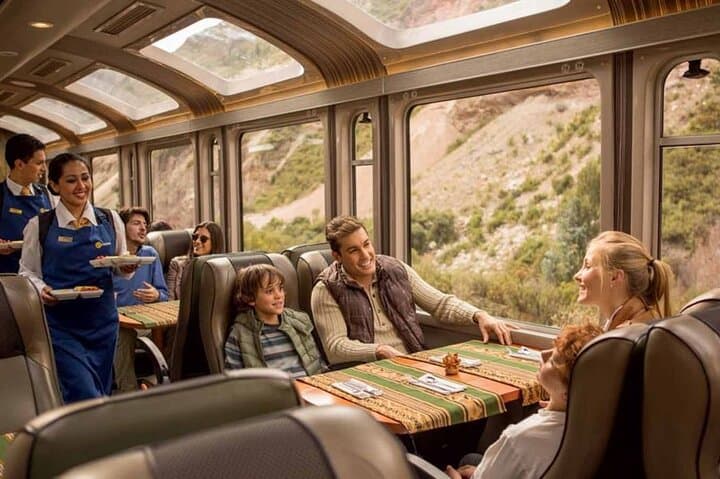
The first light crests the Andean spine as the tourist train hums away from Ollantaytambo, river canyons shrinking into ribbons of silver below. You settle into the rhythm of the tracks — a slow reveal of terraces and snow-tipped peaks — heading toward Aguas Calientes and the ancient city above.
The first light crests the Andean spine as the tourist train hums away from Ollantaytambo, river canyons shrinking into ribbons of silver below. You settle into the rhythm of the tracks — a slow reveal of terraces and snow-tipped peaks — heading toward Aguas Calientes and the ancient city above.
Machu Picchu sits at roughly 2,430 m on a steep limestone ridge carved by the Urubamba River. Built in the 15th century, the citadel’s stonework and agricultural terraces reflect Incan engineering adapted to seismic, mountainous terrain. The Sacred Valley towns you pass — Cusco, Ollantaytambo, Aguas Calientes — each hold living Quechua traditions, marketplaces of woven textiles, and cuisine shaped by high-altitude crops like quinoa and potatoes.
On day one expect a two-hour drive from Cusco to Ollantaytambo followed by a roughly 1–1.5 hour scenic train to Aguas Calientes; day two begins early with a 25–30 minute bus climb to the Machu Picchu entrance (first buses start around 05:30). The guided citadel visit runs about two hours, with optional climbs to Huayna Picchu or Machu Picchu Mountain available by separate ticket. Trail surfaces are stone, stepped, and often wet or slick after rain.
Practical guidance: acclimatize in Cusco for 24–48 hours if possible, pack breathable layers and good traction footwear, and carry water and sun protection. Move deliberately through the ruins — the mountain keeps its own pace, daring you to match it.