THE ADVENTURE COLLECTIVE® · Independent discovery and booking for outdoor travel

A 6‑day ascent of Kilimanjaro via the scenic Machame route—rainforest to alpine desert, a summit push at dawn, and close teamwork with guides and porters. This is a demanding but non-technical climb that rewards preparation and steady pacing.
A 6‑day ascent of Kilimanjaro via the scenic Machame route—rainforest to alpine desert, a summit push at dawn, and close teamwork with guides and porters. This is a demanding but non-technical climb that rewards preparation and steady pacing.
Dawn breaks over the rainforest and the mountain looms like a weathered god, its summit shrouded in cloud and hard ice. On the first morning of the Machame 6‑day climb, porters shoulder bright packs and guides check rope and gaiters as the trail slips into moss and giant lobelia. The path climbs quickly from the canopy into heathland; tree trunks drip and a river dares you to focus on footing rather than the view.
Verified experiences and guided adventures in the surrounding area.
Operated by Ndanda Tours Limited · Moshi, Kilimanjaro Region
Dawn breaks over the rainforest and the mountain looms like a weathered god, its summit shrouded in cloud and hard ice. On the first morning of the Machame 6‑day climb, porters shoulder bright packs and guides check rope and gaiters as the trail slips into moss and giant lobelia. The path climbs quickly from the canopy into heathland; tree trunks drip and a river dares you to focus on footing rather than the view.
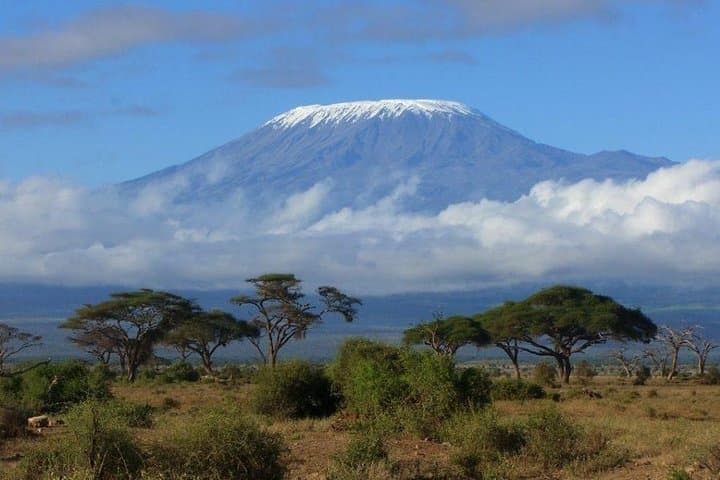
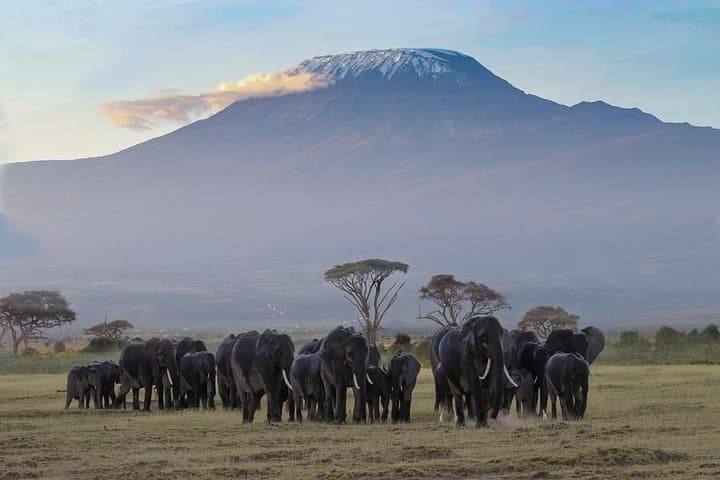
The Machame route threads the southern flank of Kilimanjaro, the tallest freestanding mountain on Earth. Kilimanjaro is a complex volcanic massif composed of the extinct Shira and Mawenzi cones and the still-dormant Kibo, whose Uhuru Peak (5,895 m) is the goal. The mountain’s geology records ancient eruptions and glacier retreat—white ice that once capped the summit is now a shrinking relic, visible in the ragged glaciers near the crater.
Local culture threads through the climb. Moshi, the trailhead hub, is part of Chagga country—farmsteads stacked with banana terraces and homes where coffee drying racks scent the air. Guides and porters are often from nearby villages; their knowledge of the mountain is practical and deep, shaped by generations of work on these slopes.
The route itself balances scenery and acclimatization. Over six days and five nights you'll traverse rainforest, heather and moorland, the Shira Plateau’s wide, wind-bent vistas, the dramatic Barranco Wall, and the sparse alpine desert below Barafu Camp. Expect a total distance around 60–70 km with day-to-day elevation changes that build toward the summit push: a steep pre-dawn ascent from Barafu to Uhuru and then a long descent to Mweka.
Practical edge: altitude is the real challenge. Guides emphasize slow pace and active acclimatization—shorter daily distances, plenty of fluids, and attention to symptoms. Pack layers for wide temperature swings; a warm down jacket and a reliable sleeping bag are non-negotiable. Trekking poles, well-broken-in boots, and daylight navigation via guides make the route manageable for fit hikers who respect the mountain.
Logistics are straightforward: the program includes camping, meals, and experienced crew; pick-up from Moshi or Kilimanjaro Airport is common. Book in Moshi a day early to sort permits and kit. On summit night plan for a 10–14 hour push, starting around midnight to hit Uhuru at sunrise. If you want a practical goal: train with long hikes and elevation gain, and prioritize aerobic fitness plus uphill time with a loaded pack.
The Machame route rewards patience. When the summit light comes—cold, thin air and a sky sharpened to an impossible clarity—there’s a clean, direct sense of achievement. The mountain doesn’t hand the view over easily; it asks you for preparation, respect, and steady feet.
challenging.
6 days.
Good aerobic fitness and experience with multi‑day hiking; capable of 6–10 hour days with steady uphill sections.
Machame is steeper and more scenic than the Marangu route but offers better acclimatization than shorter itineraries; it’s non‑technical but physically demanding.
You don’t need technical mountaineering experience, but prior multi‑day hiking and strong cardiovascular fitness are highly recommended.
The dry seasons—January to mid‑March and June to October—offer more stable weather and clearer summit windows.
There’s a significant risk above 3,000 m; the guide team will monitor symptoms, enforce slow ascents, and recommend descent if necessary.
Standard packages include park fees and camping permits, but confirm inclusions with your operator before booking.
Yes—Moshi has reputable shops for sleeping bags, down jackets, and trekking poles; inspect fit and insulation quality before the climb.
Kilimanjaro’s first recorded ascent of the Kibo summit was in 1889; the mountain has long been a landmark for local Chagga communities and early European explorers.
Glaciers on Kibo are retreating rapidly—minimize waste, use registered guides who follow park rules, and support fair wages for porters.
Ndanda Tours Limited operates guided outdoor trips and adventures with an emphasis on safety, stewardship, and memorable experiences.
Dawn breaks over the rainforest and the mountain looms like a weathered god, its summit shrouded in cloud and hard ice. On the first morning of the Machame 6‑day climb, porters shoulder bright packs and guides check rope and gaiters as the trail slips into moss and giant lobelia. The path climbs quickly from the canopy into heathland; tree trunks drip and a river dares you to focus on footing rather than the view.
Dawn breaks over the rainforest and the mountain looms like a weathered god, its summit shrouded in cloud and hard ice. On the first morning of the Machame 6‑day climb, porters shoulder bright packs and guides check rope and gaiters as the trail slips into moss and giant lobelia. The path climbs quickly from the canopy into heathland; tree trunks drip and a river dares you to focus on footing rather than the view.
The Machame route threads the southern flank of Kilimanjaro, the tallest freestanding mountain on Earth. Kilimanjaro is a complex volcanic massif composed of the extinct Shira and Mawenzi cones and the still-dormant Kibo, whose Uhuru Peak (5,895 m) is the goal. The mountain’s geology records ancient eruptions and glacier retreat—white ice that once capped the summit is now a shrinking relic, visible in the ragged glaciers near the crater.
Local culture threads through the climb. Moshi, the trailhead hub, is part of Chagga country—farmsteads stacked with banana terraces and homes where coffee drying racks scent the air. Guides and porters are often from nearby villages; their knowledge of the mountain is practical and deep, shaped by generations of work on these slopes.
The route itself balances scenery and acclimatization. Over six days and five nights you'll traverse rainforest, heather and moorland, the Shira Plateau’s wide, wind-bent vistas, the dramatic Barranco Wall, and the sparse alpine desert below Barafu Camp. Expect a total distance around 60–70 km with day-to-day elevation changes that build toward the summit push: a steep pre-dawn ascent from Barafu to Uhuru and then a long descent to Mweka.
Practical edge: altitude is the real challenge. Guides emphasize slow pace and active acclimatization—shorter daily distances, plenty of fluids, and attention to symptoms. Pack layers for wide temperature swings; a warm down jacket and a reliable sleeping bag are non-negotiable. Trekking poles, well-broken-in boots, and daylight navigation via guides make the route manageable for fit hikers who respect the mountain.
Logistics are straightforward: the program includes camping, meals, and experienced crew; pick-up from Moshi or Kilimanjaro Airport is common. Book in Moshi a day early to sort permits and kit. On summit night plan for a 10–14 hour push, starting around midnight to hit Uhuru at sunrise. If you want a practical goal: train with long hikes and elevation gain, and prioritize aerobic fitness plus uphill time with a loaded pack.
The Machame route rewards patience. When the summit light comes—cold, thin air and a sky sharpened to an impossible clarity—there’s a clean, direct sense of achievement. The mountain doesn’t hand the view over easily; it asks you for preparation, respect, and steady feet.