THE ADVENTURE COLLECTIVE® · Independent discovery and booking for outdoor travel

Early mornings on Mabamba Bay reward patient travelers: narrow canoes, papyrus corridors and the chance to watch the prehistoric shoebill hunt. This one-day trip from Kampala is short on distance but rich in wildlife, culture and close-up birding.
Early mornings on Mabamba Bay reward patient travelers: narrow canoes, papyrus corridors and the chance to watch the prehistoric shoebill hunt. This one-day trip from Kampala is short on distance but rich in wildlife, culture and close-up birding.
Dawn slips over a low ribbon of water; your canoe parts papyrus like a quiet escort. The swamp smells of wet earth and reeds, and every surface hums—dragonflies quarter the air, white-backed kingfishers flash, and somewhere the shoebill holds still, like a prehistoric shadow watching the channel.
Verified experiences and guided adventures in the surrounding area.
Operated by Silverbird Tours Agency · Mabamba, Wakiso District
Dawn slips over a low ribbon of water; your canoe parts papyrus like a quiet escort. The swamp smells of wet earth and reeds, and every surface hums—dragonflies quarter the air, white-backed kingfishers flash, and somewhere the shoebill holds still, like a prehistoric shadow watching the channel.
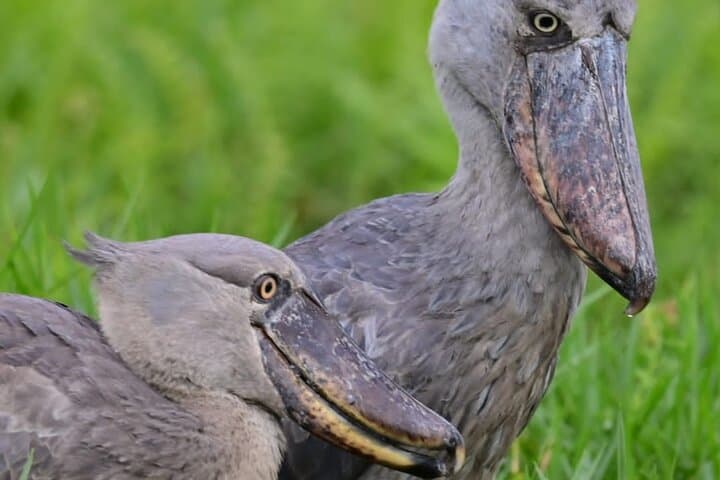
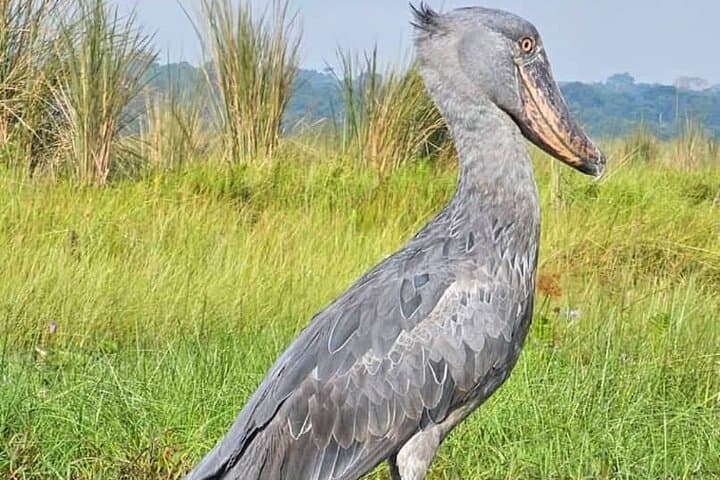
Mabamba sits on the western fringe of Lake Victoria, a peat-and-papyrus wetland shaped by seasonal lake levels and centuries of fishing and reed-harvesting by local communities. Geologically it’s shallow marsh and sediment fans; culturally it’s a working landscape where boatbuilders and bird guides keep knowledge alive. The shoebill—large, grey, slow to blink—has drawn naturalists for decades and turned this quiet bay into Uganda’s premier day-trip for serious birders.
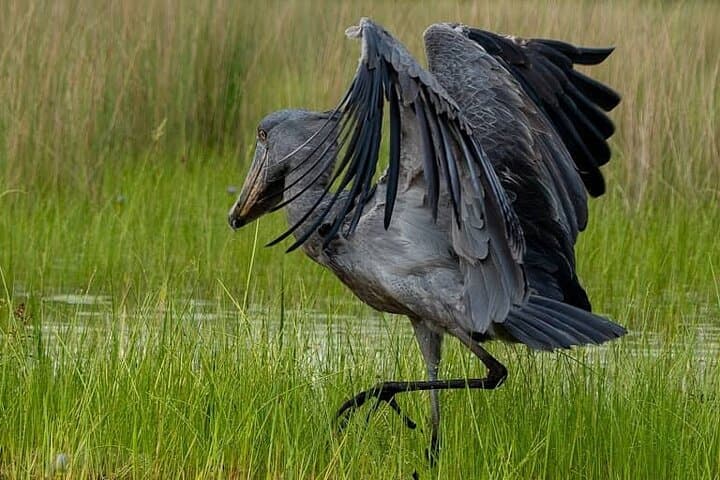
Expect a 60–90 minute drive from Kampala, an early-morning put-in, and roughly two hours of canoeing through narrow channels. Guides coax you to the water edge, and the canoe becomes a small, moving hide; the shoebill will stalk fish with patient, spooned beak while papyrus blades bend and whisper around you.
Practical notes: go early for low light and active birds, wear neutral clothing and a brimmed hat, bring binoculars and a camera with a zoom, and use insect repellent—the swamp is alive with bites. Balance matters; keep weight centered in the canoe and follow your guide’s instructions. Support local guides with a tip and avoid loud noises—respect here directly increases sighting odds. With basic preparation, Mabamba delivers close, unforgettable encounters with one of Africa’s most singular birds.
easy.
6–10 hours.
Suitable for most fitness levels; requires short periods of seated paddling and stable balance in a canoe.
Sightings are good but never guaranteed; early departures and quiet behavior dramatically increase odds—most groups see one on a typical morning trip.
The guided canoe excursion is typically about two hours, running through narrow papyrus channels where birds concentrate.
Yes—participants remain seated in stable dugout canoes; guides provide instructions and life vests when required, but non-swimmers should follow guide directions closely.
Avoid flash photography around birds; use a long lens and steady the canoe for sharper shots without disturbing wildlife.
Mabamba’s reed swamps have supported fishing, papyrus harvesting and local boat-building for generations; conservation interest grew with increased birding tourism in the late 20th century.
The wetland faces pressure from expanding agriculture and fluctuating Lake Victoria levels; responsible tours minimize disturbance, stick to channels and support local guide livelihoods to help protect habitat.
Silverbird Tours Agency operates guided outdoor trips and adventures with an emphasis on safety, stewardship, and memorable experiences.
Dawn slips over a low ribbon of water; your canoe parts papyrus like a quiet escort. The swamp smells of wet earth and reeds, and every surface hums—dragonflies quarter the air, white-backed kingfishers flash, and somewhere the shoebill holds still, like a prehistoric shadow watching the channel.
Dawn slips over a low ribbon of water; your canoe parts papyrus like a quiet escort. The swamp smells of wet earth and reeds, and every surface hums—dragonflies quarter the air, white-backed kingfishers flash, and somewhere the shoebill holds still, like a prehistoric shadow watching the channel.
Mabamba sits on the western fringe of Lake Victoria, a peat-and-papyrus wetland shaped by seasonal lake levels and centuries of fishing and reed-harvesting by local communities. Geologically it’s shallow marsh and sediment fans; culturally it’s a working landscape where boatbuilders and bird guides keep knowledge alive. The shoebill—large, grey, slow to blink—has drawn naturalists for decades and turned this quiet bay into Uganda’s premier day-trip for serious birders.
Expect a 60–90 minute drive from Kampala, an early-morning put-in, and roughly two hours of canoeing through narrow channels. Guides coax you to the water edge, and the canoe becomes a small, moving hide; the shoebill will stalk fish with patient, spooned beak while papyrus blades bend and whisper around you.
Practical notes: go early for low light and active birds, wear neutral clothing and a brimmed hat, bring binoculars and a camera with a zoom, and use insect repellent—the swamp is alive with bites. Balance matters; keep weight centered in the canoe and follow your guide’s instructions. Support local guides with a tip and avoid loud noises—respect here directly increases sighting odds. With basic preparation, Mabamba delivers close, unforgettable encounters with one of Africa’s most singular birds.