THE ADVENTURE COLLECTIVE® · Independent discovery and booking for outdoor travel

Glide through papyrus channels on a half-day search for the shoebill at Mabamba Swamp. This guided, eco-focused canoe trip from Entebbe offers close encounters with one of Africa’s rarest birds and supports local conservation.
Glide through papyrus channels on a half-day search for the shoebill at Mabamba Swamp. This guided, eco-focused canoe trip from Entebbe offers close encounters with one of Africa’s rarest birds and supports local conservation.
You push off in a narrow wooden canoe and the swamp closes around you—walls of papyrus rustling like a crowd, water dark and slow under a sky that leans toward Lake Victoria.
Verified experiences and guided adventures in the surrounding area.
Operated by Outback Adventure Safaris · Entebbe, Wakiso District
You push off in a narrow wooden canoe and the swamp closes around you—walls of papyrus rustling like a crowd, water dark and slow under a sky that leans toward Lake Victoria.
Mabamba is lowland wetland: flat, peat-rich ground fed by the lake and seasonal streams. The shoebill (Balaeniceps rex) moves through that world with an almost fossilized composure; guides read the papyrus the way fishermen read tides. The area's human story is practical—small fishing villages and market gardens that have long relied on the swamp’s rhythms—while the landscape itself is recent in geological terms, shaped by lake-level shifts and sedimentation.
Culturally, a trip here is as much about people as birds. Local guides combine long experience on the channels with conservation-minded practices; the income from guided visits and small boat fees is an important incentive to protect habitat.
Practically: the tour is a half-day (about 4 hours) from Entebbe, mostly seated in calm, shallow channels with short, optional walks on reed margins. Expect plenty of still-water photography, patient glassing, and close papyrus-lined views—bring a telephoto lens (400mm+ preferred), steady binoculars, and a light tripod or monopod.
Timing matters: early morning light and cooler air increase shoebill activity and reduce insect pressure. Wear quick-dry layers and waterproof shoes; insect repellent and sun protection are critical. Respect quiet rules—shoebills are skittish—and follow your guide’s cue for approach distance.
This is a low-impact, high-reward wildlife outing: simple logistics, intense focus, and the real chance to see one of Africa’s most singular birds.
easy.
3–4 hours.
Suitable for people in average health; trip involves sitting in a canoe with one or two short, flat walks along reed margins.
Most operators run a 3–4 hour schedule including transfer time from central Entebbe; boat time on the swamp is usually 1–2 hours.
Mabamba is one of the best sites in East Africa; experienced guides significantly improve your chances, but sightings are never guaranteed—these are wild, mobile birds.
Yes—this is a low-impact, seated boat trip with minimal walking; however, those with limited mobility should check canoe access and discuss pickup locations with the operator.
Visitors to Uganda should check current entry visa rules and recommended vaccinations (e.g., yellow fever vaccination is often required); consult official sources before travel.
Mabamba sits on Lake Victoria’s shoreline; local communities have fished and harvested papyrus for generations, shaping a working wetland landscape that supports both people and birds.
The wetland faces pressure from drainage, agriculture and pollution; guided tourism provides direct income to communities and incentives to protect papyrus habitat.
Outback Adventure Safaris operates guided outdoor trips and adventures with an emphasis on safety, stewardship, and memorable experiences.
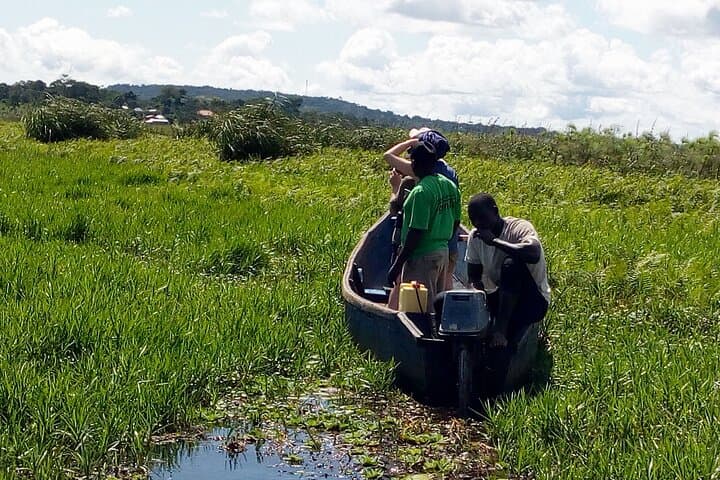
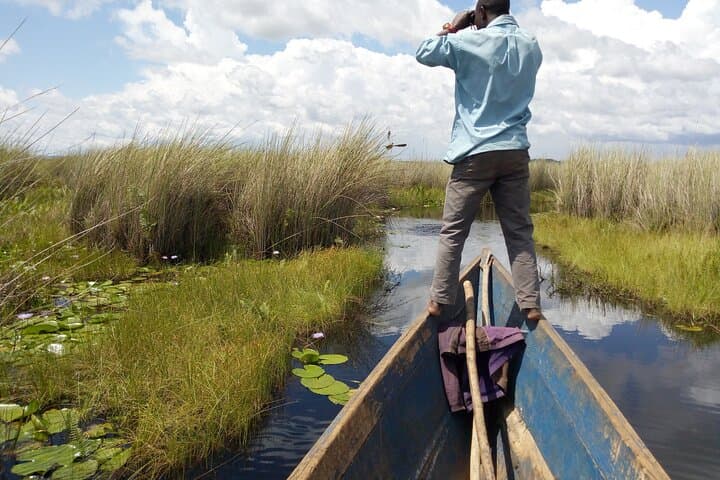
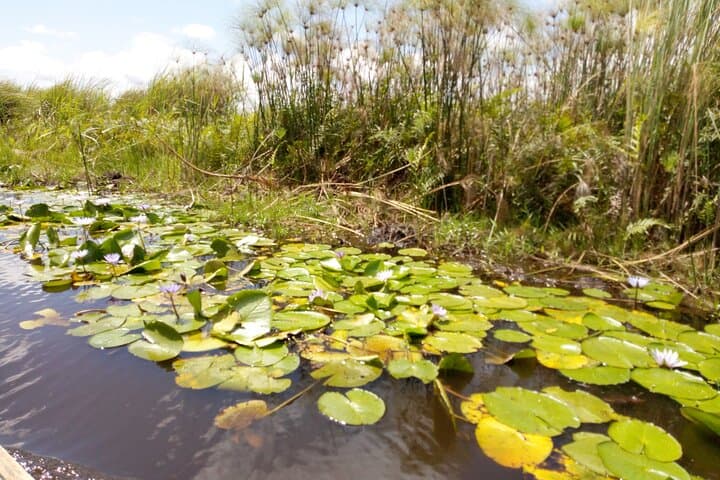
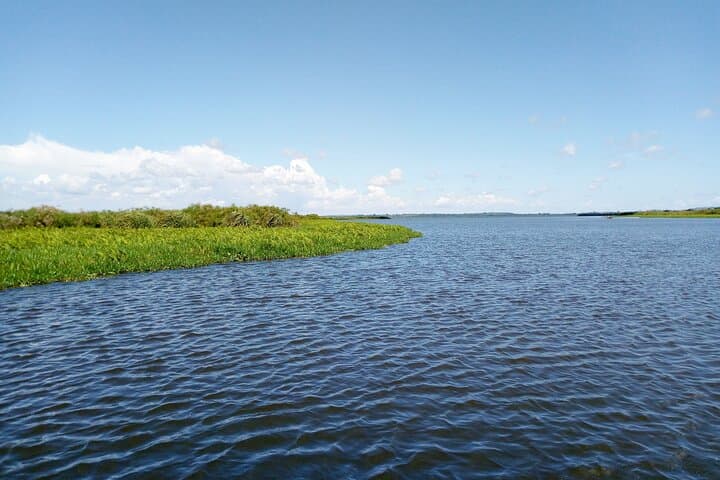
You push off in a narrow wooden canoe and the swamp closes around you—walls of papyrus rustling like a crowd, water dark and slow under a sky that leans toward Lake Victoria.
You push off in a narrow wooden canoe and the swamp closes around you—walls of papyrus rustling like a crowd, water dark and slow under a sky that leans toward Lake Victoria.
Mabamba is lowland wetland: flat, peat-rich ground fed by the lake and seasonal streams. The shoebill (Balaeniceps rex) moves through that world with an almost fossilized composure; guides read the papyrus the way fishermen read tides. The area's human story is practical—small fishing villages and market gardens that have long relied on the swamp’s rhythms—while the landscape itself is recent in geological terms, shaped by lake-level shifts and sedimentation.
Culturally, a trip here is as much about people as birds. Local guides combine long experience on the channels with conservation-minded practices; the income from guided visits and small boat fees is an important incentive to protect habitat.
Practically: the tour is a half-day (about 4 hours) from Entebbe, mostly seated in calm, shallow channels with short, optional walks on reed margins. Expect plenty of still-water photography, patient glassing, and close papyrus-lined views—bring a telephoto lens (400mm+ preferred), steady binoculars, and a light tripod or monopod.
Timing matters: early morning light and cooler air increase shoebill activity and reduce insect pressure. Wear quick-dry layers and waterproof shoes; insect repellent and sun protection are critical. Respect quiet rules—shoebills are skittish—and follow your guide’s cue for approach distance.
This is a low-impact, high-reward wildlife outing: simple logistics, intense focus, and the real chance to see one of Africa’s most singular birds.