THE ADVENTURE COLLECTIVE® · Independent discovery and booking for outdoor travel

Swap city clamor for dune silence on a two-day luxury camp in the Thar Desert. Expect a camel-led sunset, traditional Rajasthani performances, and a night under a vast, starlit sky in Swiss-style tents.
Swap city clamor for dune silence on a two-day luxury camp in the Thar Desert. Expect a camel-led sunset, traditional Rajasthani performances, and a night under a vast, starlit sky in Swiss-style tents.
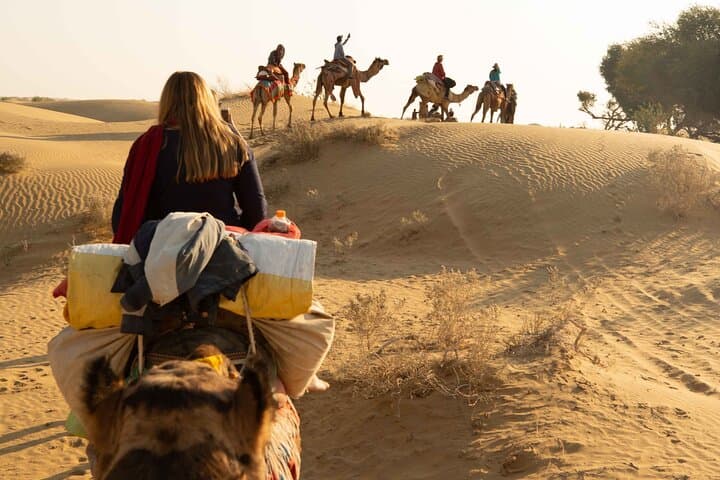
A late-afternoon sun drapes the dunes in molten gold as a column of camels threads toward a low-lying camp. The wind sculpts the sand with patient fingers; each ridge shifts silently, daring you to read its next move. Guests arrive from Jaisalmer, trade city heat for a cooler, expansive sky and the steady rhythm of camel hooves.
Verified experiences and guided adventures in the surrounding area.
Operated by Trotters Tours & Travels Camel Safari · Jaisalmer, Rajasthan
A late-afternoon sun drapes the dunes in molten gold as a column of camels threads toward a low-lying camp. The wind sculpts the sand with patient fingers; each ridge shifts silently, daring you to read its next move. Guests arrive from Jaisalmer, trade city heat for a cooler, expansive sky and the steady rhythm of camel hooves.
The Thar is young geology — wind-blown sand over an ancient, folded crust — and history here is broad-stroked: caravan routes that once linked Rajasthan to Central Asia, forts built from the same ochre stone as the surrounding plains. The cultural program that evening—folk songs, Kathputli puppetry, and local dances—reflects a living tradition shaped by scarcity and celebration.
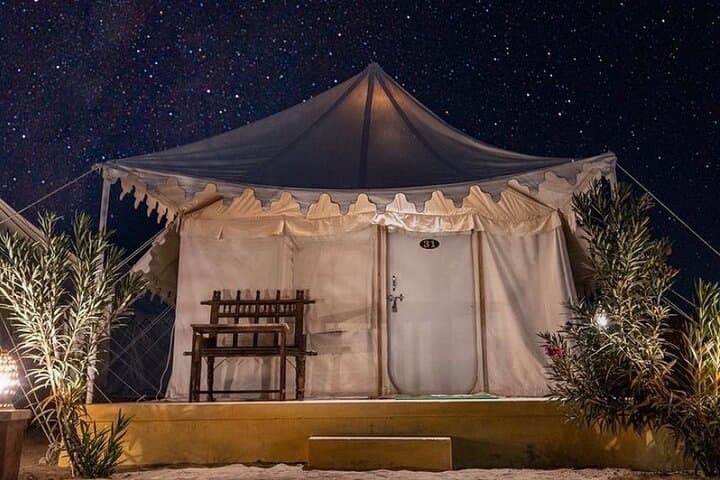
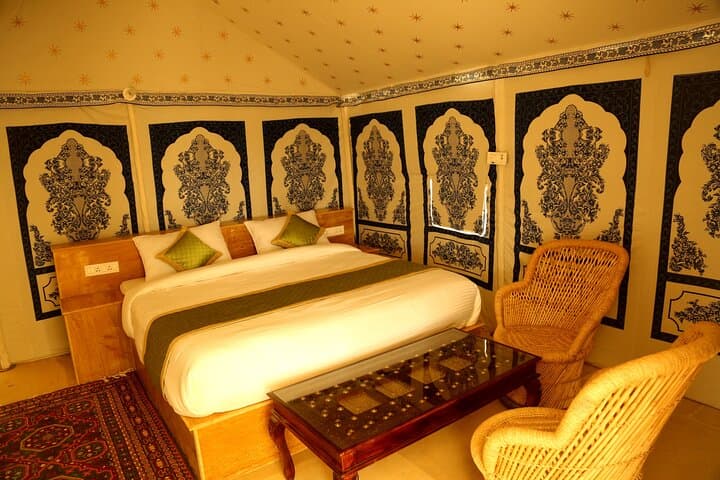
Practical notes sit beside the romance. Camps use Swiss-style tents with double beds and basic private bathrooms; meals are vegetarian, freshly cooked, and served buffet-style around a communal fire. The camel ride to the dunes is gentle but uneven; people with serious back or heart conditions are advised against participation. The desert night is its own attraction — a vault of stars unfiltered by light pollution, and a breeze that keeps the air moving.
Plan for strong daytime sun and cool nights: lightweight layers, sun protection, and a headlamp suffice for most travelers. Expect a relaxed pace—sunset and stargazing set the schedule rather than strict itineraries. For travelers seeking accessible immersion in Thar life without roughing it, the luxury-camp option balances comfort with a direct, honest encounter with desert landscape and culture.
easy.
2 days (overnight).
Suitable for travelers in average physical condition; camel rides are gentle but involve mounting and uneven footing.
The package includes private transport from the pickup point, camel ride, cultural program, dinner, overnight stay in a Swiss-style tent with basic private bathroom, and breakfast.
Most guests including children and seniors can do the short camel ride, but those with back, neck, or heart conditions should avoid it or consult the operator first.
October to March offers milder days and cold nights, making it the most comfortable season for camping and outdoor programs.
The camp serves a pure-vegetarian buffet; operators can sometimes accommodate mild dietary requests if informed at booking.
This stretch of the Thar was crossed by salt and spice caravans; nearby forts like Khabha reflect strategic trade routes that shaped local culture.
Water is scarce — camps are increasingly using solar lighting and water-conservation practices; travelers should minimize waste and avoid disturbing dunes or local wildlife.
Trotters Tours & Travels Camel Safari operates guided outdoor trips and adventures with an emphasis on safety, stewardship, and memorable experiences.
A late-afternoon sun drapes the dunes in molten gold as a column of camels threads toward a low-lying camp. The wind sculpts the sand with patient fingers; each ridge shifts silently, daring you to read its next move. Guests arrive from Jaisalmer, trade city heat for a cooler, expansive sky and the steady rhythm of camel hooves.
A late-afternoon sun drapes the dunes in molten gold as a column of camels threads toward a low-lying camp. The wind sculpts the sand with patient fingers; each ridge shifts silently, daring you to read its next move. Guests arrive from Jaisalmer, trade city heat for a cooler, expansive sky and the steady rhythm of camel hooves.
The Thar is young geology — wind-blown sand over an ancient, folded crust — and history here is broad-stroked: caravan routes that once linked Rajasthan to Central Asia, forts built from the same ochre stone as the surrounding plains. The cultural program that evening—folk songs, Kathputli puppetry, and local dances—reflects a living tradition shaped by scarcity and celebration.
Practical notes sit beside the romance. Camps use Swiss-style tents with double beds and basic private bathrooms; meals are vegetarian, freshly cooked, and served buffet-style around a communal fire. The camel ride to the dunes is gentle but uneven; people with serious back or heart conditions are advised against participation. The desert night is its own attraction — a vault of stars unfiltered by light pollution, and a breeze that keeps the air moving.
Plan for strong daytime sun and cool nights: lightweight layers, sun protection, and a headlamp suffice for most travelers. Expect a relaxed pace—sunset and stargazing set the schedule rather than strict itineraries. For travelers seeking accessible immersion in Thar life without roughing it, the luxury-camp option balances comfort with a direct, honest encounter with desert landscape and culture.