THE ADVENTURE COLLECTIVE® · Independent discovery and booking for outdoor travel

A private Egyptologist guides you across the Giza plateau with VIP transport and a camel ride, weaving archaeological detail into a 4–8 hour cultural experience. Ideal for travelers who want depth, comfort, and flexible pacing.
A private Egyptologist guides you across the Giza plateau with VIP transport and a camel ride, weaving archaeological detail into a 4–8 hour cultural experience. Ideal for travelers who want depth, comfort, and flexible pacing.
Before the sun clears Cairo’s haze the Giza plateau feels like a held breath — cool stone underfoot, the silhouettes of monumental faces cutting into the dawn.
Verified experiences and guided adventures in the surrounding area.
Operated by Pyramids Land Private Tours · Giza, Giza Governorate
Before the sun clears Cairo’s haze the Giza plateau feels like a held breath — cool stone underfoot, the silhouettes of monumental faces cutting into the dawn.
A private Egyptologist leads you through that long-held silence: the Great Pyramid rises with engineering that has resisted millennia, Chephren’s angled profile still commanding, and Menkaure’s smaller stones offering unexpected detail. The Sphinx guards the approach, its weathered face reading like a map of layered histories — Old Kingdom builders, later restorations, and centuries of travelers.
Geology here is blunt and obvious: Tura limestone casing once polished these shapes; core blocks of local limestone and granite from Aswan tell a trade story that spans the Nile. Culturally, the plateau has always been a stage — pharaonic ritual, Ottoman-era caravan routes, modern tourism — and your guide threads those eras together with archaeological context and local lore.
Practically, expect 2–3 km of walking on mixed hard-packed sand and paved sections, minimal elevation gain, and strong sun. The itinerary commonly includes a camel ride, lunch in a high-end Cairo restaurant, and private transport by Mercedes E‑Class. Entrance fees are included in the tour, and the guide handles permissions and photography tips.
Plan for early starts to avoid heat and crowds, bring layered sun protection, and keep hydration handy. Photography rewards the low light of morning and late afternoon; midday is harsher but offers clearer views of the stones’ true color. Respect barriers, follow your guide’s directions, and allocate extra time if you want to linger at viewpoints or visit the Solar Boat Museum.
moderate.
4–8 hours.
Suitable for travelers with moderate fitness — expect several hours of walking and short uneven stretches.
Yes — this private tour includes standard entrance fees for the Giza Plateau and the listed sites in the itinerary.
Camel rides are guided and short; most operators fit saddles for comfort, but they may be unsuitable for those with severe back issues.
Yes — the tour includes private transport by a Mercedes E‑Class (or similar) as listed in the inclusions.
Stroller access is possible in some areas, but surfaces can be uneven — parents should plan for some carrying and moderate physical effort.
The Great Pyramid of Khufu is the only surviving structure of the Seven Wonders; the plateau has been a focal point of ritual, commerce and study for over 4,500 years.
Visitor pressure and graffiti historically threatened fragile surfaces; licensed guides and site restrictions now aim to protect stonework — follow established paths and don’t climb on monuments.
Pyramids Land Private Tours operates guided outdoor trips and adventures with an emphasis on safety, stewardship, and memorable experiences.
Before the sun clears Cairo’s haze the Giza plateau feels like a held breath — cool stone underfoot, the silhouettes of monumental faces cutting into the dawn.
Before the sun clears Cairo’s haze the Giza plateau feels like a held breath — cool stone underfoot, the silhouettes of monumental faces cutting into the dawn.
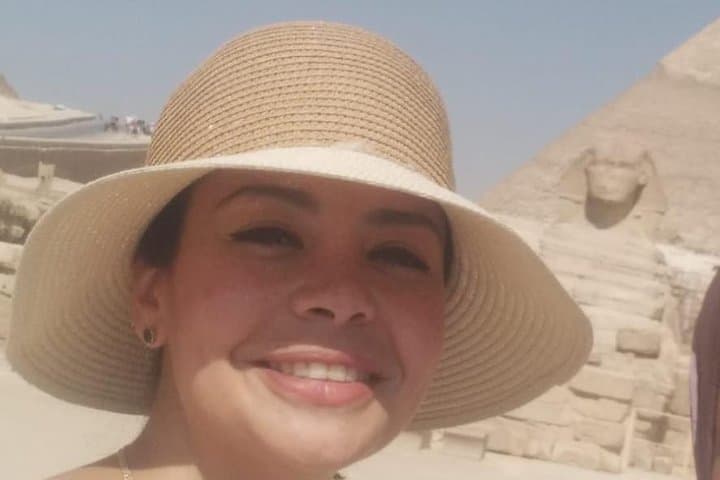
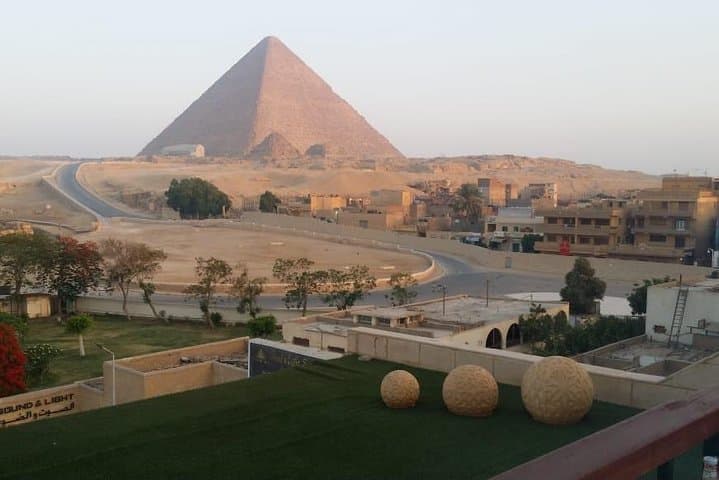
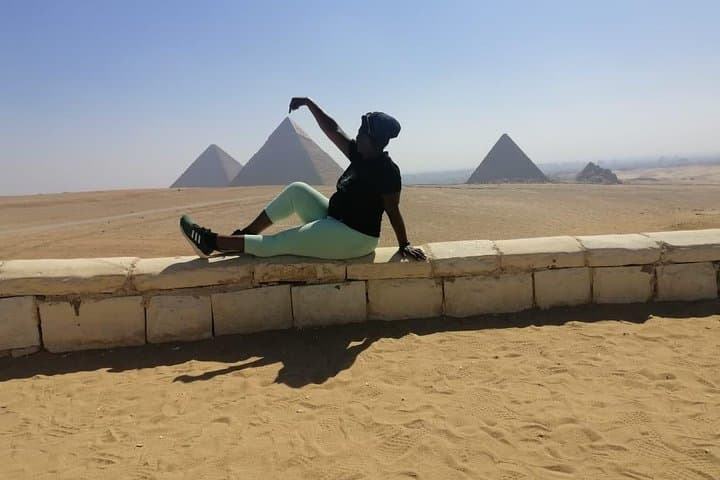
A private Egyptologist leads you through that long-held silence: the Great Pyramid rises with engineering that has resisted millennia, Chephren’s angled profile still commanding, and Menkaure’s smaller stones offering unexpected detail. The Sphinx guards the approach, its weathered face reading like a map of layered histories — Old Kingdom builders, later restorations, and centuries of travelers.
Geology here is blunt and obvious: Tura limestone casing once polished these shapes; core blocks of local limestone and granite from Aswan tell a trade story that spans the Nile. Culturally, the plateau has always been a stage — pharaonic ritual, Ottoman-era caravan routes, modern tourism — and your guide threads those eras together with archaeological context and local lore.
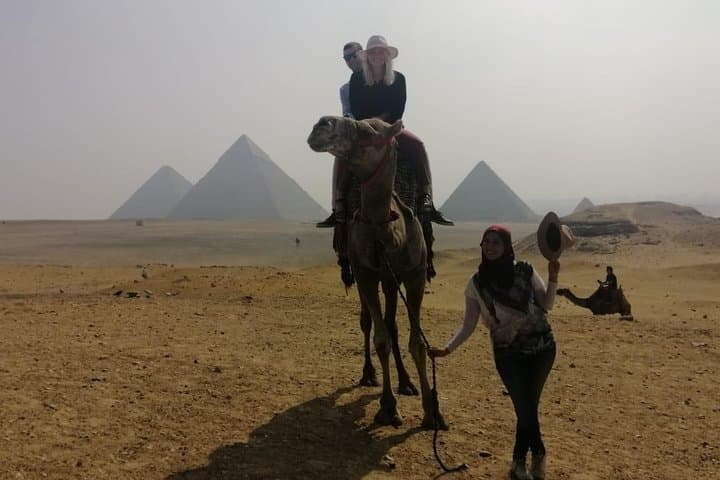
Practically, expect 2–3 km of walking on mixed hard-packed sand and paved sections, minimal elevation gain, and strong sun. The itinerary commonly includes a camel ride, lunch in a high-end Cairo restaurant, and private transport by Mercedes E‑Class. Entrance fees are included in the tour, and the guide handles permissions and photography tips.
Plan for early starts to avoid heat and crowds, bring layered sun protection, and keep hydration handy. Photography rewards the low light of morning and late afternoon; midday is harsher but offers clearer views of the stones’ true color. Respect barriers, follow your guide’s directions, and allocate extra time if you want to linger at viewpoints or visit the Solar Boat Museum.