THE ADVENTURE COLLECTIVE® · Independent discovery and booking for outdoor travel

Spend a full day exploring Ninh Binh’s limestone towers, 10th‑century Hoa Lu temples, the stair-backed viewpoint at Mua Cave, and a slow sampan cruise through Tam Coc’s cave-strewn river. This comfortable day trip from Hanoi mixes short climbs, gentle paddling, and countryside cycling.
Spend a full day exploring Ninh Binh’s limestone towers, 10th‑century Hoa Lu temples, the stair-backed viewpoint at Mua Cave, and a slow sampan cruise through Tam Coc’s cave-strewn river. This comfortable day trip from Hanoi mixes short climbs, gentle paddling, and countryside cycling.
You step out of an air-conditioned van into humid limestone country and the valley opens: rice fields flatten like polished green, and karst towers rise abrupt and gray. The climb to Mua Cave’s summit winds up Ngoa Long mountain—a steep stairway carved into the cliff—rewards a wide panorama that frames Tam Coc and the braided river below.
Verified experiences and guided adventures in the surrounding area.
Operated by SST TRAVEL · Tam Coc, Ninh Binh
You step out of an air-conditioned van into humid limestone country and the valley opens: rice fields flatten like polished green, and karst towers rise abrupt and gray. The climb to Mua Cave’s summit winds up Ngoa Long mountain—a steep stairway carved into the cliff—rewards a wide panorama that frames Tam Coc and the braided river below.
The day moves between eras and textures. Hoa Lu’s small temple complex recalls the 10th-century Dinh and Le dynasties and sits on low hills that once guarded the Red River plain. Geologically, the region is classic tropical karst—limestone sculpted by rain and river—giving rise to caves you’ll pass through on a sampan. Boarding in Tam Coc, two travelers share a flat-bottomed boat that slips slowly under low cave mouths (Hang Ca, Hang Hai, Hang Ba), the river daring you to watch closely for egrets and water buffalo bathing at the banks.
Locally, sampan crews and village roads link this landscape: boatmen steer with poles, village kids herd buffalo, and a short optional cycle to Bich Dong Pagoda threads through paddy lanes for a quieter view.
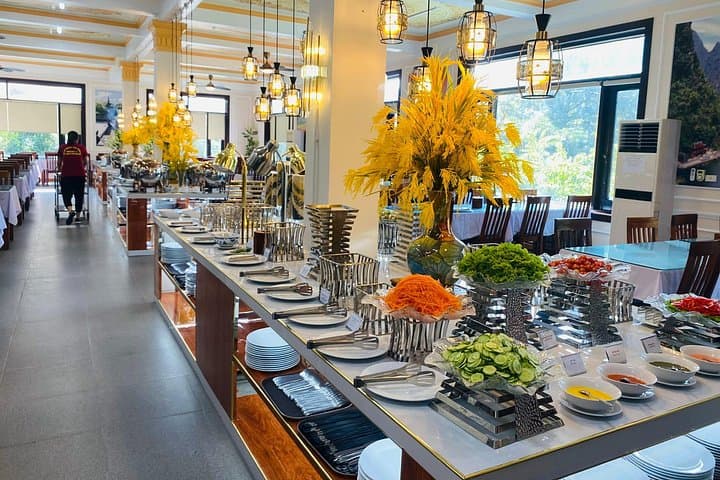
Practical guidance: this is a full 8–9 hour outing from Hanoi—expect long but comfortable transit, an easy-paced day with a few hundred steps at Mua Cave, and narrow, low-ceilinged boat sections. Wear grippy shoes, bring sun protection and a light rain layer in summer, and schedule mornings or late afternoons to avoid peak heat and mid-day crowds. Bottled water and lunch are typically included; keep valuables dry on the boat.
easy.
8–9 hours.
Suitable for most fitness levels—must be able to manage several hundred steep steps and short periods of standing in a boat.
The full day tour lasts about 8–9 hours (approximately 480–540 minutes) including round-trip transport from Hanoi.
Sampan boats on Tam Coc are typically shared between two passengers per boat with a local rower provided.
The climb involves several hundred stone steps—fit travelers will find it manageable, but it may be challenging for those with mobility issues.
Yes—there’s an optional 5 km roundtrip cycle on flat rural roads that takes roughly 40 minutes and offers close-up views of paddy fields and village life.
Hoa Lu served as Vietnam’s capital in the 10th century under the Dinh and early Le dynasties, and the small temple ruins preserve that early state’s architecture and inscriptions.
Tourism is concentrated on narrow waterways and small fields—support local guides, avoid single-use plastics, and stick to marked paths to minimize erosion and disturbance to rice terraces and bird habitats.
SST TRAVEL operates guided outdoor trips and adventures with an emphasis on safety, stewardship, and memorable experiences.

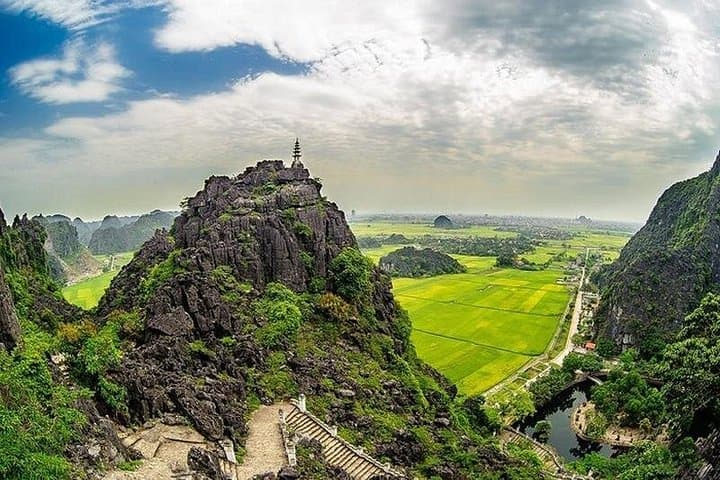

You step out of an air-conditioned van into humid limestone country and the valley opens: rice fields flatten like polished green, and karst towers rise abrupt and gray. The climb to Mua Cave’s summit winds up Ngoa Long mountain—a steep stairway carved into the cliff—rewards a wide panorama that frames Tam Coc and the braided river below.
You step out of an air-conditioned van into humid limestone country and the valley opens: rice fields flatten like polished green, and karst towers rise abrupt and gray. The climb to Mua Cave’s summit winds up Ngoa Long mountain—a steep stairway carved into the cliff—rewards a wide panorama that frames Tam Coc and the braided river below.
The day moves between eras and textures. Hoa Lu’s small temple complex recalls the 10th-century Dinh and Le dynasties and sits on low hills that once guarded the Red River plain. Geologically, the region is classic tropical karst—limestone sculpted by rain and river—giving rise to caves you’ll pass through on a sampan. Boarding in Tam Coc, two travelers share a flat-bottomed boat that slips slowly under low cave mouths (Hang Ca, Hang Hai, Hang Ba), the river daring you to watch closely for egrets and water buffalo bathing at the banks.
Locally, sampan crews and village roads link this landscape: boatmen steer with poles, village kids herd buffalo, and a short optional cycle to Bich Dong Pagoda threads through paddy lanes for a quieter view.
Practical guidance: this is a full 8–9 hour outing from Hanoi—expect long but comfortable transit, an easy-paced day with a few hundred steps at Mua Cave, and narrow, low-ceilinged boat sections. Wear grippy shoes, bring sun protection and a light rain layer in summer, and schedule mornings or late afternoons to avoid peak heat and mid-day crowds. Bottled water and lunch are typically included; keep valuables dry on the boat.