THE ADVENTURE COLLECTIVE® · Independent discovery and booking for outdoor travel

Spend two days tracing the Mekong’s quieter channels from My Tho to Can Tho: boat through palm-lined canals, visit honey farms and the bustling Cai Răng floating market, and cycle short rural trails to meet riverside village life. Practical, boat-forward exploration with an overnight in Can Tho.
Spend two days tracing the Mekong’s quieter channels from My Tho to Can Tho: boat through palm-lined canals, visit honey farms and the bustling Cai Răng floating market, and cycle short rural trails to meet riverside village life. Practical, boat-forward exploration with an overnight in Can Tho.
The morning mist lifts off the Tien River and paddle blades tap like metronomes against dark water as sampans slide past stilt houses and fruit-laden barges. You’ll begin with the soft hum of an air-conditioned transfer from Ho Chi Minh City, then trade asphalt for narrow channels where the delta governs the pace of day.
Verified experiences and guided adventures in the surrounding area.
Operated by your indochina travel · Can Tho, Cần Thơ
The morning mist lifts off the Tien River and paddle blades tap like metronomes against dark water as sampans slide past stilt houses and fruit-laden barges. You’ll begin with the soft hum of an air-conditioned transfer from Ho Chi Minh City, then trade asphalt for narrow channels where the delta governs the pace of day.
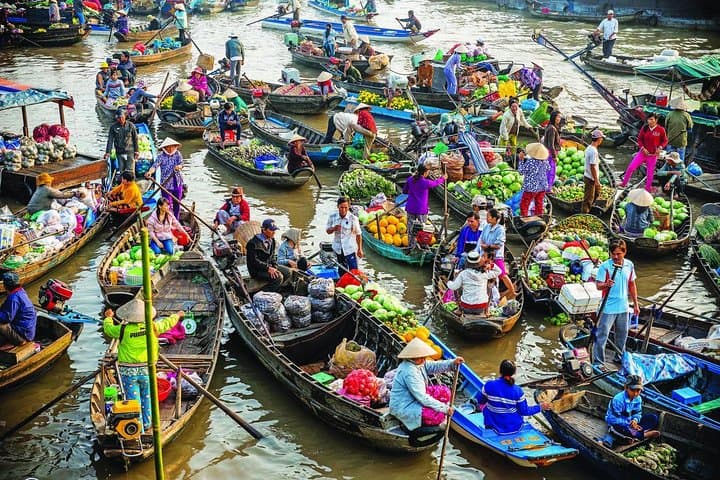
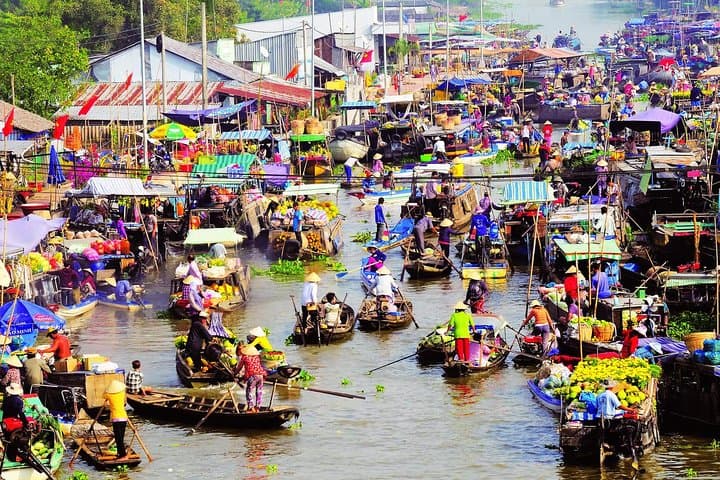
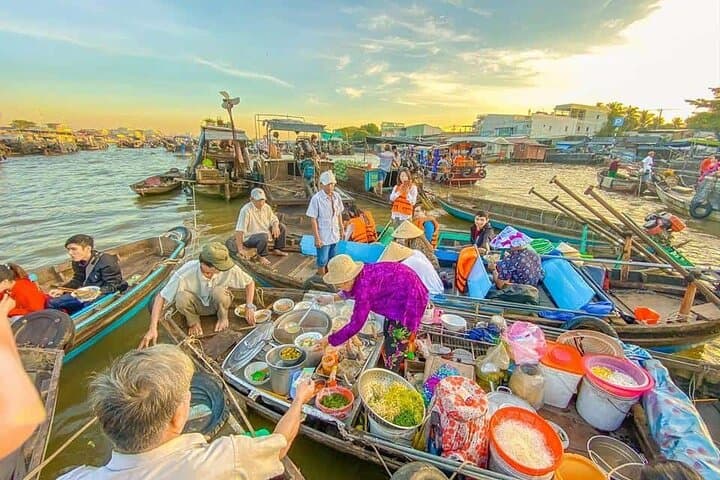
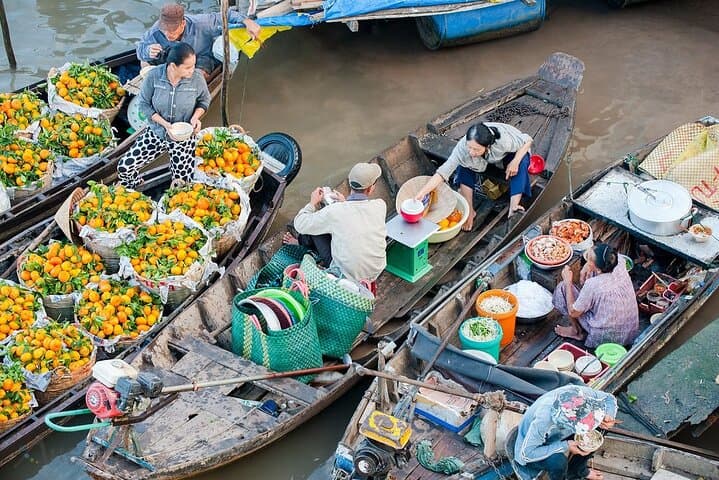
Geology here is recent—thick alluvial silt deposited by the Mekong creates a flat, low-lying landscape that floods seasonally and supports intensive rice cultivation. Culturally the region is shaped by river commerce: Cai Răng Floating Market remains a working marketplace where sellers balance conical hats, bags of rice, pandan leaves and household goods on long poles. In My Tho and Ben Tre you’ll encounter orchards, honey farms and traditional music performed in riverside homes—small industries anchored to ancestral waterways.
Expect mostly flat terrain, short rural cycling stretches (typically 5–15 km on packed dirt and quiet country lanes) and multiple short boat cruises—hand-rowed sampans through narrow mangrove channels and motor launches on wider tributaries. Elevation gain is negligible; mobility is mostly about steady balance on boards and bikes and basic boarding manoeuvres.
Travel practicalities: bring sun protection, a dry bag for electronics, light rain layers in monsoon months, and small-denomination Vietnamese đồng for market purchases. Morning departures avoid midday heat and windows for best light and active market scenes. Hydrate often—humidity accelerates fatigue—and wear closed-toe shoes for brief orchard walks and dock transfers. With an accessible pace, this two-day trip gives a concentrated, tactile view of delta life without heavy exertion, trading summit views for river-born intimacy.
easy.
2 days (approx. 48 hours).
Suitable for travelers in general good health; minimal fitness required for short, low‑grade cycling and easy boat transfers.
Yes—booking requires passport name and details and you should carry a copy while traveling; the operator will verify details at pickup.
No—the cycling sections are short (typically 5–15 km) on flat, mostly unpaved rural lanes; basic bike competency is sufficient.
Yes—infants can ride in strollers and children are welcome, but operators recommend lap seating for infants and supervision during boat transfers.
Dry season (November–April) offers lower water levels and cooler mornings for market visits, while wet season (May–October) brings higher water and more dramatic river activity—both have trade-offs.
The Mekong Delta’s villages grew around river trade routes; the floating markets developed as practical hubs where communities exchanged goods directly from boats.
Seasonal flooding and upstream dam projects affect sediment flow and fish migration—support local businesses and avoid single-use plastics to reduce your footprint.
your indochina travel operates guided outdoor trips and adventures with an emphasis on safety, stewardship, and memorable experiences.
The morning mist lifts off the Tien River and paddle blades tap like metronomes against dark water as sampans slide past stilt houses and fruit-laden barges. You’ll begin with the soft hum of an air-conditioned transfer from Ho Chi Minh City, then trade asphalt for narrow channels where the delta governs the pace of day.
The morning mist lifts off the Tien River and paddle blades tap like metronomes against dark water as sampans slide past stilt houses and fruit-laden barges. You’ll begin with the soft hum of an air-conditioned transfer from Ho Chi Minh City, then trade asphalt for narrow channels where the delta governs the pace of day.
Geology here is recent—thick alluvial silt deposited by the Mekong creates a flat, low-lying landscape that floods seasonally and supports intensive rice cultivation. Culturally the region is shaped by river commerce: Cai Răng Floating Market remains a working marketplace where sellers balance conical hats, bags of rice, pandan leaves and household goods on long poles. In My Tho and Ben Tre you’ll encounter orchards, honey farms and traditional music performed in riverside homes—small industries anchored to ancestral waterways.
Expect mostly flat terrain, short rural cycling stretches (typically 5–15 km on packed dirt and quiet country lanes) and multiple short boat cruises—hand-rowed sampans through narrow mangrove channels and motor launches on wider tributaries. Elevation gain is negligible; mobility is mostly about steady balance on boards and bikes and basic boarding manoeuvres.
Travel practicalities: bring sun protection, a dry bag for electronics, light rain layers in monsoon months, and small-denomination Vietnamese đồng for market purchases. Morning departures avoid midday heat and windows for best light and active market scenes. Hydrate often—humidity accelerates fatigue—and wear closed-toe shoes for brief orchard walks and dock transfers. With an accessible pace, this two-day trip gives a concentrated, tactile view of delta life without heavy exertion, trading summit views for river-born intimacy.