THE ADVENTURE COLLECTIVE® · Independent discovery and booking for outdoor travel

Fly into Lukla, trek across the Khumbu’s forests and moraines, and stand at Everest Base Camp on an 11-day luxury itinerary that pairs helicopter transfers with high-altitude lodge comfort. Expect dramatic glaciers, Sherpa culture, and strict acclimatization pacing.
Fly into Lukla, trek across the Khumbu’s forests and moraines, and stand at Everest Base Camp on an 11-day luxury itinerary that pairs helicopter transfers with high-altitude lodge comfort. Expect dramatic glaciers, Sherpa culture, and strict acclimatization pacing.
A rotor thumps above a white ridge as you step out at Lukla: thin air, the crunch of crampon-ready boots, and a skyline broken by serrated peaks. This luxury 11-day itinerary stitches helicopter transfers with lodge comforts, carrying you from Kathmandu’s bustle into the raw geology of the Khumbu where glaciers gouge valleys and moraines mark ancient ice flows.
Verified experiences and guided adventures in the surrounding area.
Operated by Himalayan Trekking · Kathmandu, Bagmati Province
A rotor thumps above a white ridge as you step out at Lukla: thin air, the crunch of crampon-ready boots, and a skyline broken by serrated peaks. This luxury 11-day itinerary stitches helicopter transfers with lodge comforts, carrying you from Kathmandu’s bustle into the raw geology of the Khumbu where glaciers gouge valleys and moraines mark ancient ice flows.
The region’s story is both natural and human. The Himalaya are an active collision zone—India pressing into Eurasia—producing uplift, jagged arêtes and the Khumbu Glacier’s terminal moraine. Sherpa communities here developed trade, spiritual practice and extraordinary mountaineering knowledge; monasteries like Tengboche remain cultural anchors along the route.
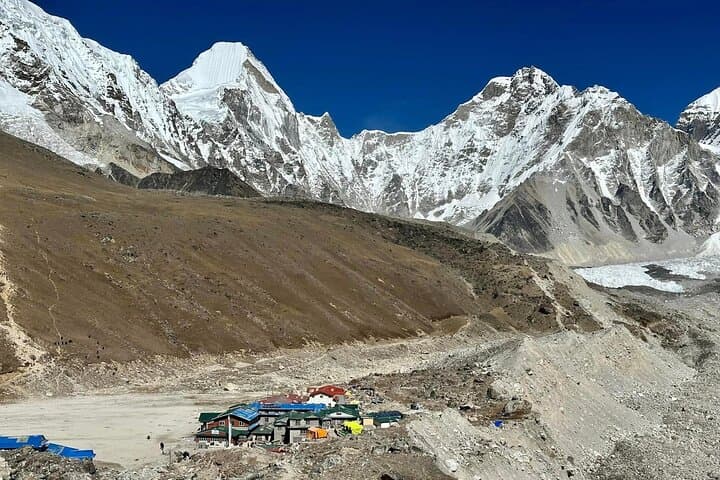
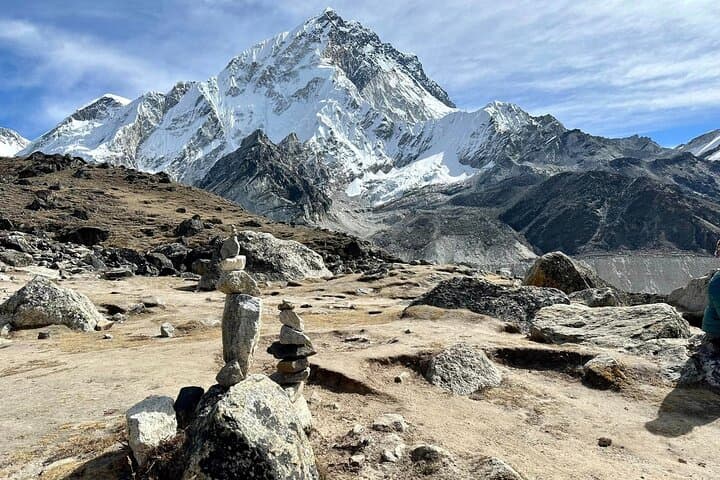
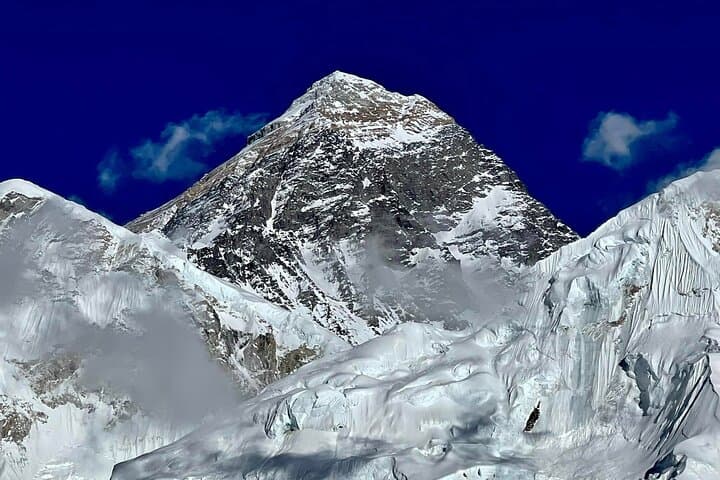
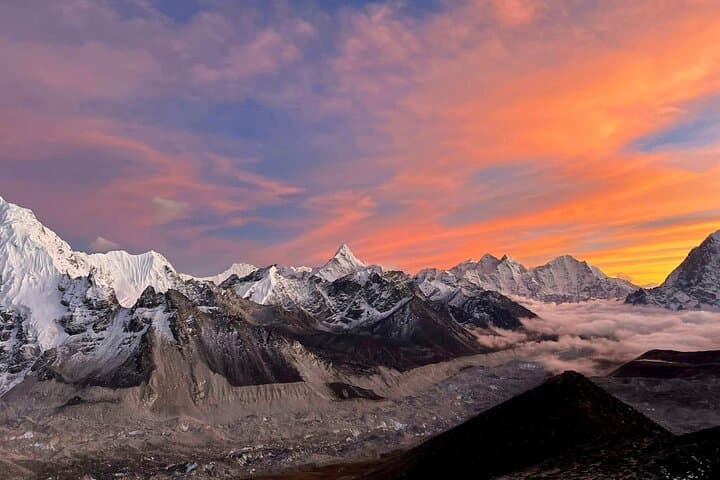
On trail you’ll move through pine and rhododendron forests, across swinging suspension bridges, and onto the stony, wind-scoured moraines that lead to Gorak Shep and Everest Base Camp (5,364 m). Kala Patthar’s pre-dawn ridge (~5,545 m) rewards climbers with the clearest perspectives on Everest and the Khumbu Icefall.
Practical essentials: expect roughly 65–80 km round-trip walking from Lukla, with altitude gain from ~2,800 m to 5,364 m—allow time for acclimatization days in Namche and Dingboche. Terrain alternates packed dirt trails, stone stairways and loose glacial moraine; weather can flip from sun to snow in hours. Hydrate, pace your ascent, and use layered, breathable insulation; the helicopter transfers reduce risk and save time but don’t remove the need for altitude vigilance. For travelers who want high-altitude exposure with lodge-level comforts, this itinerary balances ambition with pragmatic safety and cultural access.
challenging.
11 days (approx. 10–12 hours of trekking on longest days).
Good cardiovascular fitness with previous multi-day hiking experience; comfortable with long days carrying a daypack at altitude.
The route is physically demanding due to altitude; acclimatization days are built in but you should be prepared for steep, prolonged ascents and thinner air above 4,000 m.
No technical climbing skills are required to reach Everest Base Camp or Kala Patthar, but comfort on rough terrain and prior trekking experience are highly recommended.
Helicopter flights depend on weather and operational conditions; itineraries include flights but operators may substitute ground travel or reschedule for safety.
Supplemental oxygen is not typical for trekkers on this itinerary; guides and operators carry oxygen and medical kits for emergencies, and oxygen can be arranged if medically necessary.
Khumbu’s Sherpa communities grew as trade and mountaineering hubs in the early 20th century; Tengboche Monastery (est. early 20th c.) anchors local spiritual life.
The Sagarmatha National Park manages impact through permits and trail regulation; stick to marked trails, pack out waste, and limit single-use plastics to reduce strain on fragile high-mountain ecosystems.
Himalayan Trekking operates guided outdoor trips and adventures with an emphasis on safety, stewardship, and memorable experiences.
A rotor thumps above a white ridge as you step out at Lukla: thin air, the crunch of crampon-ready boots, and a skyline broken by serrated peaks. This luxury 11-day itinerary stitches helicopter transfers with lodge comforts, carrying you from Kathmandu’s bustle into the raw geology of the Khumbu where glaciers gouge valleys and moraines mark ancient ice flows.
A rotor thumps above a white ridge as you step out at Lukla: thin air, the crunch of crampon-ready boots, and a skyline broken by serrated peaks. This luxury 11-day itinerary stitches helicopter transfers with lodge comforts, carrying you from Kathmandu’s bustle into the raw geology of the Khumbu where glaciers gouge valleys and moraines mark ancient ice flows.
The region’s story is both natural and human. The Himalaya are an active collision zone—India pressing into Eurasia—producing uplift, jagged arêtes and the Khumbu Glacier’s terminal moraine. Sherpa communities here developed trade, spiritual practice and extraordinary mountaineering knowledge; monasteries like Tengboche remain cultural anchors along the route.
On trail you’ll move through pine and rhododendron forests, across swinging suspension bridges, and onto the stony, wind-scoured moraines that lead to Gorak Shep and Everest Base Camp (5,364 m). Kala Patthar’s pre-dawn ridge (~5,545 m) rewards climbers with the clearest perspectives on Everest and the Khumbu Icefall.
Practical essentials: expect roughly 65–80 km round-trip walking from Lukla, with altitude gain from ~2,800 m to 5,364 m—allow time for acclimatization days in Namche and Dingboche. Terrain alternates packed dirt trails, stone stairways and loose glacial moraine; weather can flip from sun to snow in hours. Hydrate, pace your ascent, and use layered, breathable insulation; the helicopter transfers reduce risk and save time but don’t remove the need for altitude vigilance. For travelers who want high-altitude exposure with lodge-level comforts, this itinerary balances ambition with pragmatic safety and cultural access.