THE ADVENTURE COLLECTIVE® · Independent discovery and booking for outdoor travel

A full-day luxury transfer from Marrakech to Essaouira that mixes coastal sightseeing, an argan cooperative visit, and fresh seafood by the port. Expect a three-hour drive each way, a guided medina walk, and wind‑swept Atlantic views.
A full-day luxury transfer from Marrakech to Essaouira that mixes coastal sightseeing, an argan cooperative visit, and fresh seafood by the port. Expect a three-hour drive each way, a guided medina walk, and wind‑swept Atlantic views.
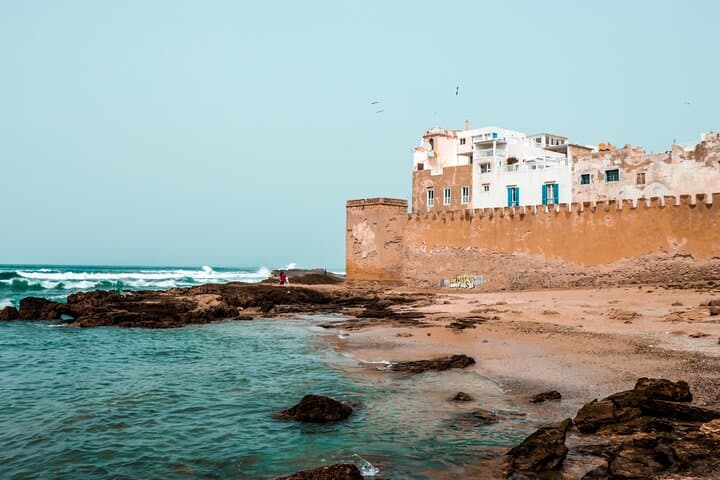
You arrive on a bright Atlantic morning, the van easing out of Marrakech as the road opens to low, scrubby hills and the wind begins to speak. By the time Essaouira’s whitewashed ramparts appear, the sea has a voice of its own—brisk, salty, and insistent—pulling you toward the medina and the fishing port.
Verified experiences and guided adventures in the surrounding area.
Operated by Atlas Dream · Essaouira, Marrakech-Safi
You arrive on a bright Atlantic morning, the van easing out of Marrakech as the road opens to low, scrubby hills and the wind begins to speak. By the time Essaouira’s whitewashed ramparts appear, the sea has a voice of its own—brisk, salty, and insistent—pulling you toward the medina and the fishing port.
Essaouira (historically Mogador) was a 18th-century fortified port shaped by Phoenician, Portuguese and Berber influences; the ramparts and cannons facing the ocean reflect a trading past and a strategic coastline carved by wind and wave. Geology here is simple—sandy beaches, exposed sandstone and coastal plains—while culture is layered: music, argan oil production, and a relaxed market rhythm that resists Marrakech’s fever.
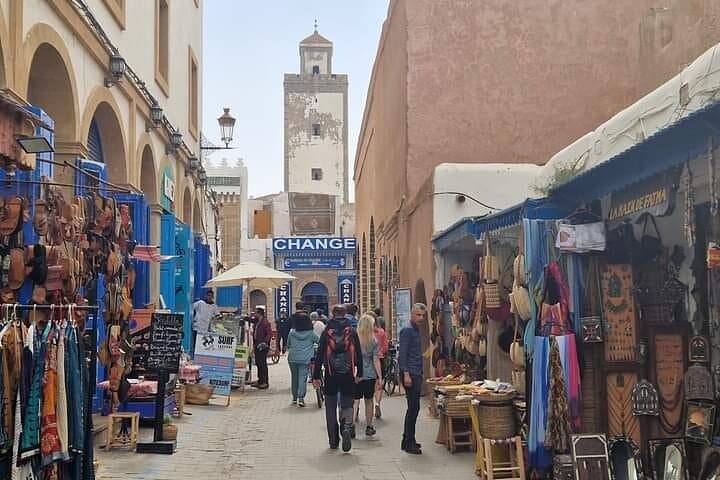
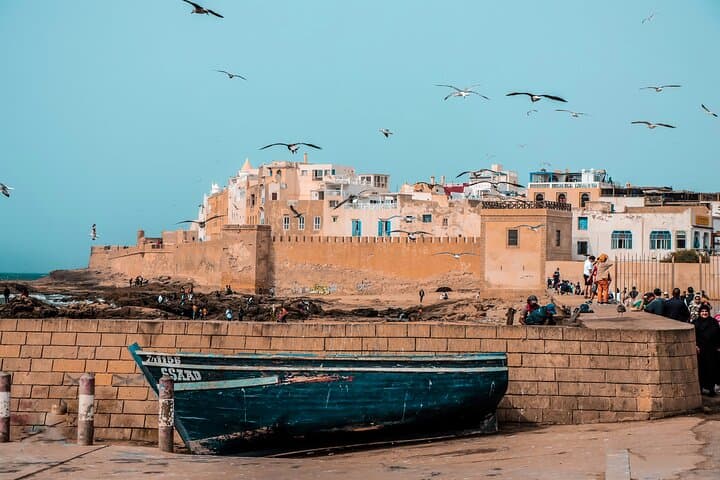
Your day typically includes a guided walk through the medina, a visit to a women’s argan cooperative, and fresh seafood at a harbor-side restaurant. The wind—locally famous among kitesurfers—often sets the pace; it can clear the air or demand a jacket. Look for street musicians, carved wooden shutters, and the boats hauled up on a packed sand strip.
Practical guidance: the trip is a full-day shared transfer (about 3 hours each way), so bring layers for wind, sunscreen, and comfortable shoes for cobbled lanes. Carry small change for market purchases and plan for limited time in each stop—this is a sampling of Essaouira, not a slow immersion.
Expect accessible transportation, opportunities to buy locally produced argan products, and a breezy coastal contrast to inland Marrakech—an easy but invigorating day on Morocco’s Atlantic edge.
easy.
12 hours.
Suitable for most fitness levels; requires ability to walk on uneven cobbles for short periods and board a minivan.
Expect about 2.5–3 hours each way depending on traffic and stops; the tour schedule typically includes a coffee stop and cooperative visit en route.
Goats in argan trees are a local curiosity but not guaranteed; sightings depend on season and the herders’ routes.
The operator lists wheelchair-accessible transportation and assistance options, but some medina areas and ramps have uneven surfaces—ask about specific accessibility needs when booking.
Lunch is included; options typically cover seafood and vegetarian dishes—notify the operator ahead of time for dietary restrictions.
Essaouira was a key Atlantic port since the 18th century, designed with European-style ramparts to support trade between Morocco and Europe.
Argan forests are protected and cooperatives support sustainable harvesting—buying directly from co-ops helps local economies and sustainable practices.
Atlas Dream operates guided outdoor trips and adventures with an emphasis on safety, stewardship, and memorable experiences.
You arrive on a bright Atlantic morning, the van easing out of Marrakech as the road opens to low, scrubby hills and the wind begins to speak. By the time Essaouira’s whitewashed ramparts appear, the sea has a voice of its own—brisk, salty, and insistent—pulling you toward the medina and the fishing port.
You arrive on a bright Atlantic morning, the van easing out of Marrakech as the road opens to low, scrubby hills and the wind begins to speak. By the time Essaouira’s whitewashed ramparts appear, the sea has a voice of its own—brisk, salty, and insistent—pulling you toward the medina and the fishing port.
Essaouira (historically Mogador) was a 18th-century fortified port shaped by Phoenician, Portuguese and Berber influences; the ramparts and cannons facing the ocean reflect a trading past and a strategic coastline carved by wind and wave. Geology here is simple—sandy beaches, exposed sandstone and coastal plains—while culture is layered: music, argan oil production, and a relaxed market rhythm that resists Marrakech’s fever.
Your day typically includes a guided walk through the medina, a visit to a women’s argan cooperative, and fresh seafood at a harbor-side restaurant. The wind—locally famous among kitesurfers—often sets the pace; it can clear the air or demand a jacket. Look for street musicians, carved wooden shutters, and the boats hauled up on a packed sand strip.
Practical guidance: the trip is a full-day shared transfer (about 3 hours each way), so bring layers for wind, sunscreen, and comfortable shoes for cobbled lanes. Carry small change for market purchases and plan for limited time in each stop—this is a sampling of Essaouira, not a slow immersion.
Expect accessible transportation, opportunities to buy locally produced argan products, and a breezy coastal contrast to inland Marrakech—an easy but invigorating day on Morocco’s Atlantic edge.