THE ADVENTURE COLLECTIVE® · Independent discovery and booking for outdoor travel

Set sail from Cabo San Lucas aboard a double-deck catamaran equipped with a hydrophone to listen for humpback songs. This 2–3 hour luxury cruise combines wildlife viewing, narration by marine experts, and all-inclusive refreshments as you pass El Arco and sea lion colonies.
Set sail from Cabo San Lucas aboard a double-deck catamaran equipped with a hydrophone to listen for humpback songs. This 2–3 hour luxury cruise combines wildlife viewing, narration by marine experts, and all-inclusive refreshments as you pass El Arco and sea lion colonies.
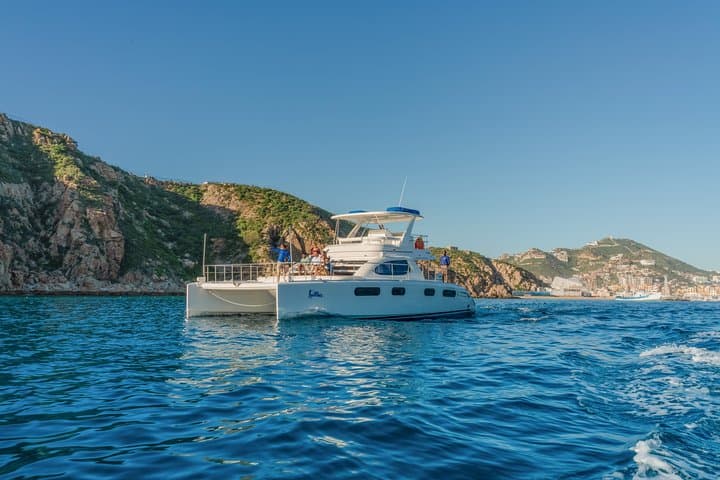
The catamaran slips away from the marina and the skyline of Cabo San Lucas falls backward — hotels and palms give way to open sea and the low, expectant rise of the horizon.
Verified experiences and guided adventures in the surrounding area.
Operated by Cabo Adventures · Cabo San Lucas, Baja California Sur
The catamaran slips away from the marina and the skyline of Cabo San Lucas falls backward — hotels and palms give way to open sea and the low, expectant rise of the horizon.
Onboard a double-deck French-built yacht, passengers trade streets for salt air and a hydrophone that picks up whale song from the depths. Guides narrate as the vessel eases past El Arco and the sea lion colonies, scanning for the blunt backs and tall flukes of migrating humpbacks that return to the Sea of Cortez each winter.
Geology here is visible from the deck: granite headlands and sculpted arches carved by waves and wind. The region’s fishing and maritime history shaped modern Cabo, and the bay’s seasonal whale migrations have become a centerpiece of local ecotourism.
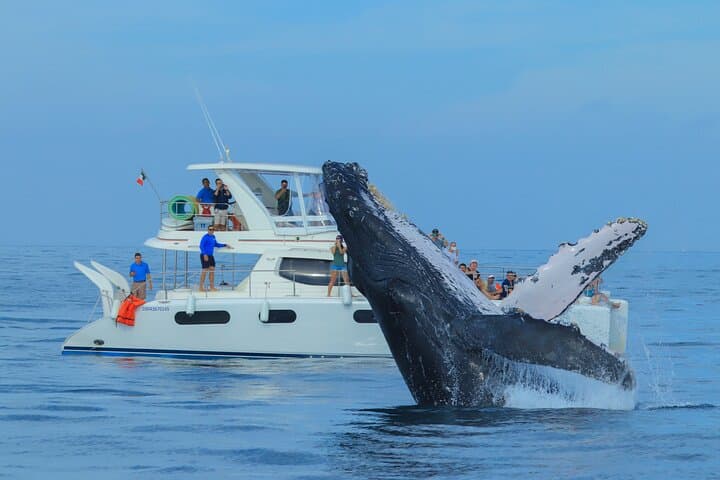
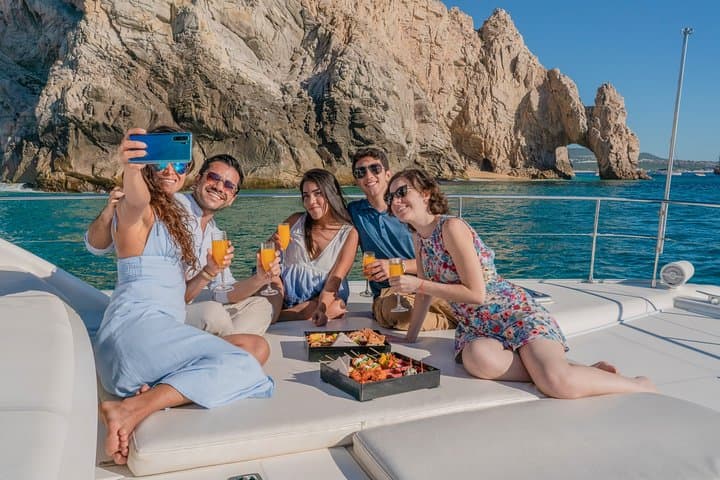
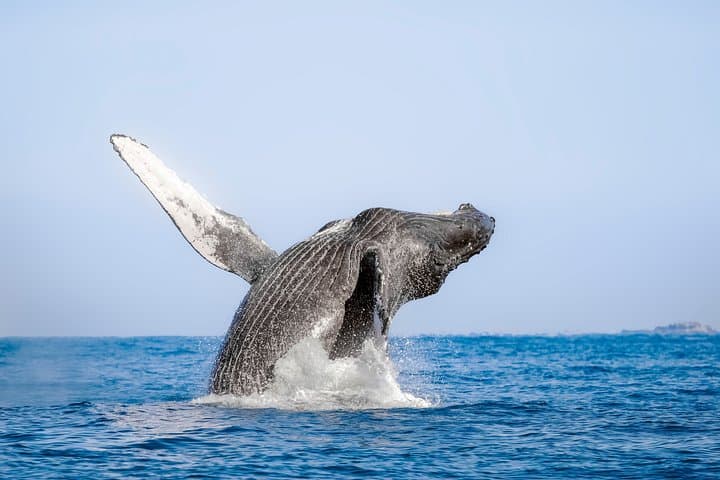
Expect a mix of calm cruising and sudden animal encounters — splashes, breaches, and curious blows. The trip is all-inclusive: appetizers, an open bar, shaded seating and an attentive crew who deploy the hydrophone so you can hear the whales’ low-frequency calls.
Practical notes: boats run 2–3 hour excursions, boarding is straightforward but may require a short dock step, and seasickness options are wise if you’re prone to motion. Morning light is best for photos; winter months (December–April) offer the highest sighting rates. Respect distance guidelines, follow crew directions, and leave no trace — this is their ocean more than ours.
If you go prepared — sun protection, a light windbreaker, and a camera with a fast shutter — the trip balances comfort with genuine wildlife encounters, turning a luxury cruise into an intimate marine encounter.
easy.
2–3 hours.
Suitable for all fitness levels; participants should be able to board a boat and stand or sit for the duration.
No. Sightings are very likely in peak season (December–April) but not guaranteed; operators use experience and timing to maximize chances.
Yes — the cruise lists an open bar and snacks as included, but drink responsibly and follow crew guidance for safety.
No — expectant mothers may not participate according to the operator’s safety policy.
Pickup is typically provided about 90 minutes before departure for a standard fee (noted as $10 USD round-trip payable at check-in); confirm details with the operator after booking.
Cabo evolved from a fishing village into an international port; the granite arches at Land’s End were sculpted over millennia by the Pacific and Gulf currents.
Whale-watching in Baja follows seasonal regulations and best practices—keep respectful distances, avoid chasing animals, and use reef-safe products to reduce ecosystem impact.
Cabo Adventures operates guided outdoor trips and adventures with an emphasis on safety, stewardship, and memorable experiences.
The catamaran slips away from the marina and the skyline of Cabo San Lucas falls backward — hotels and palms give way to open sea and the low, expectant rise of the horizon.
The catamaran slips away from the marina and the skyline of Cabo San Lucas falls backward — hotels and palms give way to open sea and the low, expectant rise of the horizon.
Onboard a double-deck French-built yacht, passengers trade streets for salt air and a hydrophone that picks up whale song from the depths. Guides narrate as the vessel eases past El Arco and the sea lion colonies, scanning for the blunt backs and tall flukes of migrating humpbacks that return to the Sea of Cortez each winter.
Geology here is visible from the deck: granite headlands and sculpted arches carved by waves and wind. The region’s fishing and maritime history shaped modern Cabo, and the bay’s seasonal whale migrations have become a centerpiece of local ecotourism.
Expect a mix of calm cruising and sudden animal encounters — splashes, breaches, and curious blows. The trip is all-inclusive: appetizers, an open bar, shaded seating and an attentive crew who deploy the hydrophone so you can hear the whales’ low-frequency calls.
Practical notes: boats run 2–3 hour excursions, boarding is straightforward but may require a short dock step, and seasickness options are wise if you’re prone to motion. Morning light is best for photos; winter months (December–April) offer the highest sighting rates. Respect distance guidelines, follow crew directions, and leave no trace — this is their ocean more than ours.
If you go prepared — sun protection, a light windbreaker, and a camera with a fast shutter — the trip balances comfort with genuine wildlife encounters, turning a luxury cruise into an intimate marine encounter.