THE ADVENTURE COLLECTIVE® · Independent discovery and booking for outdoor travel

Ride camels across Erg Chebbi, sleep in a luxury Berber camp under a sky full of stars, and return to Marrakech via the Atlas and Dades valleys. This three-day loop balances comfort with authentic desert time and scenic mountain road passages.
Ride camels across Erg Chebbi, sleep in a luxury Berber camp under a sky full of stars, and return to Marrakech via the Atlas and Dades valleys. This three-day loop balances comfort with authentic desert time and scenic mountain road passages.
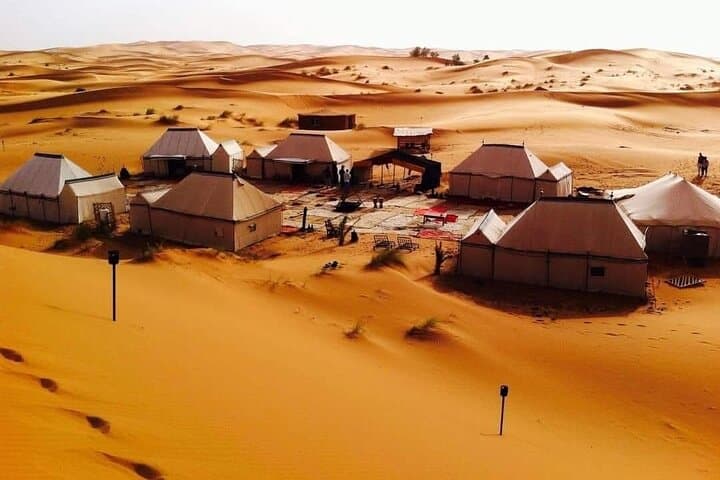
You crest a ridge of ochre sand as the late-afternoon sun slants gold across an ocean of dunes — the wind rearranges the crest behind you, daring your footprints to hold. By evening, a luxury desert camp in Merzouga settles into the hollow between dunes: Berber tents with layered rugs, hot mint tea, and a sky so clear the Milky Way seems to press close enough to touch.
Verified experiences and guided adventures in the surrounding area.
Operated by marrakech travel tours · Merzouga, Drâa-Tafilalet
You crest a ridge of ochre sand as the late-afternoon sun slants gold across an ocean of dunes — the wind rearranges the crest behind you, daring your footprints to hold. By evening, a luxury desert camp in Merzouga settles into the hollow between dunes: Berber tents with layered rugs, hot mint tea, and a sky so clear the Milky Way seems to press close enough to touch.
This three-day loop threads Marrakech, the High Atlas passes and UNESCO-listed Aït Ben Haddou, then drops into the Dades and Todra valleys before reaching the Erg Chebbi dunes at Merzouga. Geologically, the Erg Chebbi field is a living sand sea formed by Saharan winds and ancient river sediments. Culturally, the route moves through Amazigh (Berber) villages where kasbahs and mud-brick architecture speak to centuries of caravan trade.
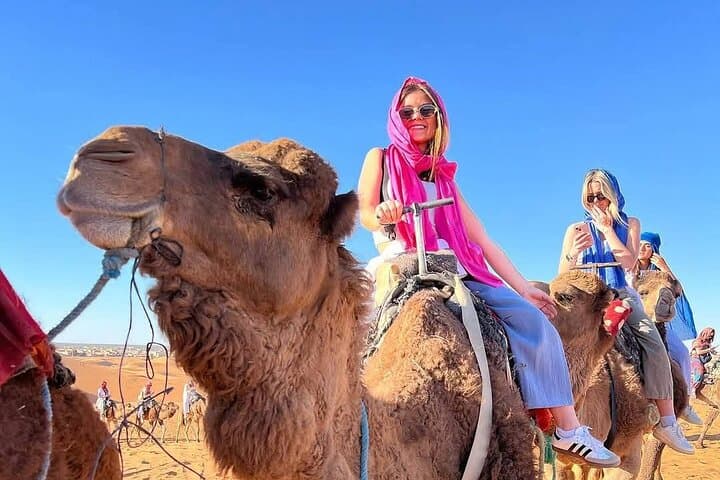
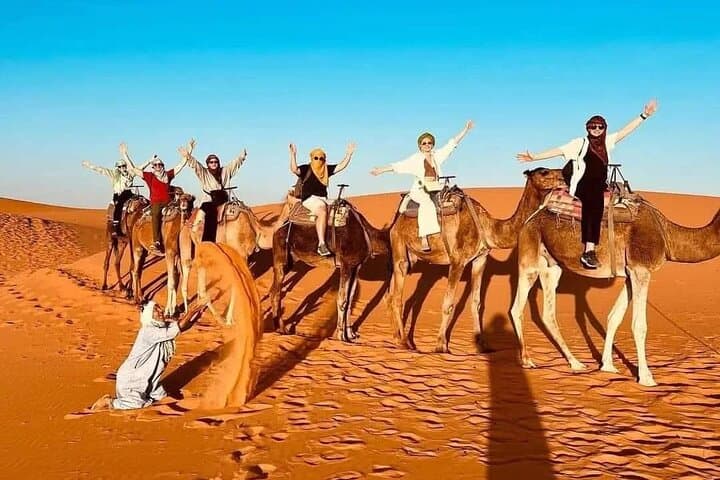
Expect camel rides over soft dune slopes at dusk and dawn, live music and communal dinners at the camp, plus short walks across rippled sand. Nights are cold; days are desert-hot. Photography windows are early morning and late afternoon when light sculpts the dunes.
Practical guidance: pack layers, sun protection and at least 2–3 liters of water per person for dune walks. Choose closed-toe shoes for traction on shifting sand. If you have limited mobility, camel saddles are steady but climbing a dune slope may be strenuous. Plan for long drives between stops — the comfort of a private transfer makes the route manageable. With modest preparation, this trip is an accessible way to experience Sahara silence, starlight and hospitality without sacrificing comfort.
easy.
3 days (approx. 72 hours).
Suitable for travelers in general good health; walking on dunes requires basic stamina but no technical fitness.
Typical camel treks to the luxury camp are 45–90 minutes one way depending on where the camp sits among the dunes; sunrise or sunset rides are common.
No prior desert experience is required—the tour is designed for general travelers and includes private transport, camp staff, and assistance mounting camels.
Luxury camps usually offer private, carpeted Berber-style tents with mattresses, blankets, and basic wash facilities; some provide ensuite options—confirm specific amenities with the operator.
Yes—operators often provide infant seats and list the tour as family-friendly, but consider camel ride comfort and long transfer times when traveling with very young children.
The route links Marrakech with historic caravan corridors; Aït Ben Haddou is a fortified ksar that controlled trans-Saharan trade and later served as an architectural model for regional kasbahs.
Tour operators are encouraged to minimize camp waste, avoid off-track vehicle driving on dunes, and support local communities via fair-hire practices to reduce environmental impact.
marrakech travel tours operates guided outdoor trips and adventures with an emphasis on safety, stewardship, and memorable experiences.
You crest a ridge of ochre sand as the late-afternoon sun slants gold across an ocean of dunes — the wind rearranges the crest behind you, daring your footprints to hold. By evening, a luxury desert camp in Merzouga settles into the hollow between dunes: Berber tents with layered rugs, hot mint tea, and a sky so clear the Milky Way seems to press close enough to touch.
You crest a ridge of ochre sand as the late-afternoon sun slants gold across an ocean of dunes — the wind rearranges the crest behind you, daring your footprints to hold. By evening, a luxury desert camp in Merzouga settles into the hollow between dunes: Berber tents with layered rugs, hot mint tea, and a sky so clear the Milky Way seems to press close enough to touch.
This three-day loop threads Marrakech, the High Atlas passes and UNESCO-listed Aït Ben Haddou, then drops into the Dades and Todra valleys before reaching the Erg Chebbi dunes at Merzouga. Geologically, the Erg Chebbi field is a living sand sea formed by Saharan winds and ancient river sediments. Culturally, the route moves through Amazigh (Berber) villages where kasbahs and mud-brick architecture speak to centuries of caravan trade.
Expect camel rides over soft dune slopes at dusk and dawn, live music and communal dinners at the camp, plus short walks across rippled sand. Nights are cold; days are desert-hot. Photography windows are early morning and late afternoon when light sculpts the dunes.
Practical guidance: pack layers, sun protection and at least 2–3 liters of water per person for dune walks. Choose closed-toe shoes for traction on shifting sand. If you have limited mobility, camel saddles are steady but climbing a dune slope may be strenuous. Plan for long drives between stops — the comfort of a private transfer makes the route manageable. With modest preparation, this trip is an accessible way to experience Sahara silence, starlight and hospitality without sacrificing comfort.