THE ADVENTURE COLLECTIVE® · Independent discovery and booking for outdoor travel

Cross the High Atlas and enter the orange sweep of Erg Chebbi on a three-day luxury loop from Marrakech. This itinerary pairs dramatic gorges, palm oases and a desert bivouac with short guided walks and local cultural stops.
Cross the High Atlas and enter the orange sweep of Erg Chebbi on a three-day luxury loop from Marrakech. This itinerary pairs dramatic gorges, palm oases and a desert bivouac with short guided walks and local cultural stops.
Dawn finds the road from Marrakech carving through the High Atlas, villages slipping past like pages. By midday the hills flatten into ochre plains and the air turns dry and sharp; by evening the orange faces of Erg Chebbi rise ahead, dunes that seem to breathe under wind. The caravan route once used by traders from Timbuktu still shapes towns en route—Aït Ben Haddou’s kasbahs and the palm oases of Tafilalet frame the journey.
Verified experiences and guided adventures in the surrounding area.
Operated by Morocco City Breaks · Merzouga, Errachidia Province
Dawn finds the road from Marrakech carving through the High Atlas, villages slipping past like pages. By midday the hills flatten into ochre plains and the air turns dry and sharp; by evening the orange faces of Erg Chebbi rise ahead, dunes that seem to breathe under wind. The caravan route once used by traders from Timbuktu still shapes towns en route—Aït Ben Haddou’s kasbahs and the palm oases of Tafilalet frame the journey.
Geology here is blunt and honest: layered limestone and red sandstone give way to wind-sculpted sand seas. Culture is equally direct—Rissani’s market rhythms, the date groves of Erfoud, and local Saharawi hospitality introduce travelers to craft traditions and desert cuisine. Todra and Dades gorges cut dramatic canyons where water, rare and insistent, has chewed deep channels into the plateau.
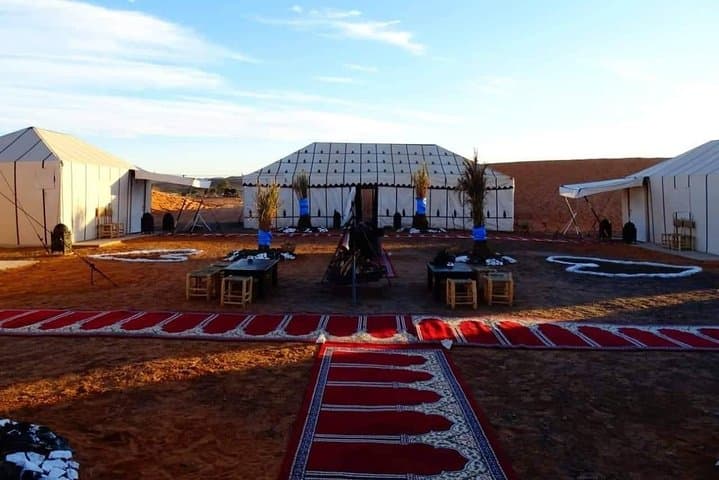
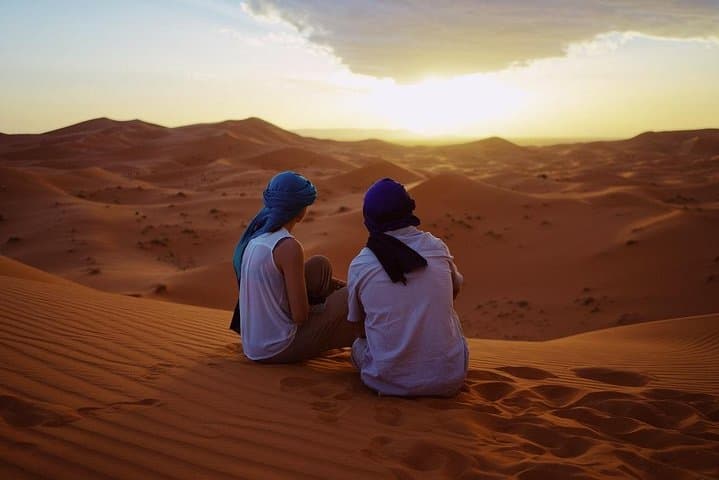
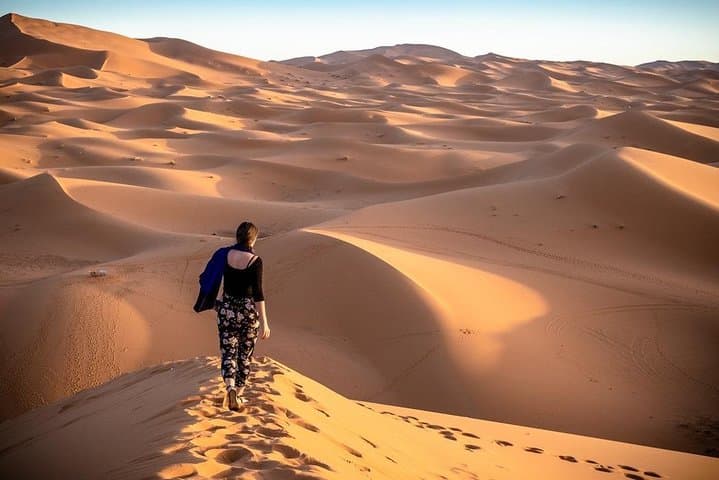
The trip balances long, comfortable transfers with short exploration stops and an overnight bivouac near Merzouga’s dunes. Expect guided walks along dune crests at sunrise and sunset, a camel approach to camp, and hotel nights in Dades valley. The camp sits ~800 m from the road for safety—simple, quiet, and focused on stars.
Practical advice: time desert walks for cool morning hours, layer for large temperature swings, and carry cash for souks and tips. Hydrate proactively—the desert will push your pace and attention. For travelers with mild mobility limits this excursion is accessible; anyone with spinal or serious heart issues should avoid it. Pack sun protection, insulated layers, and a sense of patience for long drives between highlights.
moderate.
3 days.
Suitable for travelers in average fitness comfortable with short walks, camel approaches, and extended vehicle transfers
Most itineraries include a short camel transfer to the bivouac—typically 30–60 minutes—followed by a walk to dune crests with guides.
Yes; the bivouac is a desert camp located about 800 m from the road with simple sleeping tents, blankets, and communal dining; hotels on other nights are mid-range.
Visa requirements depend on nationality—many visitors enter visa-free for short stays; check official consular advice and routine vaccinations before travel.
The tour notes it’s not recommended for travelers with spinal or serious heart conditions; infants must sit on laps and some activities involve uneven surfaces.
This corridor was part of trans-Saharan caravan routes; ksour and kasbahs grew where trade and water intersected, shaping local architecture and markets.
The Sahara’s fragile dune systems and oases respond poorly to off-track driving and waste; follow camp rules, limit single-use plastics, and support local guides to minimize impact.
Morocco City Breaks operates guided outdoor trips and adventures with an emphasis on safety, stewardship, and memorable experiences.

Dawn finds the road from Marrakech carving through the High Atlas, villages slipping past like pages. By midday the hills flatten into ochre plains and the air turns dry and sharp; by evening the orange faces of Erg Chebbi rise ahead, dunes that seem to breathe under wind. The caravan route once used by traders from Timbuktu still shapes towns en route—Aït Ben Haddou’s kasbahs and the palm oases of Tafilalet frame the journey.
Dawn finds the road from Marrakech carving through the High Atlas, villages slipping past like pages. By midday the hills flatten into ochre plains and the air turns dry and sharp; by evening the orange faces of Erg Chebbi rise ahead, dunes that seem to breathe under wind. The caravan route once used by traders from Timbuktu still shapes towns en route—Aït Ben Haddou’s kasbahs and the palm oases of Tafilalet frame the journey.
Geology here is blunt and honest: layered limestone and red sandstone give way to wind-sculpted sand seas. Culture is equally direct—Rissani’s market rhythms, the date groves of Erfoud, and local Saharawi hospitality introduce travelers to craft traditions and desert cuisine. Todra and Dades gorges cut dramatic canyons where water, rare and insistent, has chewed deep channels into the plateau.
The trip balances long, comfortable transfers with short exploration stops and an overnight bivouac near Merzouga’s dunes. Expect guided walks along dune crests at sunrise and sunset, a camel approach to camp, and hotel nights in Dades valley. The camp sits ~800 m from the road for safety—simple, quiet, and focused on stars.
Practical advice: time desert walks for cool morning hours, layer for large temperature swings, and carry cash for souks and tips. Hydrate proactively—the desert will push your pace and attention. For travelers with mild mobility limits this excursion is accessible; anyone with spinal or serious heart issues should avoid it. Pack sun protection, insulated layers, and a sense of patience for long drives between highlights.