THE ADVENTURE COLLECTIVE® · Independent discovery and booking for outdoor travel

Drive the High Atlas, visit the UNESCO ksar of Ait Ben Haddou, then cross the Draa Valley to spend a night in a luxury desert camp near Zagora. Expect a camel sunset, palm oases, and organized transport with meals included.
Drive the High Atlas, visit the UNESCO ksar of Ait Ben Haddou, then cross the Draa Valley to spend a night in a luxury desert camp near Zagora. Expect a camel sunset, palm oases, and organized transport with meals included.
On the road out of Marrakech the Atlas climbs like a gate; switchbacks carve the air and the town’s hum recedes to gravel and wind.
Verified experiences and guided adventures in the surrounding area.
Operated by Marrakech day Trip · Zagora, Drâa-Tafilalet
On the road out of Marrakech the Atlas climbs like a gate; switchbacks carve the air and the town’s hum recedes to gravel and wind.
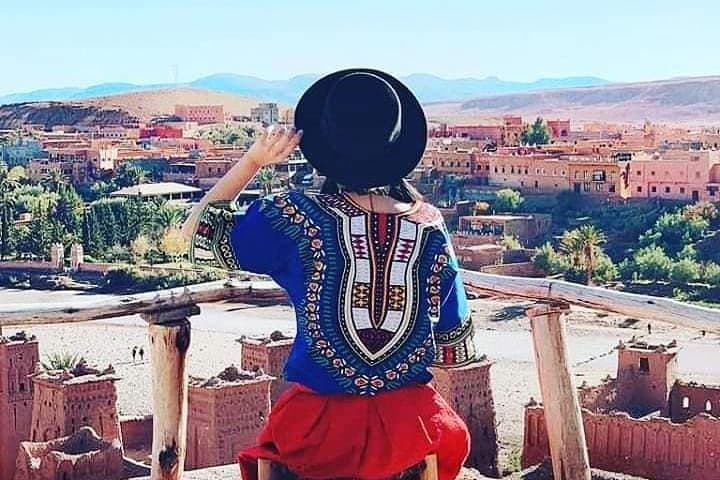
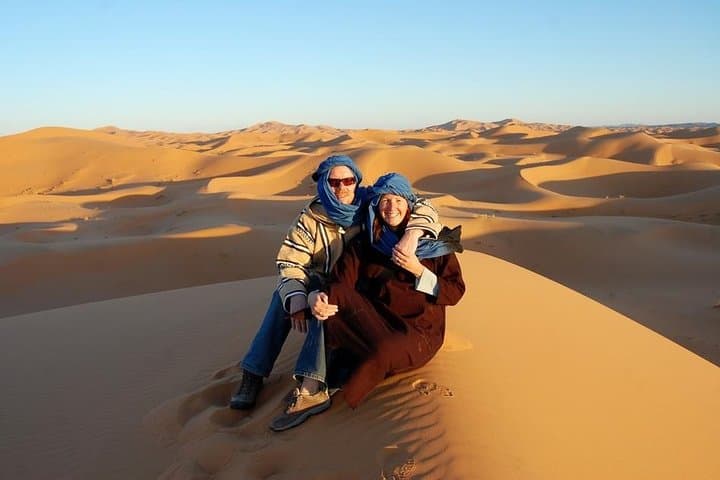
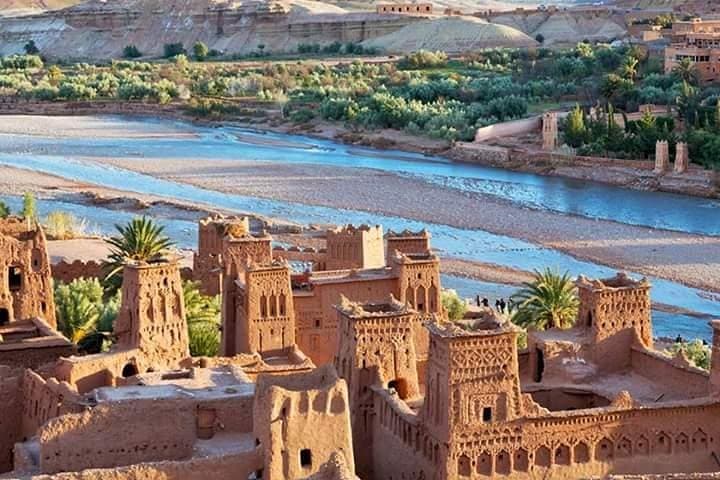
By midafternoon you arrive at Ait Ben Haddou, an earthen fortress that remembers caravan trade and film crews alike—mud-brick walls baking under relentless sun. The drive continues across the Anti-Atlas and into the Draa Valley, where the palm groves run like a green spine and the river dares you to follow its shade south. As the vehicle drops off the paved road, dunes step forward; the desert’s slow insistence shapes every horizon.
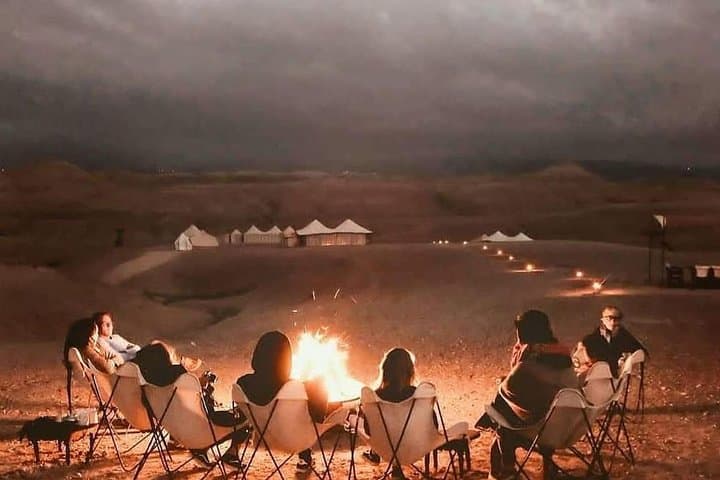
Zagora’s sand is geologically young, wind-sculpted granules from the Sahara that creak underfoot and hold heat into the evening. Cultural threads here run deep: kasbahs, Berber drum songs, and a history of trans-Saharan caravans. The luxury camp offers a softer edge—private tent with bathroom, dinner, and a night around the fire listening to nomad rhythms while the sky rotates stars visibly.
Expect a relaxed pace: long driving stretches, a short guided walk, a camel ride timed for sunset, then a night under canvas. Bring sun protection and layers—the desert cools quickly. Hydrate before dune walks and practice footing on loose sand; the camel’s gait is steady but unfamiliar to many.
This is a sensory trip—rock and sand, drum and wind—with practical logistics handled for you: private transport, meals, and an overnight in a luxury tent make it ideal for travelers who want the Sahara experience without backcountry complexity.
moderate.
24–30 hours.
Suitable for travelers in average fitness; brief dune walks and mounting a camel require basic mobility and balance
Pickup is typically from Marrakech; the return drops you back in Marrakech on day two after visiting Ouarzazate and local kasbahs.
Camel rides timed for sunset are usually short (20–45 minutes) and suitable for beginners—staff assist mounting and dismounting.
Overnight is in a luxury tent with a private bathroom; meals include dinner the first night and breakfast on day two as described in the itinerary.
You cross the Tizi n’Tichka at about 2,260 m; travelers with severe altitude sensitivity should consult a doctor, but most people experience only mild effects if any.
The route follows former caravan corridors; Ait Ben Haddou preserves clay architecture from trans-Saharan trade and later film production history.
Water is scarce—follow camp guidance on water use, avoid single-use plastics, and stick to established paths to protect fragile desert crusts.
Marrakech day Trip operates guided outdoor trips and adventures with an emphasis on safety, stewardship, and memorable experiences.
On the road out of Marrakech the Atlas climbs like a gate; switchbacks carve the air and the town’s hum recedes to gravel and wind.
On the road out of Marrakech the Atlas climbs like a gate; switchbacks carve the air and the town’s hum recedes to gravel and wind.
By midafternoon you arrive at Ait Ben Haddou, an earthen fortress that remembers caravan trade and film crews alike—mud-brick walls baking under relentless sun. The drive continues across the Anti-Atlas and into the Draa Valley, where the palm groves run like a green spine and the river dares you to follow its shade south. As the vehicle drops off the paved road, dunes step forward; the desert’s slow insistence shapes every horizon.
Zagora’s sand is geologically young, wind-sculpted granules from the Sahara that creak underfoot and hold heat into the evening. Cultural threads here run deep: kasbahs, Berber drum songs, and a history of trans-Saharan caravans. The luxury camp offers a softer edge—private tent with bathroom, dinner, and a night around the fire listening to nomad rhythms while the sky rotates stars visibly.
Expect a relaxed pace: long driving stretches, a short guided walk, a camel ride timed for sunset, then a night under canvas. Bring sun protection and layers—the desert cools quickly. Hydrate before dune walks and practice footing on loose sand; the camel’s gait is steady but unfamiliar to many.
This is a sensory trip—rock and sand, drum and wind—with practical logistics handled for you: private transport, meals, and an overnight in a luxury tent make it ideal for travelers who want the Sahara experience without backcountry complexity.