THE ADVENTURE COLLECTIVE® · Independent discovery and booking for outdoor travel

Travel from Luxor to the sacred temples of Abydos and Dendera on a private full-day transfer that pairs archaeological depth with comfortable travel. Visit Seti I’s Abydos and Hathor’s Dendera, buy tickets on site, and finish with a transfer to Hurghada.
Travel from Luxor to the sacred temples of Abydos and Dendera on a private full-day transfer that pairs archaeological depth with comfortable travel. Visit Seti I’s Abydos and Hathor’s Dendera, buy tickets on site, and finish with a transfer to Hurghada.
You pull away from Luxor at dawn and the Nile’s green ribbon shrinks behind you as desert flats and village roofs roll by. The driver steers an air-conditioned car along a road that stitches fertile fields to ochre stone; the hush inside the vehicle sharpens as the silhouette of Abydos rises like a memory carved in rock.
Verified experiences and guided adventures in the surrounding area.
Operated by Eyes of Egypt · Luxor, Luxor Governorate
You pull away from Luxor at dawn and the Nile’s green ribbon shrinks behind you as desert flats and village roofs roll by. The driver steers an air-conditioned car along a road that stitches fertile fields to ochre stone; the hush inside the vehicle sharpens as the silhouette of Abydos rises like a memory carved in rock.
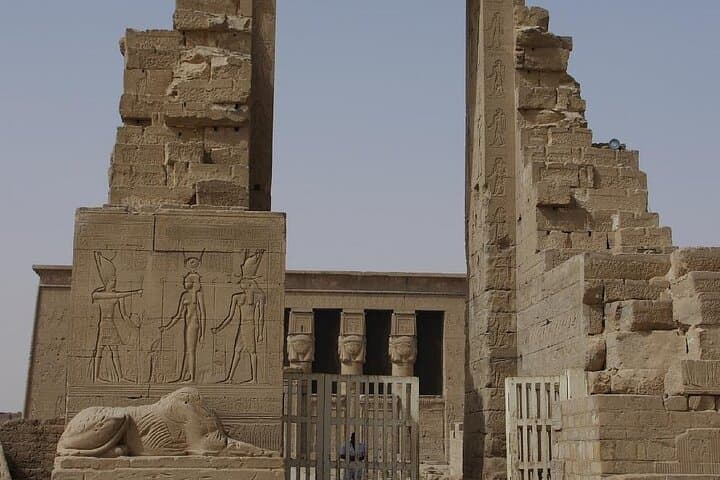
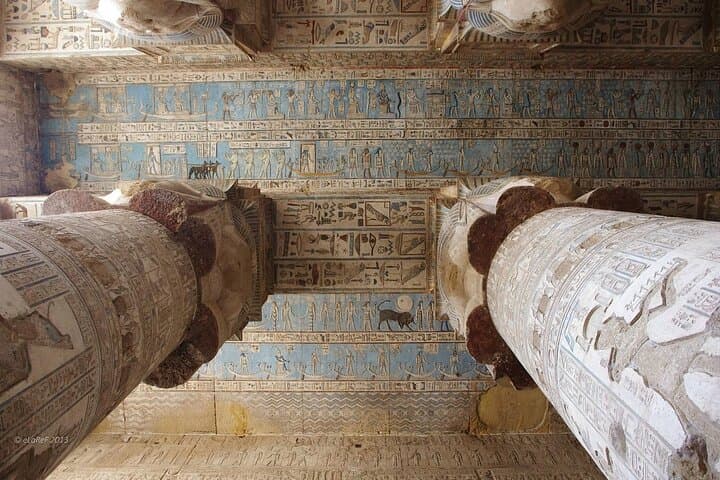
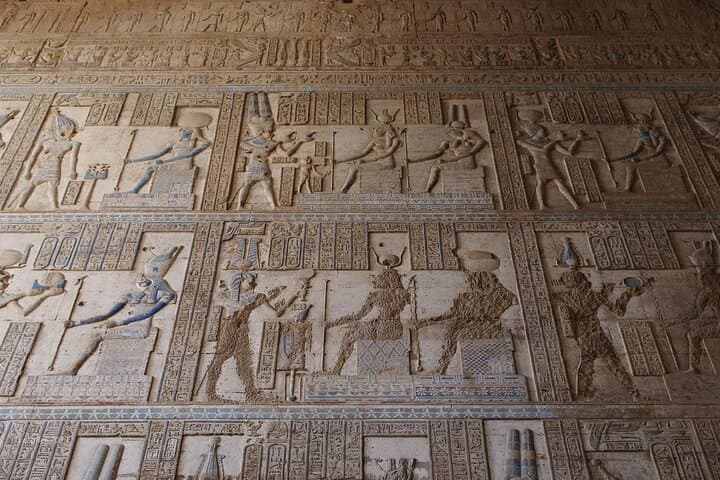
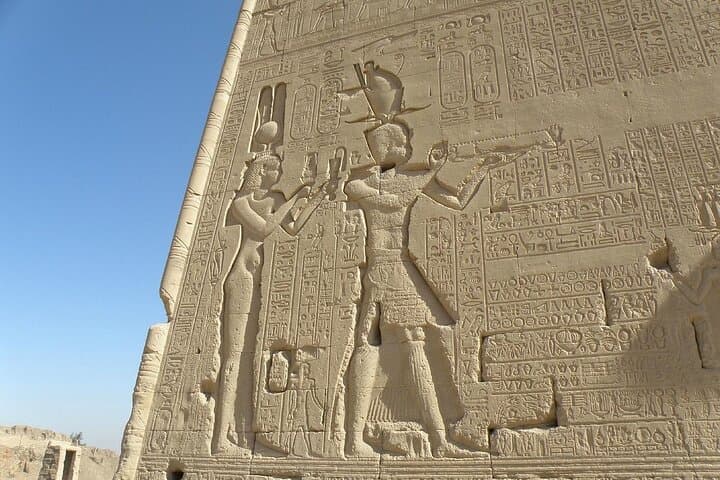
Abydos and Dendera are chapters of Egypt’s long liturgy: Abydos, a millennia-old pilgrimage center for Osiris with the Seti I temple and the rare Abydos King List; Dendera, a later cult site for Hathor whose zodiac ceiling and Hathoric column faces survive in vivid relief. Geologically you move from Nile alluvium—deep, irrigated soil—to limestone outcrops and the eastern desert’s gravel plains, a shift that helped make these sites sacred and defensible. Culturally, expect quiet devotion, small vendor stalls, and local farmers whose rhythms have anchored the valley for generations.
Practical rhythm: temple visits involve mostly level walking on compacted sand and stone with steps into chambers and crypts. Tickets are purchased on site; certified guides can add context but are optional. Carry sun protection, cash for admissions and snacks, and a charged phone for photos. Timing matters—arrive early to avoid the heat and afternoon light that flattens relief carvings. The driver handles the long miles; your role is to move deliberately between sanctuaries, to listen to stone and shadow, and to leave no trace.
This private transfer from Luxor to Hurghada pairs archaeology with comfort: long stretches of quiet road punctuated by two outstanding, lesser-crowded temples.
easy.
10–11 hours.
Low; mostly vehicle travel with short, mostly level walks around temple complexes
No—entrance tickets for Abydos and Dendera are paid on site by each guest; bring Egyptian pounds or confirmed card acceptance varies.
Yes—the transfer is in an air-conditioned private vehicle and suitable for those with limited mobility, though some temple areas have uneven ground.
A certified guide can accompany you inside the temples for an extra fee if requested in advance; the driver provides logistical support only.
The full experience runs about 10–11 hours, with roughly 3 hours total driving between major stops and extended time at each temple.
Abydos was a primary cult center for Osiris and a focus of royal commemoration; Dendera’s temple complex preserves Ptolemaic and Roman-era additions including an astronomical ceiling.
These sites are managed with preservation priorities; stick to marked paths, avoid touching painted reliefs, and support local conservation by using licensed guides and paying official fees.
Eyes of Egypt operates guided outdoor trips and adventures with an emphasis on safety, stewardship, and memorable experiences.
You pull away from Luxor at dawn and the Nile’s green ribbon shrinks behind you as desert flats and village roofs roll by. The driver steers an air-conditioned car along a road that stitches fertile fields to ochre stone; the hush inside the vehicle sharpens as the silhouette of Abydos rises like a memory carved in rock.
You pull away from Luxor at dawn and the Nile’s green ribbon shrinks behind you as desert flats and village roofs roll by. The driver steers an air-conditioned car along a road that stitches fertile fields to ochre stone; the hush inside the vehicle sharpens as the silhouette of Abydos rises like a memory carved in rock.
Abydos and Dendera are chapters of Egypt’s long liturgy: Abydos, a millennia-old pilgrimage center for Osiris with the Seti I temple and the rare Abydos King List; Dendera, a later cult site for Hathor whose zodiac ceiling and Hathoric column faces survive in vivid relief. Geologically you move from Nile alluvium—deep, irrigated soil—to limestone outcrops and the eastern desert’s gravel plains, a shift that helped make these sites sacred and defensible. Culturally, expect quiet devotion, small vendor stalls, and local farmers whose rhythms have anchored the valley for generations.
Practical rhythm: temple visits involve mostly level walking on compacted sand and stone with steps into chambers and crypts. Tickets are purchased on site; certified guides can add context but are optional. Carry sun protection, cash for admissions and snacks, and a charged phone for photos. Timing matters—arrive early to avoid the heat and afternoon light that flattens relief carvings. The driver handles the long miles; your role is to move deliberately between sanctuaries, to listen to stone and shadow, and to leave no trace.
This private transfer from Luxor to Hurghada pairs archaeology with comfort: long stretches of quiet road punctuated by two outstanding, lesser-crowded temples.