THE ADVENTURE COLLECTIVE® · Independent discovery and booking for outdoor travel

Spend a private day from Luxor visiting Kom Ombo’s unusual double temple and the remarkably complete Temple of Horus at Edfu. This customizable tour pairs close-up archaeology with Nile-side scenery and practical travel logistics.
Spend a private day from Luxor visiting Kom Ombo’s unusual double temple and the remarkably complete Temple of Horus at Edfu. This customizable tour pairs close-up archaeology with Nile-side scenery and practical travel logistics.
You leave Luxor at first light, the city unhurried and the Nile bright against the roadside. The highway west of the river slides past palm groves and brick villages until the temple pylons of Kom Ombo appear, rising like bookends to a different age.
Verified experiences and guided adventures in the surrounding area.
Operated by Eyes of Egypt · Luxor, Luxor Governorate
You leave Luxor at first light, the city unhurried and the Nile bright against the roadside. The highway west of the river slides past palm groves and brick villages until the temple pylons of Kom Ombo appear, rising like bookends to a different age.
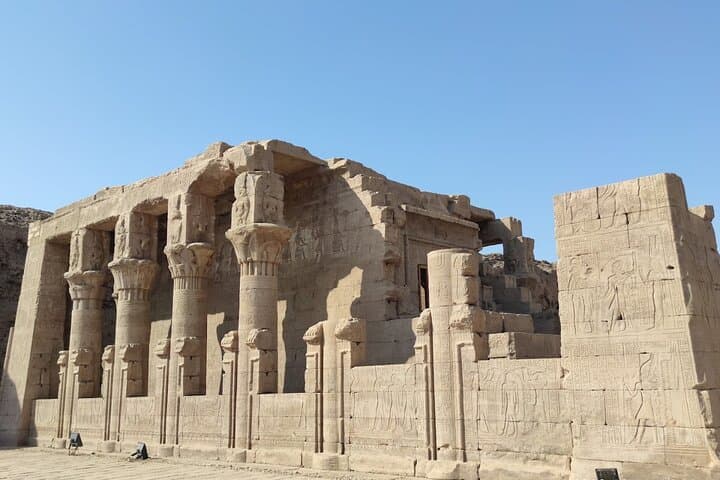
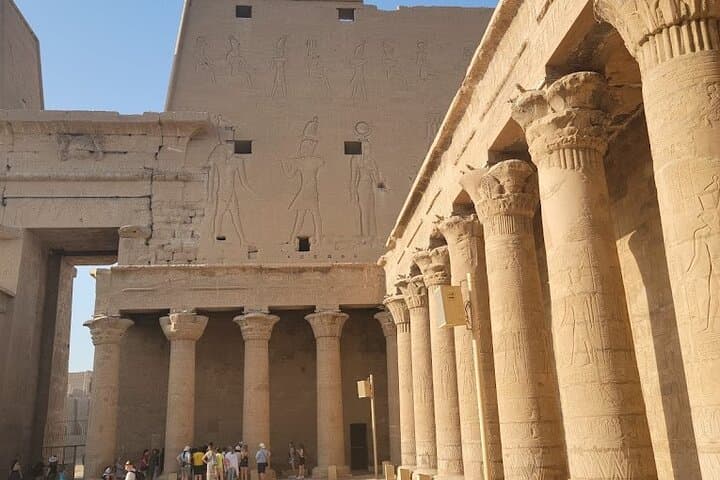
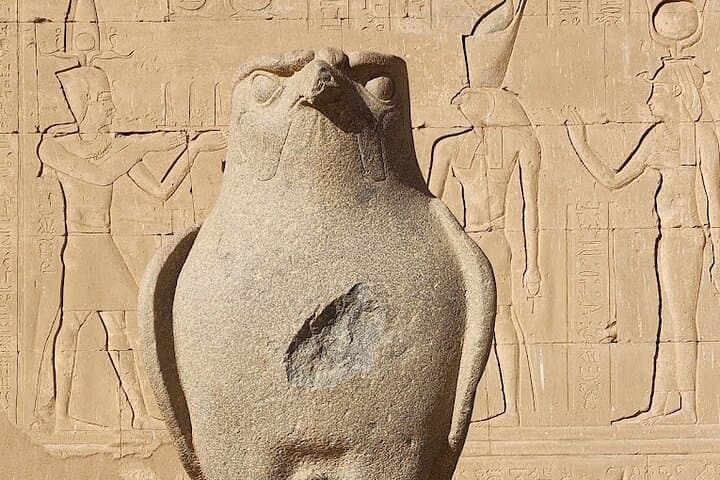
Kom Ombo’s twin sanctuaries — one for Sobek the crocodile god, the other for Horus the falcon-headed god — feel almost theatrical. Reliefs and carved registers tell local myths: crocodile cults, mummified crocodiles, and a ruler’s grief that shaped ritual practice. Downriver at Edfu, the Temple of Horus offers another mood: a nearly intact Ptolemaic complex, massive pylons and columned courts that survived beneath centuries of settlement debris and dust.
Geology here is simple: sun-baked sandstone and Nile alluvium, which both preserved and exposed stonework over millennia. The culture you pass through is modern Nile-side Egypt — fishermen, feluccas, and market stalls — a practical backdrop to monumental architecture.
Practical guidance: expect a full day (7–9 hours) in a private air-conditioned vehicle with walking on uneven stone and sandy surfaces. Midday heat is intense; schedule temple visits for morning or late afternoon when possible. Consider a certified Egyptologist for deeper context and skip-the-line tickets if you want fast entry. Bring sunscreen, a wide-brim hat, refillable water, and modest clothing that covers shoulders and knees.
This is a day for history lovers who want concentrated time with two very different temple complexes, paced to your group and grounded in the rhythms of the Nile.
moderate.
7–9 hours.
Moderate fitness: able to walk 1–3 miles total on uneven ground and climb stairs inside temples.
Entrance fees are included only if you select the all-inclusive option; otherwise fees are paid locally or added to your booking when chosen.
The tour runs approximately 7–9 hours (420–540 minutes) depending on traffic, time at sites, and any customization.
Temples have uneven ground and steps; the operator lists wheelchair-accessible transport, but access within temples may be limited — inquire about mobility accommodations in advance.
Yes — this private tour is customizable and you can add a certified Egyptologist guide for deeper interpretation and skip-the-line arrangements.
Edfu is a Ptolemaic-era temple begun under Ptolemy III and completed under Ptolemy XII; Kom Ombo’s double dedication to Sobek and Horus reflects local cults and Nile ecology.
Temples are conserved but vulnerable to tourism wear and riverine humidity; stay on marked paths, avoid touching carved reliefs, and follow local guide instructions to reduce impact.
Eyes of Egypt operates guided outdoor trips and adventures with an emphasis on safety, stewardship, and memorable experiences.

You leave Luxor at first light, the city unhurried and the Nile bright against the roadside. The highway west of the river slides past palm groves and brick villages until the temple pylons of Kom Ombo appear, rising like bookends to a different age.
You leave Luxor at first light, the city unhurried and the Nile bright against the roadside. The highway west of the river slides past palm groves and brick villages until the temple pylons of Kom Ombo appear, rising like bookends to a different age.
Kom Ombo’s twin sanctuaries — one for Sobek the crocodile god, the other for Horus the falcon-headed god — feel almost theatrical. Reliefs and carved registers tell local myths: crocodile cults, mummified crocodiles, and a ruler’s grief that shaped ritual practice. Downriver at Edfu, the Temple of Horus offers another mood: a nearly intact Ptolemaic complex, massive pylons and columned courts that survived beneath centuries of settlement debris and dust.
Geology here is simple: sun-baked sandstone and Nile alluvium, which both preserved and exposed stonework over millennia. The culture you pass through is modern Nile-side Egypt — fishermen, feluccas, and market stalls — a practical backdrop to monumental architecture.
Practical guidance: expect a full day (7–9 hours) in a private air-conditioned vehicle with walking on uneven stone and sandy surfaces. Midday heat is intense; schedule temple visits for morning or late afternoon when possible. Consider a certified Egyptologist for deeper context and skip-the-line tickets if you want fast entry. Bring sunscreen, a wide-brim hat, refillable water, and modest clothing that covers shoulders and knees.
This is a day for history lovers who want concentrated time with two very different temple complexes, paced to your group and grounded in the rhythms of the Nile.