THE ADVENTURE COLLECTIVE® · Independent discovery and booking for outdoor travel

Travel from Luxor to two of Egypt’s most compelling river temples on a private, full‑day excursion. Explore Edfu’s Horus sanctuary and Kom Ombo’s dual temple with an expert guide and included admissions.
Travel from Luxor to two of Egypt’s most compelling river temples on a private, full‑day excursion. Explore Edfu’s Horus sanctuary and Kom Ombo’s dual temple with an expert guide and included admissions.
At first light you leave Luxor in an air‑conditioned vehicle, the Nile keeping time on your right as palm groves blur past. The road narrows, desert ridges shove back and the temples of Edfu and Kom Ombo rise from the riverplain like carved chapters of a long story. In Edfu, the massive pylons and deep reliefs of the Temple of Horus draw you into an era when pharaohs, priests and pilgrims shaped a ritual landscape.
Verified experiences and guided adventures in the surrounding area.
Operated by Egypt Tours Travel · Luxor, Luxor Governorate
At first light you leave Luxor in an air‑conditioned vehicle, the Nile keeping time on your right as palm groves blur past. The road narrows, desert ridges shove back and the temples of Edfu and Kom Ombo rise from the riverplain like carved chapters of a long story. In Edfu, the massive pylons and deep reliefs of the Temple of Horus draw you into an era when pharaohs, priests and pilgrims shaped a ritual landscape.
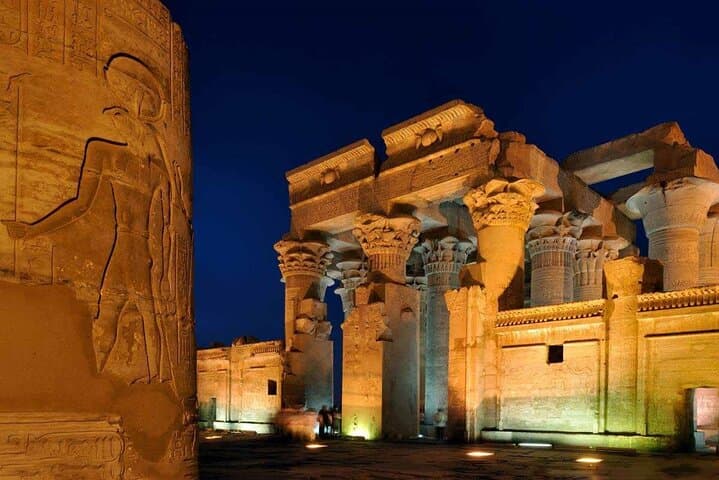
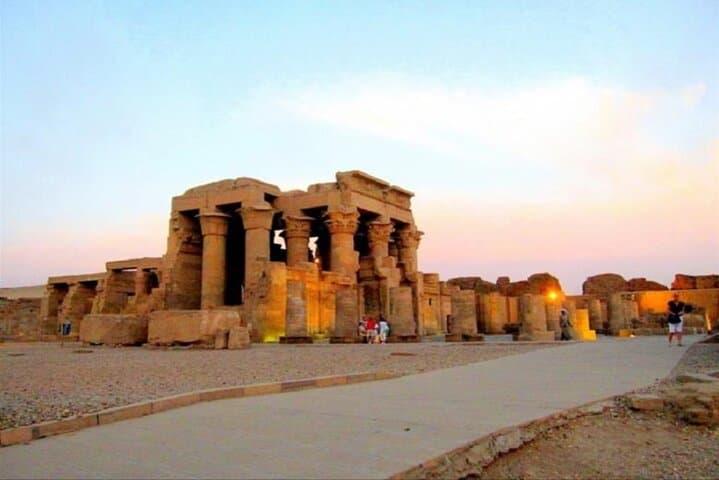
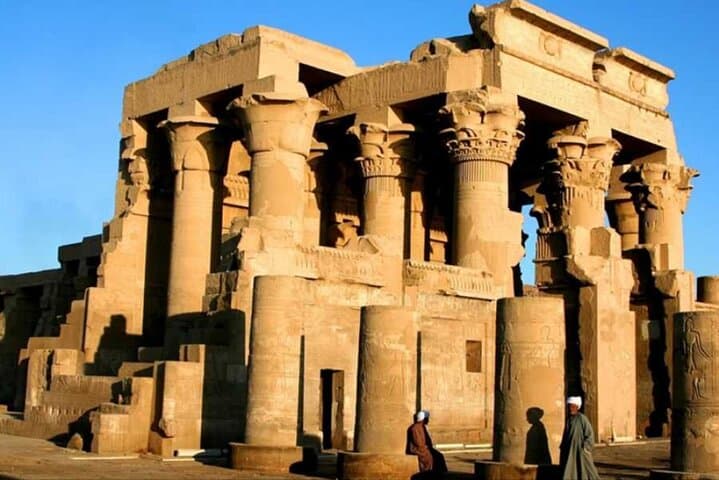
Built in the Ptolemaic period, Edfu’s stone work explains political power as much as religion — the falcon‑god Horus is everywhere, watching and judging. Kom Ombo, by contrast, is a study in duality: two sanctuaries under one roof honoring Sobek the crocodile and Horus the falcon. The temple’s reliefs and the nearby Crocodile Museum hint at a Nile that both nourished and demanded respect.
Geology is plain here: sandstone blocks quarried and moved by river and human muscle, sun‑bleached and long resistant to wind. Local culture still orbits the river — fishing families, date sellers and small markets where ancient and modern Egypt meet.
Practically: the full private excursion runs about seven hours with guided entrance included; wear sturdy shoes, bring sun protection and a refillable water bottle, and expect stretches of uncovered sun. Photography is generally allowed but avoid touching carved surfaces; small cash is useful for tips and refreshments. Accessible for most travelers, this tour pairs easy walking with a rich concentration of history — a compact, intense day on the Nile’s eastern bank.
easy.
6–7 hours.
Suitable for most fitness levels; requires walking on flat temple floors and short stairs
Yes — the tour includes hotel pickup and drop‑off in Luxor; your pickup point is confirmed at booking.
Yes — admission fees to Edfu and Kom Ombo are included in the tour price.
The tour lists wheelchair accessible transport and surfaces; some temple areas have steps, so check specifics with the operator before booking.
This is a private tour with a dedicated guide and vehicle; you control the pace within the scheduled time.
Edfu and Kom Ombo are primarily Ptolemaic temples (3rd–1st century BCE) built on older ritual sites; Kom Ombo’s dual dedication reflects local cult practices tied to the Nile’s bounty and dangers.
Visitor pressure can accelerate erosion of carved stone; follow your guide’s instructions, avoid touching reliefs, and minimize single‑use plastics to reduce local waste.
Egypt Tours Travel operates guided outdoor trips and adventures with an emphasis on safety, stewardship, and memorable experiences.
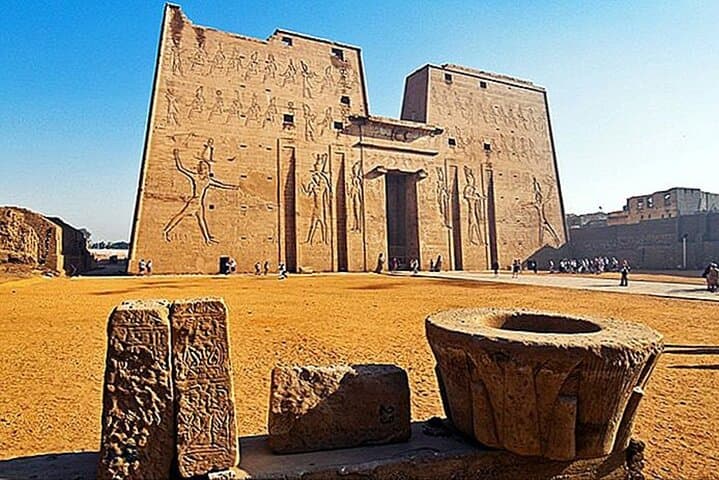
At first light you leave Luxor in an air‑conditioned vehicle, the Nile keeping time on your right as palm groves blur past. The road narrows, desert ridges shove back and the temples of Edfu and Kom Ombo rise from the riverplain like carved chapters of a long story. In Edfu, the massive pylons and deep reliefs of the Temple of Horus draw you into an era when pharaohs, priests and pilgrims shaped a ritual landscape.
At first light you leave Luxor in an air‑conditioned vehicle, the Nile keeping time on your right as palm groves blur past. The road narrows, desert ridges shove back and the temples of Edfu and Kom Ombo rise from the riverplain like carved chapters of a long story. In Edfu, the massive pylons and deep reliefs of the Temple of Horus draw you into an era when pharaohs, priests and pilgrims shaped a ritual landscape.
Built in the Ptolemaic period, Edfu’s stone work explains political power as much as religion — the falcon‑god Horus is everywhere, watching and judging. Kom Ombo, by contrast, is a study in duality: two sanctuaries under one roof honoring Sobek the crocodile and Horus the falcon. The temple’s reliefs and the nearby Crocodile Museum hint at a Nile that both nourished and demanded respect.
Geology is plain here: sandstone blocks quarried and moved by river and human muscle, sun‑bleached and long resistant to wind. Local culture still orbits the river — fishing families, date sellers and small markets where ancient and modern Egypt meet.
Practically: the full private excursion runs about seven hours with guided entrance included; wear sturdy shoes, bring sun protection and a refillable water bottle, and expect stretches of uncovered sun. Photography is generally allowed but avoid touching carved surfaces; small cash is useful for tips and refreshments. Accessible for most travelers, this tour pairs easy walking with a rich concentration of history — a compact, intense day on the Nile’s eastern bank.