THE ADVENTURE COLLECTIVE® · Independent discovery and booking for outdoor travel

Drive north from Luxor to stand beneath the painted ceilings and astronomical panels of Dendera’s Hathor Temple. This private half-day tour pairs door-to-door transport with a guide, roof access, and an intimate look at Ptolemaic-era reliefs.
Drive north from Luxor to stand beneath the painted ceilings and astronomical panels of Dendera’s Hathor Temple. This private half-day tour pairs door-to-door transport with a guide, roof access, and an intimate look at Ptolemaic-era reliefs.
You leave Luxor before the heat tightens, the air conditioning a quiet companion as the Nile’s green edges slip by — sugarcane, date palms, and the occasional mud-brick village. An hour-and-a-half north, the stone mass of the Temple of Hathor rises from the plain: broad columns, painted ceilings, and a roofline that invites a climb for a low, honest skyline of the Egyptian countryside.
Verified experiences and guided adventures in the surrounding area.
Operated by Egypt Lifetime Tours · Dendera, Qena Governorate
You leave Luxor before the heat tightens, the air conditioning a quiet companion as the Nile’s green edges slip by — sugarcane, date palms, and the occasional mud-brick village. An hour-and-a-half north, the stone mass of the Temple of Hathor rises from the plain: broad columns, painted ceilings, and a roofline that invites a climb for a low, honest skyline of the Egyptian countryside.
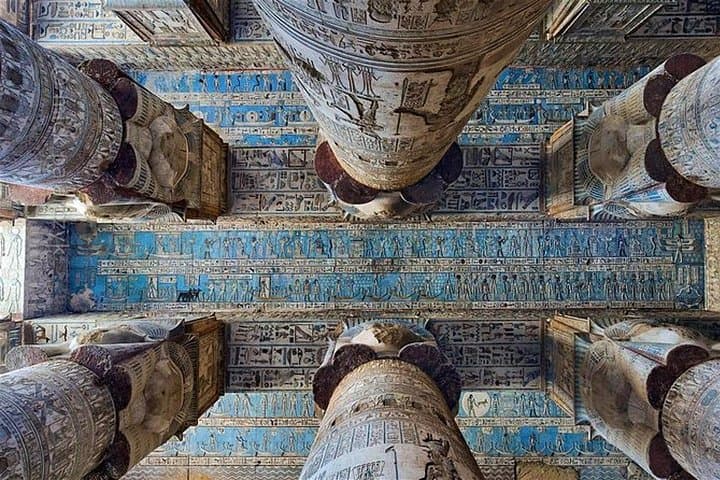
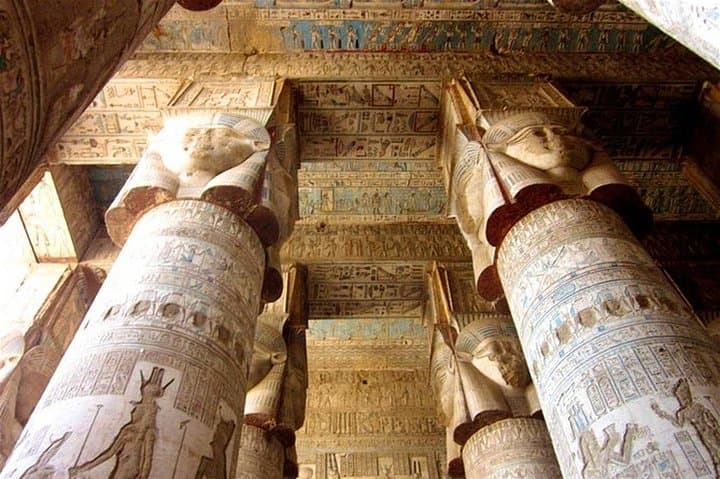
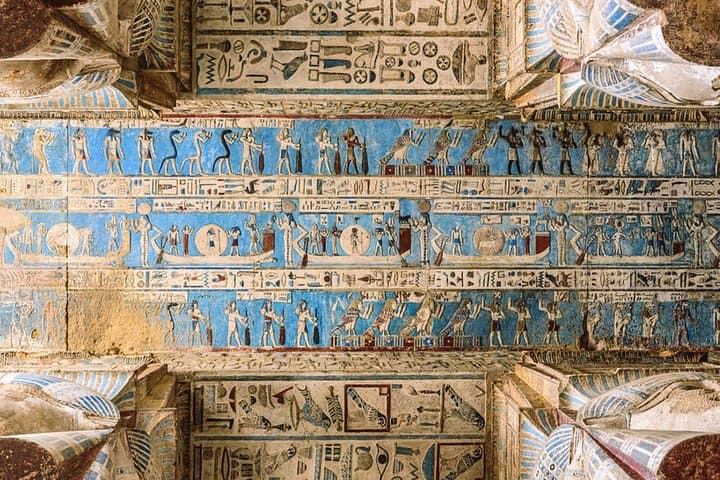
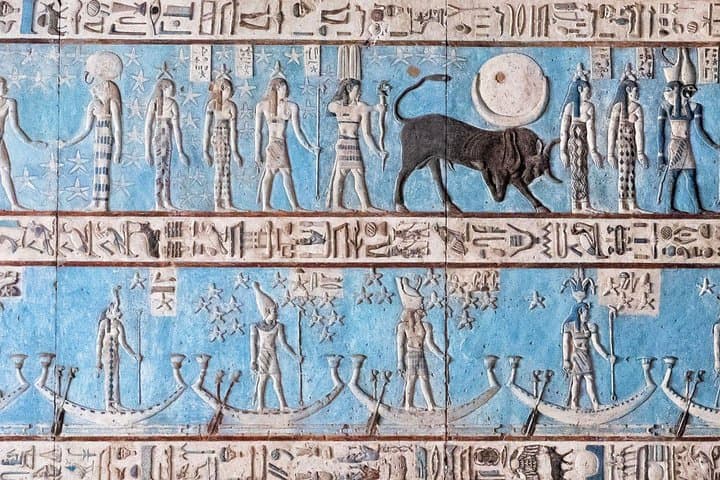
The temple at Dendera is late Pharaonic in spirit and Ptolemaic-Roman in finish. Architects worked with local limestone and sandstone, chiseling astronomical panels and a rare relief believed to show Cleopatra and her child. Visitors can study zodiac and astronomical scenes — the original zodiac now lives in the Louvre — descend into crypt-like chambers and, for those willing, squeeze up narrow passages to the roof for close views of carved cow-head capitals.
Culturally, Dendera was a center for rituals to Hathor, goddess of music, childbirth, and pleasure; the reliefs still carry the gestures and instruments of that cult.
Practically: this private half-day includes door-to-door pick up in an air-conditioned car, a guide, and one water bottle; entrance fees are paid on site. Wear sturdy shoes for uneven stone, sun protection, and be ready for steps and tight passages — roof access is narrow and can be steep. Bring a camera, small cash or card for tickets and gratuities, and plan the visit for morning or late afternoon to avoid mid-day heat. The trip balances easy logistics with concentrated archaeological reward.
easy.
5–6 hours.
Suitable for most fitness levels; expect short climbs, steps, and standing during explanations.
No — entrance fees are paid on site by visitors; tour includes transport, guide, and one bottle of water.
The drive is roughly 60–90 minutes each way depending on traffic and pickup location; plan on about 5–6 hours total for the half-day tour.
The site is generally accessible but rooftop and narrow passages are steep and not suitable for everyone; the tour notes wheelchair-accessible options but roof access will be restricted.
Yes — photography is generally allowed; be respectful of signage and any restricted areas indicated by the guide.
Dendera’s main temple complex was completed in the Ptolemaic and Roman eras over older sacred sites; it served as a major cult center for Hathor, linking music, fertility, and astronomy.
Ongoing conservation focuses on stabilizing paint and reliefs; visitors should avoid touching carvings and follow pathways to minimize wear on ancient stone.
Egypt Lifetime Tours operates guided outdoor trips and adventures with an emphasis on safety, stewardship, and memorable experiences.
You leave Luxor before the heat tightens, the air conditioning a quiet companion as the Nile’s green edges slip by — sugarcane, date palms, and the occasional mud-brick village. An hour-and-a-half north, the stone mass of the Temple of Hathor rises from the plain: broad columns, painted ceilings, and a roofline that invites a climb for a low, honest skyline of the Egyptian countryside.
You leave Luxor before the heat tightens, the air conditioning a quiet companion as the Nile’s green edges slip by — sugarcane, date palms, and the occasional mud-brick village. An hour-and-a-half north, the stone mass of the Temple of Hathor rises from the plain: broad columns, painted ceilings, and a roofline that invites a climb for a low, honest skyline of the Egyptian countryside.
The temple at Dendera is late Pharaonic in spirit and Ptolemaic-Roman in finish. Architects worked with local limestone and sandstone, chiseling astronomical panels and a rare relief believed to show Cleopatra and her child. Visitors can study zodiac and astronomical scenes — the original zodiac now lives in the Louvre — descend into crypt-like chambers and, for those willing, squeeze up narrow passages to the roof for close views of carved cow-head capitals.
Culturally, Dendera was a center for rituals to Hathor, goddess of music, childbirth, and pleasure; the reliefs still carry the gestures and instruments of that cult.
Practically: this private half-day includes door-to-door pick up in an air-conditioned car, a guide, and one water bottle; entrance fees are paid on site. Wear sturdy shoes for uneven stone, sun protection, and be ready for steps and tight passages — roof access is narrow and can be steep. Bring a camera, small cash or card for tickets and gratuities, and plan the visit for morning or late afternoon to avoid mid-day heat. The trip balances easy logistics with concentrated archaeological reward.