THE ADVENTURE COLLECTIVE® · Independent discovery and booking for outdoor travel

Travel between Luxor and Aswan while visiting Kom Ombo and Edfu Temples on a private transfer. This six-hour journey combines comfortable transport with two of Upper Egypt’s most accessible Ptolemaic monuments.
Travel between Luxor and Aswan while visiting Kom Ombo and Edfu Temples on a private transfer. This six-hour journey combines comfortable transport with two of Upper Egypt’s most accessible Ptolemaic monuments.
Morning light on the Nile turns the river into a ribbon of burnished bronze as the air-cooled vehicle pulls away from Luxor. The drive to Aswan becomes a moving gallery: riverbanks with small farms, low cliffs of exposed sandstone, and the occasional palm grove rearing above mudbrick villages. Stops at Kom Ombo and Edfu break the road trip into two concentrated dives into ancient religion and stonework.
Verified experiences and guided adventures in the surrounding area.
Operated by Emo Tours Swiss · Luxor, Luxor Governorate
Morning light on the Nile turns the river into a ribbon of burnished bronze as the air-cooled vehicle pulls away from Luxor. The drive to Aswan becomes a moving gallery: riverbanks with small farms, low cliffs of exposed sandstone, and the occasional palm grove rearing above mudbrick villages. Stops at Kom Ombo and Edfu break the road trip into two concentrated dives into ancient religion and stonework.
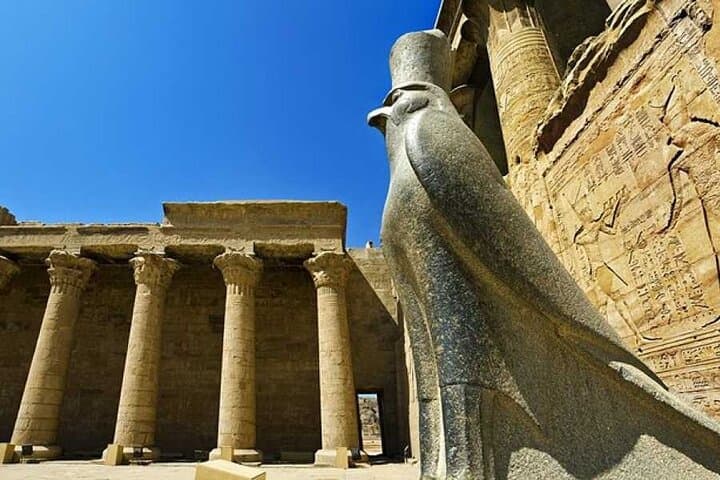
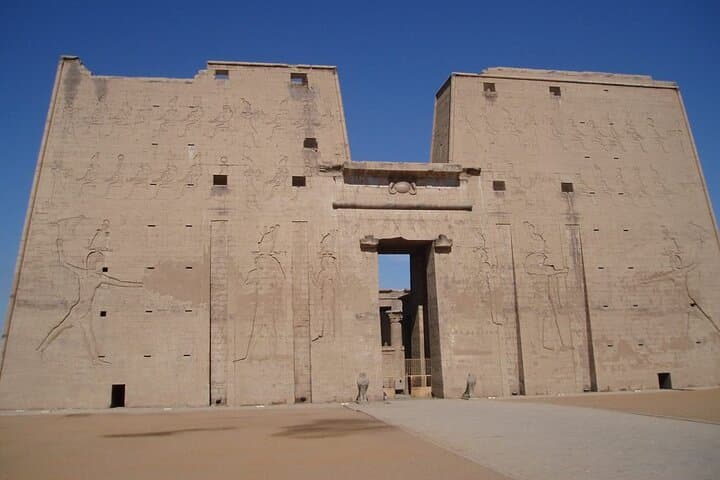
Kom Ombo’s unusual twin-temple layout—Ptolemaic in construction—lays out two shrines in mirror image, honoring Sobek and Horus and reflecting the Nile-dependent, dualistic worldview of the region. Edfu, farther south, is one of Egypt’s best-preserved Ptolemaic temples; its stately pylons and carved reliefs narrate rituals, royal dedications, and daily life in the temple economy. Geologically, the route follows the Nile’s floodplain, where thin alluvial soils sit beneath soft sandstone bluffs; buildings and fields both respond to the river’s seasonal rhythms.
Culturally, drivers, guides, and small vendors along the way are part of a living Nile economy—expect brief exchanges, offers of cold drinks, and local crafts near the temple gates. Practical guidance: plan for a 6‑hour window, carry sun protection and a refillable water bottle, and wear shoes suited to uneven stone floors and short stair sections. Security and ticket checks are routine; bring passport ID and digital copies as requested.
This transfer is transport-first with rich archaeological stops: efficient for travelers who want to move between Luxor and Aswan while getting two meaningful temple visits without adding extra nights.
easy.
6 hours.
Minimal fitness required—short walks and stairs at temple sites; suitable for most travelers.
The trip is about 6 hours total; stops typically allow 45–90 minutes at each temple depending on traffic and group preference.
Entrance fees are usually not included—confirm at booking and bring cash or card to pay on site if required.
Yes—booking requires passport details and a photocopy; carry your passport for security checks and ticketing.
Yes, the service is advertised as a private, air-conditioned vehicle suitable for door-to-door transfer.
Both Kom Ombo and Edfu temples are primarily Ptolemaic constructions built on older sacred sites; their reliefs and inscriptions document cult practice and local administration along the Nile.
These monuments are managed under Egypt’s antiquities authorities; visitors should follow marked paths, avoid touching reliefs, and minimize plastic waste to reduce impact.
Emo Tours Swiss operates guided outdoor trips and adventures with an emphasis on safety, stewardship, and memorable experiences.
Morning light on the Nile turns the river into a ribbon of burnished bronze as the air-cooled vehicle pulls away from Luxor. The drive to Aswan becomes a moving gallery: riverbanks with small farms, low cliffs of exposed sandstone, and the occasional palm grove rearing above mudbrick villages. Stops at Kom Ombo and Edfu break the road trip into two concentrated dives into ancient religion and stonework.
Morning light on the Nile turns the river into a ribbon of burnished bronze as the air-cooled vehicle pulls away from Luxor. The drive to Aswan becomes a moving gallery: riverbanks with small farms, low cliffs of exposed sandstone, and the occasional palm grove rearing above mudbrick villages. Stops at Kom Ombo and Edfu break the road trip into two concentrated dives into ancient religion and stonework.
Kom Ombo’s unusual twin-temple layout—Ptolemaic in construction—lays out two shrines in mirror image, honoring Sobek and Horus and reflecting the Nile-dependent, dualistic worldview of the region. Edfu, farther south, is one of Egypt’s best-preserved Ptolemaic temples; its stately pylons and carved reliefs narrate rituals, royal dedications, and daily life in the temple economy. Geologically, the route follows the Nile’s floodplain, where thin alluvial soils sit beneath soft sandstone bluffs; buildings and fields both respond to the river’s seasonal rhythms.
Culturally, drivers, guides, and small vendors along the way are part of a living Nile economy—expect brief exchanges, offers of cold drinks, and local crafts near the temple gates. Practical guidance: plan for a 6‑hour window, carry sun protection and a refillable water bottle, and wear shoes suited to uneven stone floors and short stair sections. Security and ticket checks are routine; bring passport ID and digital copies as requested.
This transfer is transport-first with rich archaeological stops: efficient for travelers who want to move between Luxor and Aswan while getting two meaningful temple visits without adding extra nights.