THE ADVENTURE COLLECTIVE® · Independent discovery and booking for outdoor travel

Float between Luxor and Aswan on a private five-day Nile cruise that pairs sunrise temple tours with lazy afternoons on deck. Visit Karnak, the Valley of the Kings, Edfu and Philae while an Egyptologist brings ancient stories to life.
Float between Luxor and Aswan on a private five-day Nile cruise that pairs sunrise temple tours with lazy afternoons on deck. Visit Karnak, the Valley of the Kings, Edfu and Philae while an Egyptologist brings ancient stories to life.
The sun lifts off the Nile like a slow promise—gold slanting across the sundeck as the boat slips away from Luxor's quay. Passengers stand with tea on the rail, watching mud banks and palm clusters slide by while the cruise's wake sketches a temporary road on the river. Over five days the landscape alternates: compressed desert bluffs give way to ribboned farmland, temple pylons rise from sand like ancient doors, and small villages appear as color against the water.
Verified experiences and guided adventures in the surrounding area.
Operated by Get Nile Cruise · Luxor, Luxor Governorate
The sun lifts off the Nile like a slow promise—gold slanting across the sundeck as the boat slips away from Luxor's quay. Passengers stand with tea on the rail, watching mud banks and palm clusters slide by while the cruise's wake sketches a temporary road on the river. Over five days the landscape alternates: compressed desert bluffs give way to ribboned farmland, temple pylons rise from sand like ancient doors, and small villages appear as color against the water.
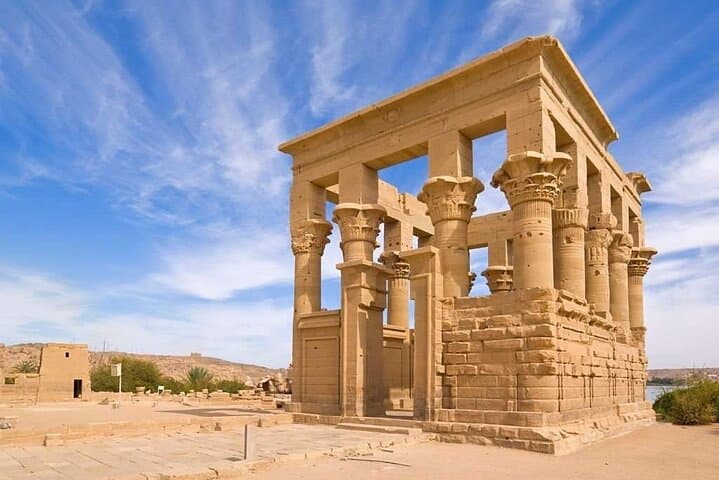
This itinerary threads the high points of Upper Egypt: Karnak and Luxor's monumental avenues, the rock-cut tombs of the Valley of the Kings, Hatshepsut’s mortuary temple, Edfu’s well-preserved Temple of Horus and Kom Ombo’s double shrine. Geologically the route follows the Nile’s long floodplain carved through Pleistocene sediments; culturally it traces millennia of Pharaonic worship and, later, Nubian life reshaped by the Aswan High Dam.
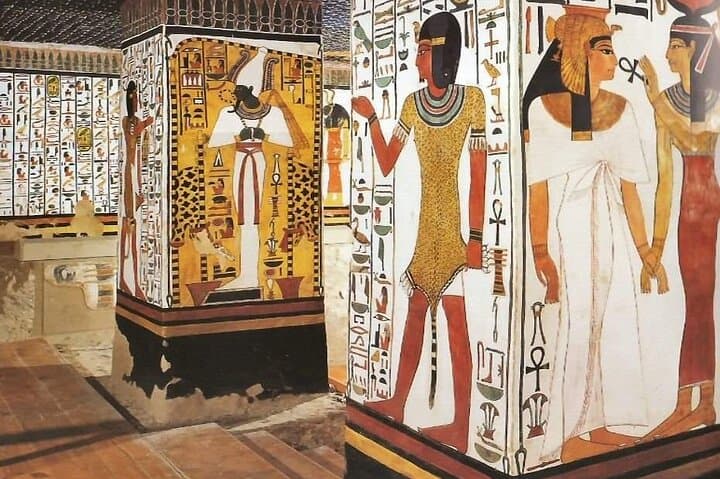
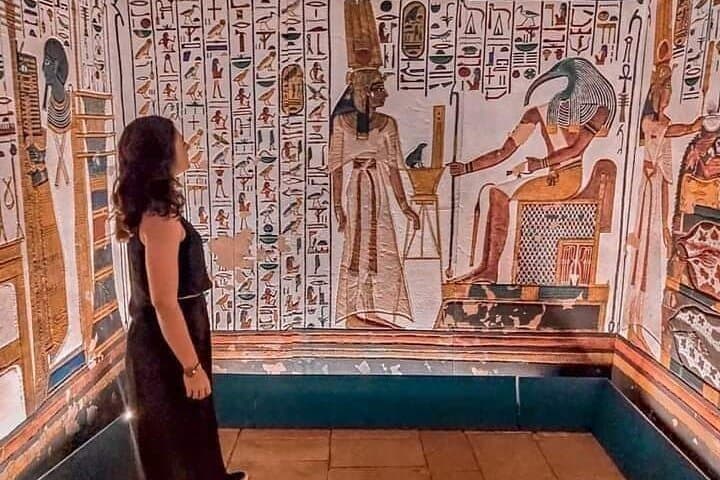
Expect guided walks over uneven stone, short carriage rides in Edfu, and a motorboat to Philae. The pace is relaxed but active—mornings are best for temple visits to avoid heat and crowds; afternoons suit slow navigation, tea on deck and a late-day felucca around Aswan’s islands. Practical notes: carry sun protection, a reusable water bottle and sturdy shoes with grip for steps and sand. Bring small change for tips, and keep camera batteries charged—sites have limited charging options. Respect conservation rules inside tombs (no flash, minimal touching) to preserve fragile pigments.
By the final felucca ride, the Nile has a rhythm: it dares you to slow down and watch history pass by.
easy.
5 days, 4 nights.
Suitable for travelers in average fitness who can walk moderate distances and climb stairs; not strenuous but requires mobility on uneven terrain.
Entrance fees to the mentioned sites are included if you select the option that covers admissions; confirm at booking and carry ID for ticketing.
The cruise notes wheelchair accessibility, but temple sites and some boats may have steps—advise the operator of needs in advance for tailored arrangements.
Yes, a professional English-speaking Egyptologist guide is provided to lead site visits and explain historical context.
Private A/C transfers from Luxor airport, railway station or hotels are included; specify arrival details at booking to coordinate pickup.
The Nile corridor linked Upper and Lower Egypt for millennia; temples along this route were built and modified across pharaonic dynasties and later shaped by Hellenistic and Roman presence.
Tourism pressures and past dam projects altered local ecology and village life—respect restricted areas, avoid flash photography in tombs and support local guides and community-run businesses.
Get Nile Cruise operates guided outdoor trips and adventures with an emphasis on safety, stewardship, and memorable experiences.
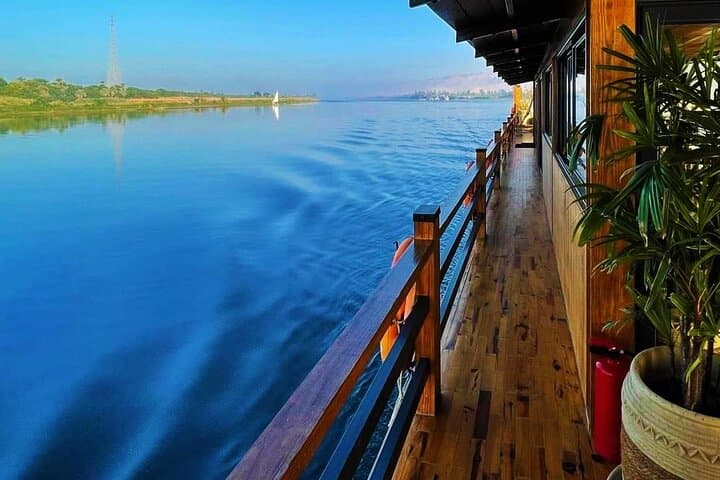
The sun lifts off the Nile like a slow promise—gold slanting across the sundeck as the boat slips away from Luxor's quay. Passengers stand with tea on the rail, watching mud banks and palm clusters slide by while the cruise's wake sketches a temporary road on the river. Over five days the landscape alternates: compressed desert bluffs give way to ribboned farmland, temple pylons rise from sand like ancient doors, and small villages appear as color against the water.
The sun lifts off the Nile like a slow promise—gold slanting across the sundeck as the boat slips away from Luxor's quay. Passengers stand with tea on the rail, watching mud banks and palm clusters slide by while the cruise's wake sketches a temporary road on the river. Over five days the landscape alternates: compressed desert bluffs give way to ribboned farmland, temple pylons rise from sand like ancient doors, and small villages appear as color against the water.
This itinerary threads the high points of Upper Egypt: Karnak and Luxor's monumental avenues, the rock-cut tombs of the Valley of the Kings, Hatshepsut’s mortuary temple, Edfu’s well-preserved Temple of Horus and Kom Ombo’s double shrine. Geologically the route follows the Nile’s long floodplain carved through Pleistocene sediments; culturally it traces millennia of Pharaonic worship and, later, Nubian life reshaped by the Aswan High Dam.
Expect guided walks over uneven stone, short carriage rides in Edfu, and a motorboat to Philae. The pace is relaxed but active—mornings are best for temple visits to avoid heat and crowds; afternoons suit slow navigation, tea on deck and a late-day felucca around Aswan’s islands. Practical notes: carry sun protection, a reusable water bottle and sturdy shoes with grip for steps and sand. Bring small change for tips, and keep camera batteries charged—sites have limited charging options. Respect conservation rules inside tombs (no flash, minimal touching) to preserve fragile pigments.
By the final felucca ride, the Nile has a rhythm: it dares you to slow down and watch history pass by.