THE ADVENTURE COLLECTIVE® · Independent discovery and booking for outdoor travel

Travel north from Luxor to two of Egypt’s most evocative temple complexes—Abydos, home of the Abydos King List, and the Greco-Roman splendor of Dendera. This guided tour combines expert interpretation with manageable walks across paved temple grounds.
Travel north from Luxor to two of Egypt’s most evocative temple complexes—Abydos, home of the Abydos King List, and the Greco-Roman splendor of Dendera. This guided tour combines expert interpretation with manageable walks across paved temple grounds.
You step into the pale heat of Upper Egypt as the minibus pulls away from Luxor, palms and mud-brick villages sliding past the Nile floodplain. Roads run straight as rulers between fields; the sense of time shifts as ancient stone draws nearer—first the enigmatic reliefs of Abydos, then the columned cool of Dendera.
Verified experiences and guided adventures in the surrounding area.
Operated by Cupid EgypTravel · Luxor, Luxor Governorate
You step into the pale heat of Upper Egypt as the minibus pulls away from Luxor, palms and mud-brick villages sliding past the Nile floodplain. Roads run straight as rulers between fields; the sense of time shifts as ancient stone draws nearer—first the enigmatic reliefs of Abydos, then the columned cool of Dendera.
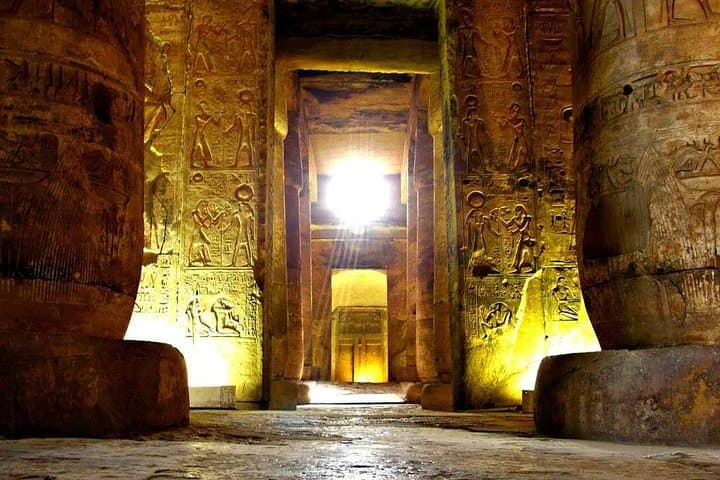
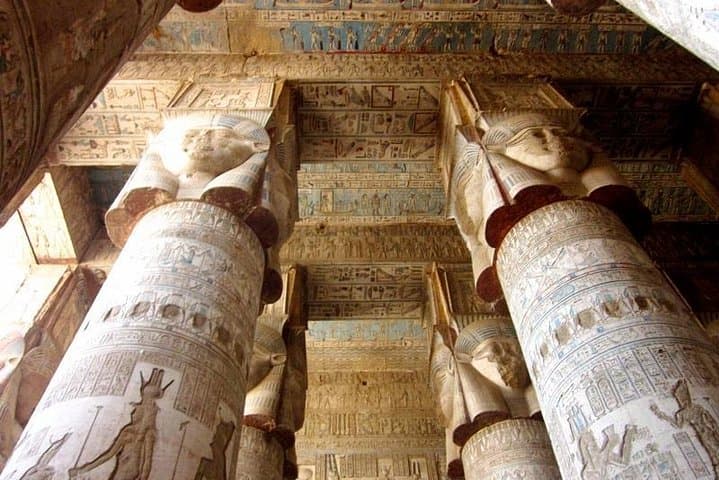
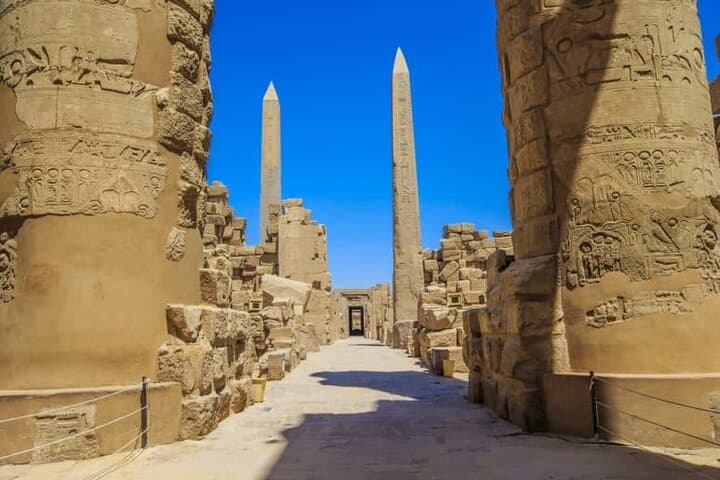
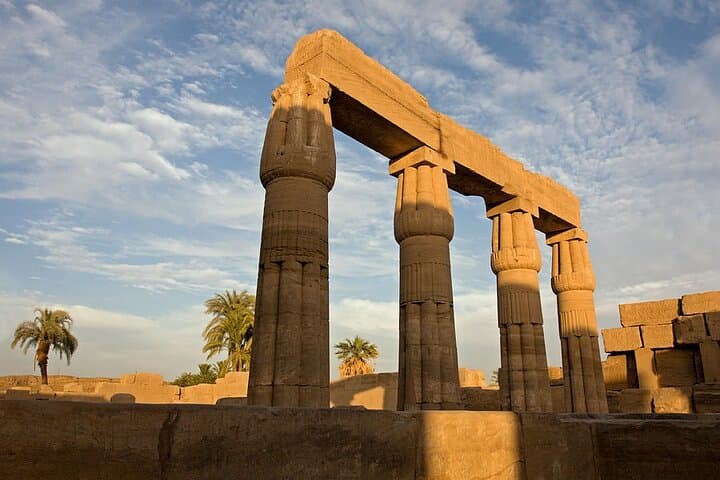
Abydos is the older, more intimate stop: Seti I’s memorial temple holds the Abydos King List, a unique chronological record carved into stone that links pharaohs across dynasties. Geologically the sites ride the Nile’s limestone bench—sandstone and compacted silt that ancient craftsmen carved with surgical precision. Dendera, rebuilt in the Greco-Roman era, offers a different personality: Hathor’s hypostyle hall, astral ceilings (the famed Dendera Zodiac), and a rooftop panorama of cultivated plain and distant hills.
Culturally this circuit shows how Egyptian religion and imperial memory were built to be seen—columns that talk, reliefs that narrate, roofs that frame the sky.
Practical guidance: the tour is primarily flat walking on paved and worn stone; expect uneven steps and low thresholds inside chambers. Wear sun protection and comfortable closed-toe shoes; carry at least 1–2 liters of water (bottles often provided). Start early to avoid the high sun—midday can be intense—and allow time to listen to an Egyptologist guide who'll explain inscriptions and ritual layout. Photography is generally allowed but avoid flash on pigments and follow site rules. Mobility access is advertised, but some surfaces are rough; a cautious approach is best. Return to Luxor with a clearer picture of how pharaohs curated their past and how centuries of styles layer on the same sacred ground.
easy.
4 hours.
Light walking ability; suitable for most fitness levels but involves standing and short stair sections.
The listing does not explicitly state entrance fees; confirm with the operator before booking—many organized tours include site entry but not always.
Transport and many areas are described as wheelchair accessible, but temple interiors have uneven stone floors and steps; travelers requiring full accessibility should notify the operator in advance.
Both sites are roughly 1–2 hours’ drive north of Luxor depending on traffic: Dendera is east-northeast near Qena and Abydos is further northwest along the Nile corridor.
Non-flash photography is generally permitted; flash may be restricted to protect pigments—obey local signs and guide instructions.
Abydos preserves a royal memorial tradition—Seti I’s temple contains the Abydos King List, a rare dynastic register; Dendera reflects later Greco-Roman pharaonic cults centered on Hathor.
Sites are sensitive: avoid touching reliefs, respect marked pathways, and use provided waste facilities to limit erosion and pollution.
Cupid EgypTravel operates guided outdoor trips and adventures with an emphasis on safety, stewardship, and memorable experiences.
You step into the pale heat of Upper Egypt as the minibus pulls away from Luxor, palms and mud-brick villages sliding past the Nile floodplain. Roads run straight as rulers between fields; the sense of time shifts as ancient stone draws nearer—first the enigmatic reliefs of Abydos, then the columned cool of Dendera.
You step into the pale heat of Upper Egypt as the minibus pulls away from Luxor, palms and mud-brick villages sliding past the Nile floodplain. Roads run straight as rulers between fields; the sense of time shifts as ancient stone draws nearer—first the enigmatic reliefs of Abydos, then the columned cool of Dendera.
Abydos is the older, more intimate stop: Seti I’s memorial temple holds the Abydos King List, a unique chronological record carved into stone that links pharaohs across dynasties. Geologically the sites ride the Nile’s limestone bench—sandstone and compacted silt that ancient craftsmen carved with surgical precision. Dendera, rebuilt in the Greco-Roman era, offers a different personality: Hathor’s hypostyle hall, astral ceilings (the famed Dendera Zodiac), and a rooftop panorama of cultivated plain and distant hills.
Culturally this circuit shows how Egyptian religion and imperial memory were built to be seen—columns that talk, reliefs that narrate, roofs that frame the sky.
Practical guidance: the tour is primarily flat walking on paved and worn stone; expect uneven steps and low thresholds inside chambers. Wear sun protection and comfortable closed-toe shoes; carry at least 1–2 liters of water (bottles often provided). Start early to avoid the high sun—midday can be intense—and allow time to listen to an Egyptologist guide who'll explain inscriptions and ritual layout. Photography is generally allowed but avoid flash on pigments and follow site rules. Mobility access is advertised, but some surfaces are rough; a cautious approach is best. Return to Luxor with a clearer picture of how pharaohs curated their past and how centuries of styles layer on the same sacred ground.