THE ADVENTURE COLLECTIVE® · Independent discovery and booking for outdoor travel

Experience Luxor Temple after sunset when soft illumination reveals carved reliefs and empty walkways. Choose self‑guided, guided, or VIP options for a private, 2–3 hour night visit optimized for photos and quiet history.
Experience Luxor Temple after sunset when soft illumination reveals carved reliefs and empty walkways. Choose self‑guided, guided, or VIP options for a private, 2–3 hour night visit optimized for photos and quiet history.
The sky over the Nile dims to a deep indigo as warm floodlights pick out the hieroglyphs on the temple’s facades. Walkways cool beneath your feet and the columns, which have borne the wind and heat of millennia, take on a new clarity in the pool of light—shadows sharpening the carved scenes of gods and pharaohs.
Verified experiences and guided adventures in the surrounding area.
Operated by Eyes of Egypt · Luxor, Luxor Governorate
The sky over the Nile dims to a deep indigo as warm floodlights pick out the hieroglyphs on the temple’s facades. Walkways cool beneath your feet and the columns, which have borne the wind and heat of millennia, take on a new clarity in the pool of light—shadows sharpening the carved scenes of gods and pharaohs.
Luxor Temple began under Amenhotep III around 1400 BCE and was expanded by Ramesses II; the site bears layers from Pharaonic, Greek, Roman, Christian and Islamic periods. Built largely of sandstone on the east bank of the Nile, the complex was a living cult center for the Theban triad—Amun‑Ra, Mut and Khonsu—and later adapted by successive cultures.
Evening visits highlight carved reliefs and the great pylon without the day’s tourist crush, and the air, warmed by the river, feels like it’s holding its breath. Local guides can place monuments in narrative context—why an obelisk stands where it does, how later rulers reused stone—and photographers get cleaner light and longer exposures.
Practical guidance: book the guided or VIP option if you want tickets and interpretation included; self‑guided is cheaper but requires buying entry yourself. Tours run about 2–3 hours; wear comfortable shoes for uneven stone and modest clothing that covers shoulders and knees out of respect. Bring a fast‑lens camera or a smartphone with low‑light capability; tripods may be restricted, so confirm with the operator. Pickup and drop‑off within Luxor are normally included; the site is wheelchair accessible but expect some uneven surfaces. For the best light, schedule arrival at sunset and linger into the early evening to see the monuments resolve from silhouette into detail.
easy.
2–3 hours.
Suitable for most travelers who can walk short distances on uneven stone surfaces and a few steps.
Yes—photography for personal use is allowed; flash is permitted but tripods and professional gear may be restricted without prior permission from site authorities or the operator.
The operator lists the tour as wheelchair accessible, but expect some uneven ground; contact the provider in advance to arrange accessible pickup and to confirm on‑site assistance.
No: Self‑Guided provides transfer only (no entrance); Guided includes a licensed guide and tickets; VIP adds premium service—confirm your selection when booking.
Full refunds are available if you cancel at least 24 hours before the scheduled departure; later cancellations are not refundable per the operator’s standard policy.
Luxor Temple functioned as a ceremonial center for the annual Opet Festival and was built in stages from the New Kingdom through later eras, showing continuous reuse and adaptation.
Respect the site by not touching carved reliefs or climbing monuments; supporting licensed local guides helps fund conservation and provides accurate cultural context.
Eyes of Egypt operates guided outdoor trips and adventures with an emphasis on safety, stewardship, and memorable experiences.

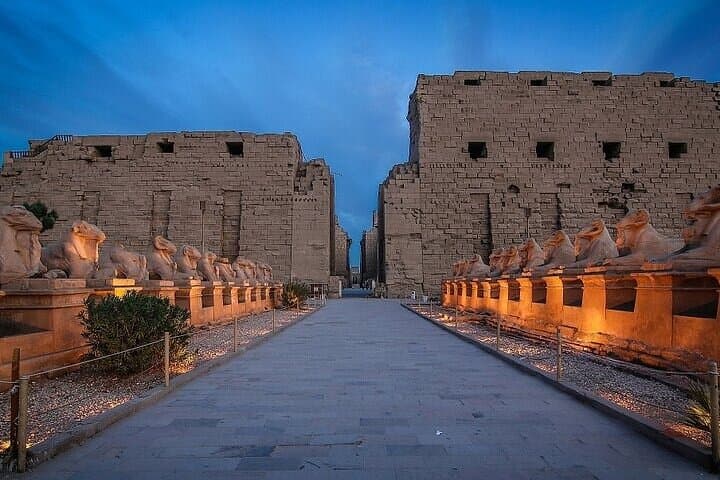


The sky over the Nile dims to a deep indigo as warm floodlights pick out the hieroglyphs on the temple’s facades. Walkways cool beneath your feet and the columns, which have borne the wind and heat of millennia, take on a new clarity in the pool of light—shadows sharpening the carved scenes of gods and pharaohs.
The sky over the Nile dims to a deep indigo as warm floodlights pick out the hieroglyphs on the temple’s facades. Walkways cool beneath your feet and the columns, which have borne the wind and heat of millennia, take on a new clarity in the pool of light—shadows sharpening the carved scenes of gods and pharaohs.
Luxor Temple began under Amenhotep III around 1400 BCE and was expanded by Ramesses II; the site bears layers from Pharaonic, Greek, Roman, Christian and Islamic periods. Built largely of sandstone on the east bank of the Nile, the complex was a living cult center for the Theban triad—Amun‑Ra, Mut and Khonsu—and later adapted by successive cultures.
Evening visits highlight carved reliefs and the great pylon without the day’s tourist crush, and the air, warmed by the river, feels like it’s holding its breath. Local guides can place monuments in narrative context—why an obelisk stands where it does, how later rulers reused stone—and photographers get cleaner light and longer exposures.
Practical guidance: book the guided or VIP option if you want tickets and interpretation included; self‑guided is cheaper but requires buying entry yourself. Tours run about 2–3 hours; wear comfortable shoes for uneven stone and modest clothing that covers shoulders and knees out of respect. Bring a fast‑lens camera or a smartphone with low‑light capability; tripods may be restricted, so confirm with the operator. Pickup and drop‑off within Luxor are normally included; the site is wheelchair accessible but expect some uneven surfaces. For the best light, schedule arrival at sunset and linger into the early evening to see the monuments resolve from silhouette into detail.