THE ADVENTURE COLLECTIVE® · Independent discovery and booking for outdoor travel

See Luxor Temple under floodlit columns and watch Karnak come alive in the Sound & Light Show. This private evening experience pairs self-paced exploration at Luxor with the narrated spectacle at Karnak—perfect for photographers and history lovers.
See Luxor Temple under floodlit columns and watch Karnak come alive in the Sound & Light Show. This private evening experience pairs self-paced exploration at Luxor with the narrated spectacle at Karnak—perfect for photographers and history lovers.
The evening air along the Nile is warm and alive; lamps scatter along the corniche while temple pylons rise from the darkness like slow-moving monuments. Walk past illuminated statues and columns at Luxor Temple and feel the stone absorb the night, the hieroglyphs catching the light as if the past were leaning forward to speak.
Verified experiences and guided adventures in the surrounding area.
Operated by Eyes of Egypt · Luxor, Luxor Governorate
The evening air along the Nile is warm and alive; lamps scatter along the corniche while temple pylons rise from the darkness like slow-moving monuments. Walk past illuminated statues and columns at Luxor Temple and feel the stone absorb the night, the hieroglyphs catching the light as if the past were leaning forward to speak.
Karnak and Luxor sit at the heart of ancient Thebes, built and rebuilt from the Middle Kingdom through the New Kingdom by generations of pharaohs. Karnak’s vast precincts and hypostyle halls were assembled over centuries; Luxor Temple was a ceremonial stage for opulent festivals. Geologically the area is Nile alluvium—flat, sandy terraces with archaeological layers buried close to the surface—so the monuments sit low against the desert’s slow rise toward the west bank.
Culturally the two sites remain living parts of Luxor: local vendors, mosque calls from nearby neighborhoods, and riverside life frame the ruins. The Karnak Sound & Light show uses projection and narration to map pharaohs and gods onto the stone, making history legible for a modern audience while you stay seated on the lawn of the complex.
Practical guidance: the tour runs about 3–4 hours and involves short, mostly flat walks with a few steps inside temple precincts. Wear closed shoes for uneven flagstones, bring a light jacket for cooler winter nights, and carry a charged camera or phone for low-light shots. Tickets and private transfers are included; bring your passport or ID and arrive with enough time to enjoy both sites at an unhurried pace.
easy.
3–4 hours.
Suitable for most travelers; involves moderate standing and short walks on paved and stone surfaces with a few steps.
Yes—tickets for Luxor Temple and the Karnak Sound & Light Show are included with this experience.
Yes; the itinerary is family-friendly with minimal walking and the show is designed to engage all ages.
The operator lists wheelchair-accessible transportation and accessible surfaces, but some ancient thresholds have steps—contact the provider in advance to confirm assistance needs.
Yes—the tour allows self-paced exploration of Luxor Temple while your driver waits; guided narration is provided only at the shared Karnak show.
Luxor (ancient Thebes) and Karnak were the religious heart of ancient Egypt; successive pharaohs from the Middle and New Kingdoms expanded the temples into the monumental complexes seen today.
The sites are sensitive to light and foot traffic—stick to marked paths, avoid touching carvings, and follow local guidelines to reduce wear on ancient stone.
Eyes of Egypt operates guided outdoor trips and adventures with an emphasis on safety, stewardship, and memorable experiences.
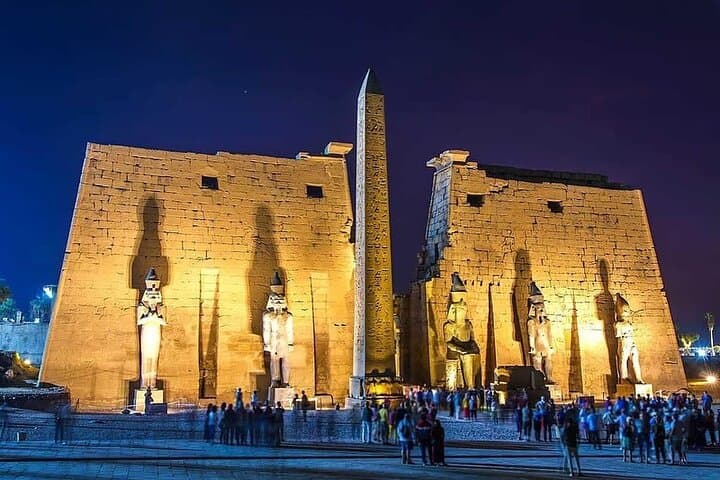
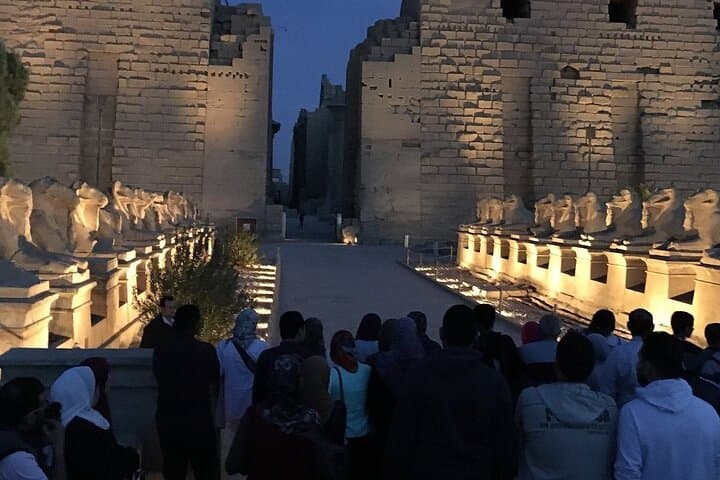
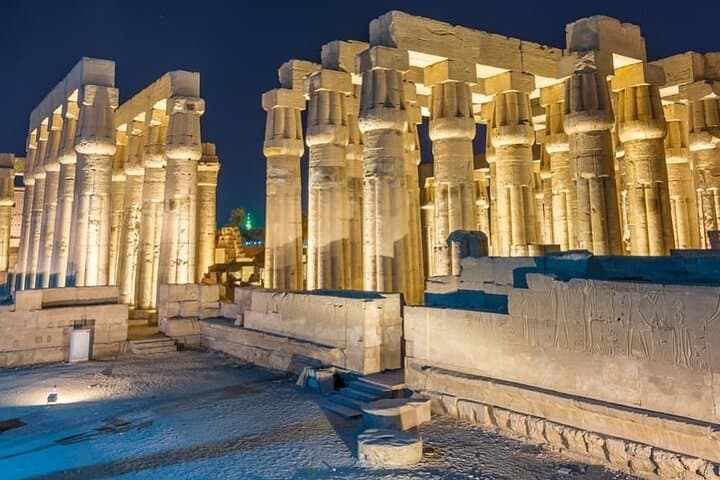
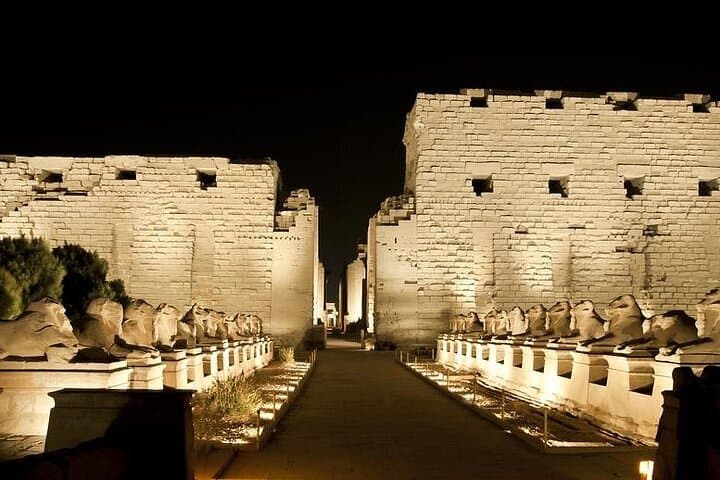
The evening air along the Nile is warm and alive; lamps scatter along the corniche while temple pylons rise from the darkness like slow-moving monuments. Walk past illuminated statues and columns at Luxor Temple and feel the stone absorb the night, the hieroglyphs catching the light as if the past were leaning forward to speak.
The evening air along the Nile is warm and alive; lamps scatter along the corniche while temple pylons rise from the darkness like slow-moving monuments. Walk past illuminated statues and columns at Luxor Temple and feel the stone absorb the night, the hieroglyphs catching the light as if the past were leaning forward to speak.
Karnak and Luxor sit at the heart of ancient Thebes, built and rebuilt from the Middle Kingdom through the New Kingdom by generations of pharaohs. Karnak’s vast precincts and hypostyle halls were assembled over centuries; Luxor Temple was a ceremonial stage for opulent festivals. Geologically the area is Nile alluvium—flat, sandy terraces with archaeological layers buried close to the surface—so the monuments sit low against the desert’s slow rise toward the west bank.
Culturally the two sites remain living parts of Luxor: local vendors, mosque calls from nearby neighborhoods, and riverside life frame the ruins. The Karnak Sound & Light show uses projection and narration to map pharaohs and gods onto the stone, making history legible for a modern audience while you stay seated on the lawn of the complex.
Practical guidance: the tour runs about 3–4 hours and involves short, mostly flat walks with a few steps inside temple precincts. Wear closed shoes for uneven flagstones, bring a light jacket for cooler winter nights, and carry a charged camera or phone for low-light shots. Tickets and private transfers are included; bring your passport or ID and arrive with enough time to enjoy both sites at an unhurried pace.