THE ADVENTURE COLLECTIVE® · Independent discovery and booking for outdoor travel

Rise above Luxor at first light and watch temples, tombs and the Nile unfold beneath you. This early-morning balloon flight pairs panoramic history with a practical, pre-dawn routine — ideal for photo-focused travelers.
Rise above Luxor at first light and watch temples, tombs and the Nile unfold beneath you. This early-morning balloon flight pairs panoramic history with a practical, pre-dawn routine — ideal for photo-focused travelers.
You lift off while the desert is still cool and the Nile is a dark ribbon below, the basket humming as it climbs into the first light. Lanterns fade, and columns, tomb mounds and tree-lined fields slowly resolve into shapes: Karnak’s pylons, the hip-roofed silhouettes of mortuary temples, and the scattered peaks of the Theban Hills. The pilot eases the burner and the breeze carries you over time-worn stone and the patchwork of small farms, the city shrinking beneath the slow arc of morning.
Verified experiences and guided adventures in the surrounding area.
Operated by CRUISE ERA · Luxor, Luxor Governorate
You lift off while the desert is still cool and the Nile is a dark ribbon below, the basket humming as it climbs into the first light. Lanterns fade, and columns, tomb mounds and tree-lined fields slowly resolve into shapes: Karnak’s pylons, the hip-roofed silhouettes of mortuary temples, and the scattered peaks of the Theban Hills. The pilot eases the burner and the breeze carries you over time-worn stone and the patchwork of small farms, the city shrinking beneath the slow arc of morning.
Luxor — ancient Thebes — is a concentration of Pharaonic sites whose monuments sit on an alluvial plain carved by the Nile and backed by limestone ridges. From the air you see geology and archaeology together: sand, cultivated floodplain and the carved facades of temples that have watched centuries of sunrise. Local crews have run flights here for years; expect a short briefing, certified pilots, and the gentle ritual of a post-flight certificate and light refreshment.
Practical points: flights depart before dawn (hotel pickup included), the airborne portion is roughly 40–50 minutes within a 2-hour window that covers transfers and briefing. Dress in layers — desert mornings are cool, and the basket can be drafty — and bring a camera with a mid-range zoom for architectural detail. Wear closed-toe shoes for the field landing. Weather can cancel flights; operators typically require 24-hour cancellation for refunds. This is an easy, low-impact way to see Luxor’s major monuments from a perspective few visitors get: quiet, panoramic, and quietly spectacular.
easy.
2 hours (includes transfers and briefing).
Minimal physical exertion required; participants should be able to stand in the basket and step in/out of a low-sided basket.
The airborne portion is approximately 40–50 minutes; the full activity, including pickup and briefing, is about 2 hours.
Operators generally allow children and older adults who can stand and climb into the basket; check specific age or weight limits with the provider before booking.
Safety-first pilots will cancel in unsafe conditions—operators typically offer a full refund if canceled at least 24 hours prior, or rebook when possible.
Yes, hotel or cruise dock pickup and drop-off are normally included as part of the transfer service.
Luxor occupies the site of ancient Thebes, a capital of Egypt’s New Kingdom; many monuments visible from the air date to pharaohs like Hatshepsut and Ramses II.
Balloon operators work with local launch crews to keep landings low-impact; stick to designated pickup points and avoid leaving litter on agricultural margins.
CRUISE ERA operates guided outdoor trips and adventures with an emphasis on safety, stewardship, and memorable experiences.

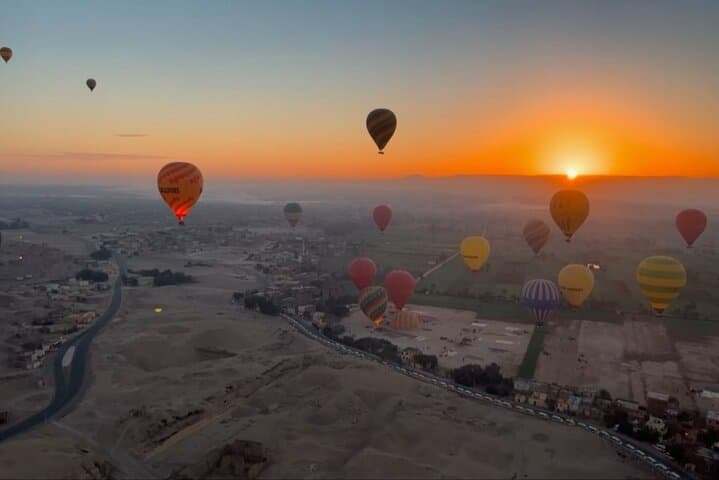
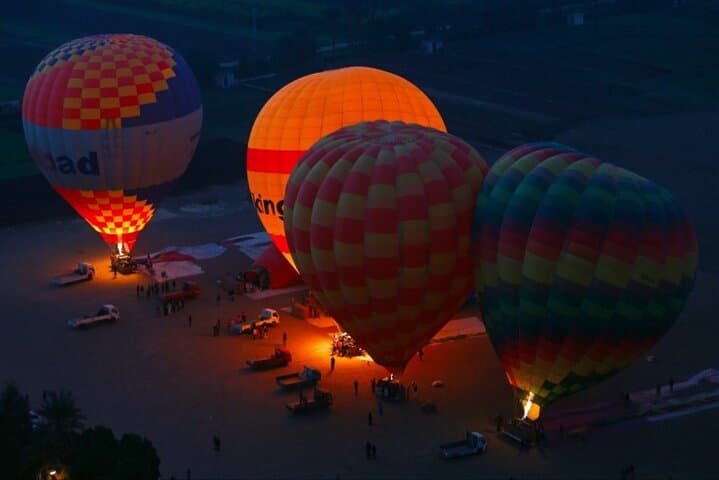
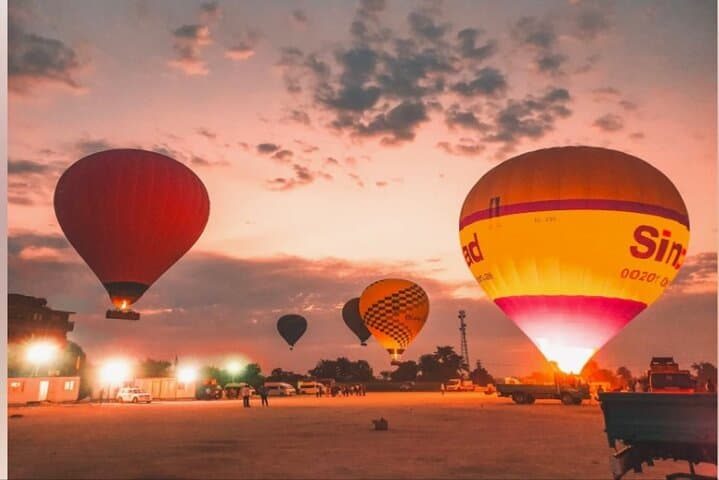
You lift off while the desert is still cool and the Nile is a dark ribbon below, the basket humming as it climbs into the first light. Lanterns fade, and columns, tomb mounds and tree-lined fields slowly resolve into shapes: Karnak’s pylons, the hip-roofed silhouettes of mortuary temples, and the scattered peaks of the Theban Hills. The pilot eases the burner and the breeze carries you over time-worn stone and the patchwork of small farms, the city shrinking beneath the slow arc of morning.
You lift off while the desert is still cool and the Nile is a dark ribbon below, the basket humming as it climbs into the first light. Lanterns fade, and columns, tomb mounds and tree-lined fields slowly resolve into shapes: Karnak’s pylons, the hip-roofed silhouettes of mortuary temples, and the scattered peaks of the Theban Hills. The pilot eases the burner and the breeze carries you over time-worn stone and the patchwork of small farms, the city shrinking beneath the slow arc of morning.
Luxor — ancient Thebes — is a concentration of Pharaonic sites whose monuments sit on an alluvial plain carved by the Nile and backed by limestone ridges. From the air you see geology and archaeology together: sand, cultivated floodplain and the carved facades of temples that have watched centuries of sunrise. Local crews have run flights here for years; expect a short briefing, certified pilots, and the gentle ritual of a post-flight certificate and light refreshment.
Practical points: flights depart before dawn (hotel pickup included), the airborne portion is roughly 40–50 minutes within a 2-hour window that covers transfers and briefing. Dress in layers — desert mornings are cool, and the basket can be drafty — and bring a camera with a mid-range zoom for architectural detail. Wear closed-toe shoes for the field landing. Weather can cancel flights; operators typically require 24-hour cancellation for refunds. This is an easy, low-impact way to see Luxor’s major monuments from a perspective few visitors get: quiet, panoramic, and quietly spectacular.