THE ADVENTURE COLLECTIVE® · Independent discovery and booking for outdoor travel

Float above the Valley of the Kings at sunrise on a 45‑minute hot air balloon flight from Luxor. This early-morning aerial tour offers clear views of pharaonic monuments, the Nile, and the dunes of the west bank.
Float above the Valley of the Kings at sunrise on a 45‑minute hot air balloon flight from Luxor. This early-morning aerial tour offers clear views of pharaonic monuments, the Nile, and the dunes of the west bank.
You lift off as the desert cools and the Nile still holds the night’s reflections, the basket humming gently beneath the envelope as the first light pushes across the Valley of the Kings. From sixty to several hundred meters above the west bank, mortuary temples, spread tombs and the Colossi of Memnon resolve into clear shapes while the Nile cuts a dark ribbon to the east.
Verified experiences and guided adventures in the surrounding area.
Operated by Book Egypt Tours · Luxor, Luxor Governorate
You lift off as the desert cools and the Nile still holds the night’s reflections, the basket humming gently beneath the envelope as the first light pushes across the Valley of the Kings. From sixty to several hundred meters above the west bank, mortuary temples, spread tombs and the Colossi of Memnon resolve into clear shapes while the Nile cuts a dark ribbon to the east.
Luxor was once ancient Thebes, the religious and political heart of pharaonic Egypt; the flight path tracks millennia of stone — tombs hewn into limestone ridges, temple courts, and the linear pulse of the Nile floodplain. Geologically the valley is riverine and sedimentary, the desert plains made of wind-swept sands and exposed Eocene limestone where royal tombs were cut. Culturally the region is dominated by tourism and archaeological conservation that considers both the monuments and fragile desert ecology.
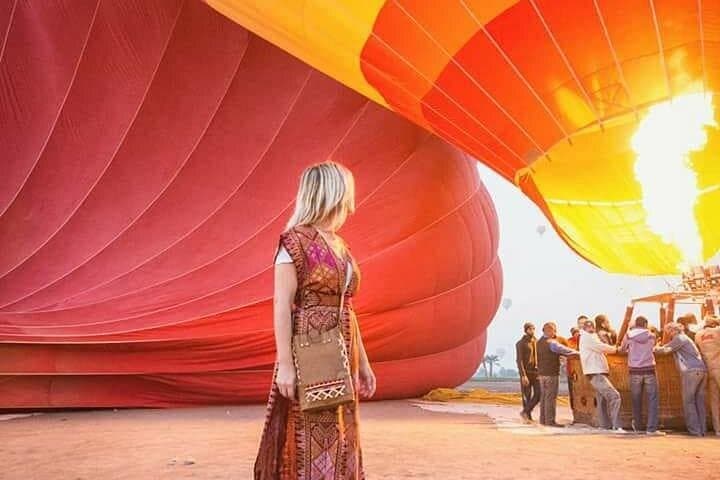
Practical guidance: flights run at sunrise for stable thermals and best views; total door-to-door time is typically 2–3 hours including hotel pickup. Wear layered clothing — desert mornings are cool, and heat builds fast. Bring a secure camera or phone strap; loose items can be lost in the field. The operator enforces weight limits and basic fitness standards; the ascent and soft landing demand moderate mobility.
Expect a poised, contemplative experience rather than adrenaline: the balloon drifts with the wind, the pilot reads currents, and the landscape slowly reorients beneath you. Book early for high season and confirm pickup details the night before.
moderate.
2–3 hours (45-minute flight + transfers).
Moderate fitness and ability to step into/out of a low basket and stand for the flight are recommended
The balloon flight itself is about 45 minutes; expect 2–3 hours total including hotel pickup and transfers.
Operators typically accept families but require moderate mobility; check age and weight restrictions and disclose health concerns when booking.
Flights are commonly canceled for unsafe winds or poor visibility—bookings usually offer a full refund or rebooking if the operator cancels due to weather.
Most tours include hotel or cruise port pick-up and drop-off — confirm your pickup location and time during booking.
Thebes (modern Luxor) was Egypt’s New Kingdom capital; many royal tombs and mortuary temples on the west bank date to the 16th–11th centuries BCE.
Balloon operators and local authorities balance tourism with preservation; follow guidance on where to disembark and avoid trampling archaeological or ecologically sensitive areas.
Book Egypt Tours operates guided outdoor trips and adventures with an emphasis on safety, stewardship, and memorable experiences.
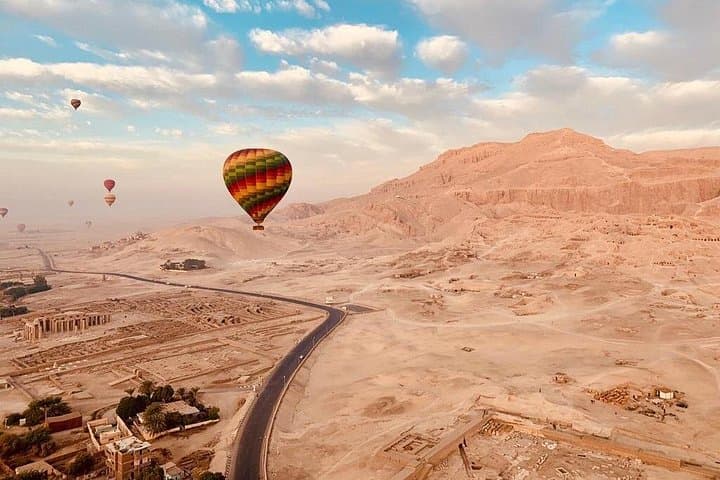
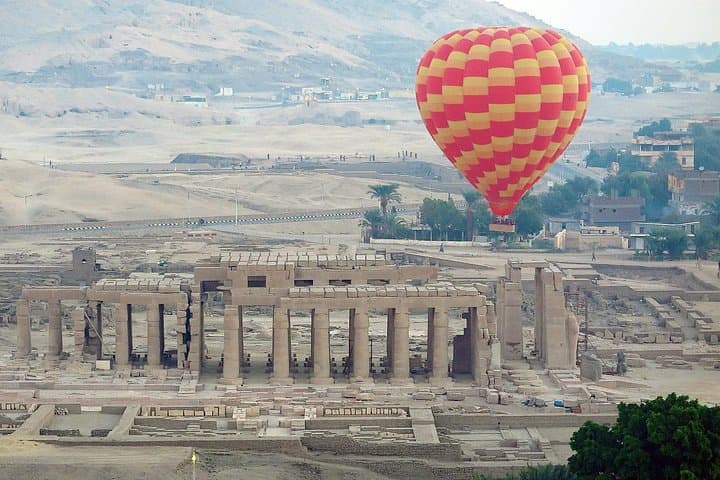
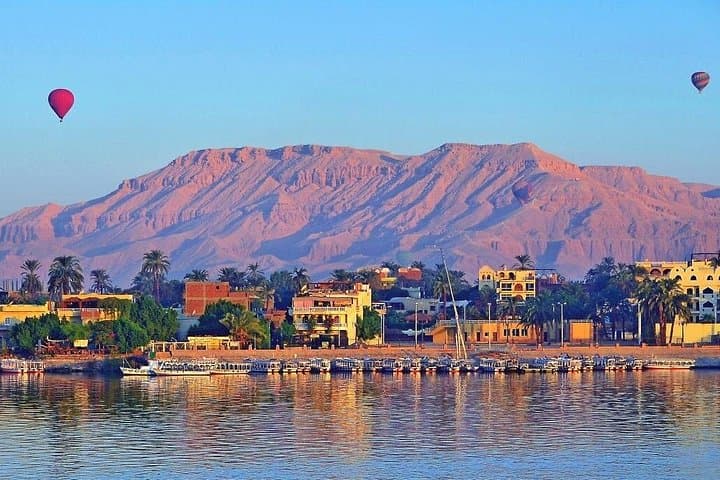
You lift off as the desert cools and the Nile still holds the night’s reflections, the basket humming gently beneath the envelope as the first light pushes across the Valley of the Kings. From sixty to several hundred meters above the west bank, mortuary temples, spread tombs and the Colossi of Memnon resolve into clear shapes while the Nile cuts a dark ribbon to the east.
You lift off as the desert cools and the Nile still holds the night’s reflections, the basket humming gently beneath the envelope as the first light pushes across the Valley of the Kings. From sixty to several hundred meters above the west bank, mortuary temples, spread tombs and the Colossi of Memnon resolve into clear shapes while the Nile cuts a dark ribbon to the east.
Luxor was once ancient Thebes, the religious and political heart of pharaonic Egypt; the flight path tracks millennia of stone — tombs hewn into limestone ridges, temple courts, and the linear pulse of the Nile floodplain. Geologically the valley is riverine and sedimentary, the desert plains made of wind-swept sands and exposed Eocene limestone where royal tombs were cut. Culturally the region is dominated by tourism and archaeological conservation that considers both the monuments and fragile desert ecology.
Practical guidance: flights run at sunrise for stable thermals and best views; total door-to-door time is typically 2–3 hours including hotel pickup. Wear layered clothing — desert mornings are cool, and heat builds fast. Bring a secure camera or phone strap; loose items can be lost in the field. The operator enforces weight limits and basic fitness standards; the ascent and soft landing demand moderate mobility.
Expect a poised, contemplative experience rather than adrenaline: the balloon drifts with the wind, the pilot reads currents, and the landscape slowly reorients beneath you. Book early for high season and confirm pickup details the night before.