THE ADVENTURE COLLECTIVE® · Independent discovery and booking for outdoor travel

Choose either Luxor's East Bank temples or the West Bank tombs on this flexible six-hour private car tour. A local driver lets you move at your own pace—perfect for focused exploration of Karnak, Luxor Temple, the Valley of the Kings, or Hatshepsut's Temple.
Choose either Luxor's East Bank temples or the West Bank tombs on this flexible six-hour private car tour. A local driver lets you move at your own pace—perfect for focused exploration of Karnak, Luxor Temple, the Valley of the Kings, or Hatshepsut's Temple.
The Nile pushes a slow, patient current through Luxor as your driver eases the car onto sun-baked streets; sandstone walls and columns slide past like pages in a history book. In six hours you can choose the East Bank's monumental temples or the West Bank's royal necropolises, each stop offering a different pulse of ancient Thebes.
Verified experiences and guided adventures in the surrounding area.
Operated by Eyes of Egypt · Luxor, Luxor Governorate
The Nile pushes a slow, patient current through Luxor as your driver eases the car onto sun-baked streets; sandstone walls and columns slide past like pages in a history book. In six hours you can choose the East Bank's monumental temples or the West Bank's royal necropolises, each stop offering a different pulse of ancient Thebes.
Luxor grew from the ancient city of Thebes, New Kingdom Egypt's political and religious heart. Geology here is simple and revealing: compresssed limestone and sandstone carved by wind and Nile floodplain processes, with tombs cut into valley rock and temples raised on harder beds. Culture follows ritual rhythm—morning prayers at temple thresholds, markets filling with hibiscus and dates, drivers and guides holding living memory of centuries.
Expect close-up encounters with Karnak's pylons, the intimate chambers of royal tombs, and the terraces of Hatshepsut that climb the cliff face. The Valley of the Kings requires respectful movement; tombs are fragile and many restrict photography or flash. Your English-speaking driver provides local logistics and can arrange a licensed guide or tickets if you prefer expert archaeological context.
Practical guidance: start early to avoid midday heat, carry water and sun protection, wear shoes that handle sand and uneven stone, and plan for short walks and many photo stops. Six hours is intentionally focused—pick East or West Bank and leave room for a relaxed pace. With a private car you trade group timing for flexibility: linger where you want, skip what you don’t.
easy.
6 hours.
Low-impact walking with short uneven sections; suitable for families and travelers with moderate mobility.
No; entrance tickets and licensed guides are not included but your driver can arrange them for an extra fee or direct you to ticket offices.
Not comfortably—six hours is best focused on either the East Bank (temples and museum) or the West Bank (tombs and mortuary temples).
Vehicles and pickup are wheelchair accessible, but many archaeological sites have uneven ground and limited accessibility inside tombs.
Tipping is customary; a modest gratuity at the end of the day (adjusted to group size and service) is appreciated.
Luxor occupies the site of ancient Thebes, the New Kingdom capital where pharaohs built massive temples and cut royal tombs into the western cliffs.
Tomb interiors are vulnerable to humidity and foot traffic—follow site rules, avoid flash photography, and support licensed guides who promote preservation.
Eyes of Egypt operates guided outdoor trips and adventures with an emphasis on safety, stewardship, and memorable experiences.
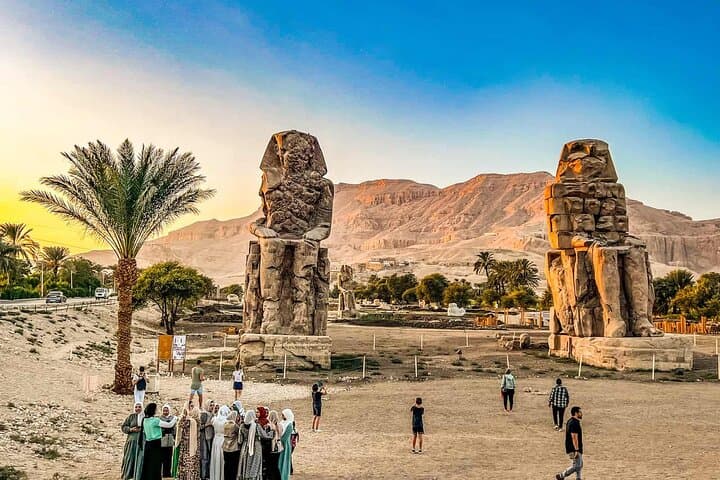
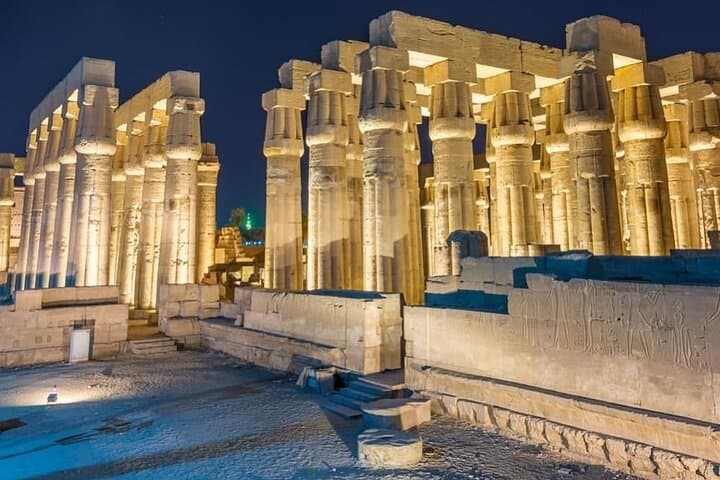

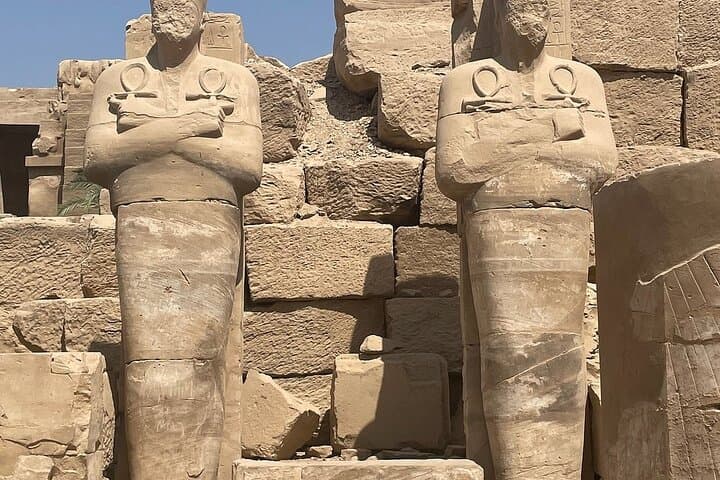
The Nile pushes a slow, patient current through Luxor as your driver eases the car onto sun-baked streets; sandstone walls and columns slide past like pages in a history book. In six hours you can choose the East Bank's monumental temples or the West Bank's royal necropolises, each stop offering a different pulse of ancient Thebes.
The Nile pushes a slow, patient current through Luxor as your driver eases the car onto sun-baked streets; sandstone walls and columns slide past like pages in a history book. In six hours you can choose the East Bank's monumental temples or the West Bank's royal necropolises, each stop offering a different pulse of ancient Thebes.
Luxor grew from the ancient city of Thebes, New Kingdom Egypt's political and religious heart. Geology here is simple and revealing: compresssed limestone and sandstone carved by wind and Nile floodplain processes, with tombs cut into valley rock and temples raised on harder beds. Culture follows ritual rhythm—morning prayers at temple thresholds, markets filling with hibiscus and dates, drivers and guides holding living memory of centuries.
Expect close-up encounters with Karnak's pylons, the intimate chambers of royal tombs, and the terraces of Hatshepsut that climb the cliff face. The Valley of the Kings requires respectful movement; tombs are fragile and many restrict photography or flash. Your English-speaking driver provides local logistics and can arrange a licensed guide or tickets if you prefer expert archaeological context.
Practical guidance: start early to avoid midday heat, carry water and sun protection, wear shoes that handle sand and uneven stone, and plan for short walks and many photo stops. Six hours is intentionally focused—pick East or West Bank and leave room for a relaxed pace. With a private car you trade group timing for flexibility: linger where you want, skip what you don’t.