THE ADVENTURE COLLECTIVE® · Independent discovery and booking for outdoor travel

Ride across the west bank desert of Luxor at sunset, crossing the Nile by motorboat and exploring Wadi Ziad’s stony flats. This compact quad-bike safari balances easy-to-learn riding with sweeping desert views and local geological curiosities.
Ride across the west bank desert of Luxor at sunset, crossing the Nile by motorboat and exploring Wadi Ziad’s stony flats. This compact quad-bike safari balances easy-to-learn riding with sweeping desert views and local geological curiosities.
The sun has already begun its slow descent when the minivan drops you at the riverbank and a motorboat shuttles the small group across the Nile. On the west bank, the sand takes on a warm bronze glow; wind-swept ridges and scrubby foothills of the Theban Plateau watch like quiet sentries. A line of simple ATVs waits, engines ticking as guides run through safety basics before sending riders out toward Wadi Ziad.
Verified experiences and guided adventures in the surrounding area.
Operated by Nile Prince Travel · Luxor, Luxor Governorate
The sun has already begun its slow descent when the minivan drops you at the riverbank and a motorboat shuttles the small group across the Nile. On the west bank, the sand takes on a warm bronze glow; wind-swept ridges and scrubby foothills of the Theban Plateau watch like quiet sentries. A line of simple ATVs waits, engines ticking as guides run through safety basics before sending riders out toward Wadi Ziad.
This stretch of the west bank sits above layers of Pharaonic history: tombs and temples carved into limestone, and valleys formed by ancient floods and episodic rainfall. The stony flats hold a geology of compacted sand, alluvial deposits and quarried limestone that ancient Egyptians once exploited. Local guides often point out Wadi Ziad’s colorful stones and the worn faces of trackways that have carried people for millennia.
Expect one to two hours of riding across mixed desert terrain — hard-packed tracks, loose sand and small rocky sections — with time carved out to watch the sun drop behind the West Bank ridgeline. The guides provide helmets, a bottle of water and a simple briefing; the transfer includes pickup and return to your hotel or Nile cruise.
Practical pointers: arrive with closed-toe shoes, sunglasses and a light layer for post-sunset chill. Stay hydrated and follow the guide’s line; desert light changes fast, and shadows can hide soft sand. The experience is short, accessible and best timed to coincide with sunset for maximum contrast between cool evening air and the glowing desert below.
easy.
3–4 hours.
Suitable for most fitness levels; able to mount/steady oneself on a quad and follow short safety briefings.
No — guides provide a short safety briefing and basic instruction; the route is suitable for beginners.
Yes — the itinerary includes a short motorboat transfer across the Nile to the west bank launch point.
The operator notes the activity is accessible for most ages, but children and older participants should disclose mobility needs when booking and use provided child seats if needed.
The operator may cancel in poor conditions with a full refund if the cancellation is at least 24 hours prior; sandstorms or unsafe winds can cause delays or cancellations.
The Theban West Bank has been shaped by millennia of human activity — from limestone quarries to burial sites — with modern trails often paralleling ancient routes.
Stay on designated tracks to limit erosion and avoid disturbing fragile stone outcrops; leave no trash and use provided water containers responsibly.
Nile Prince Travel operates guided outdoor trips and adventures with an emphasis on safety, stewardship, and memorable experiences.
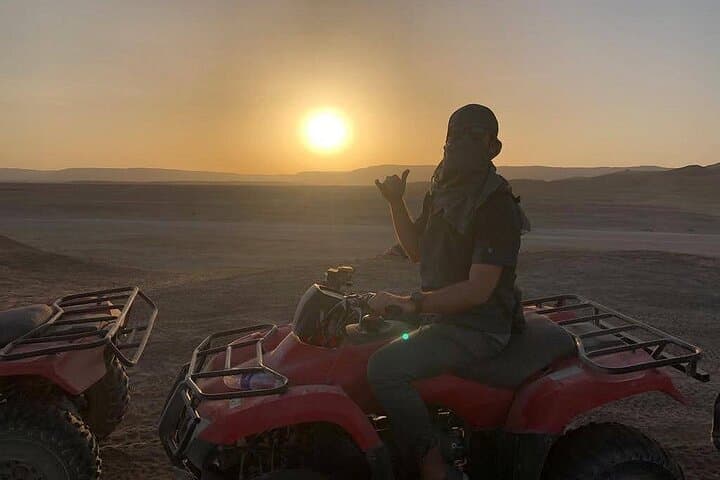
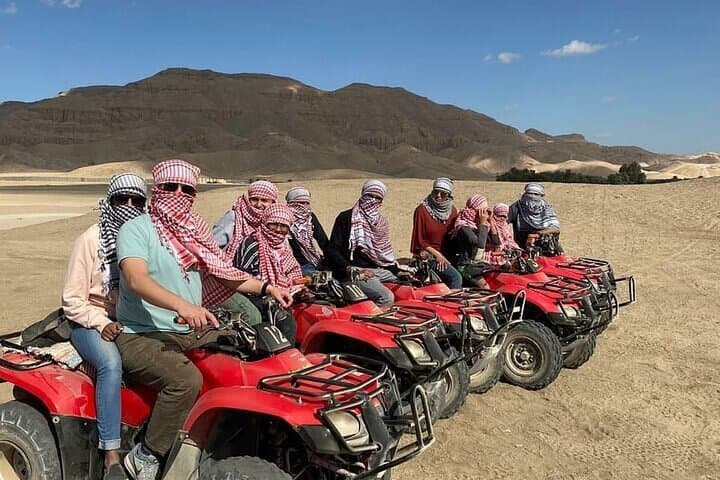
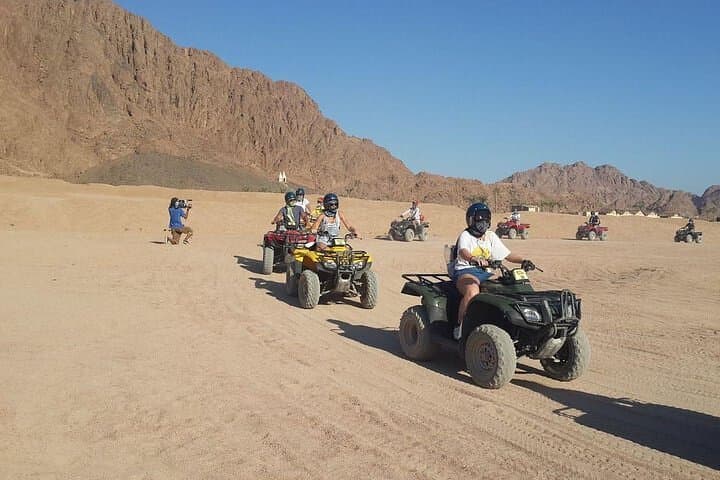
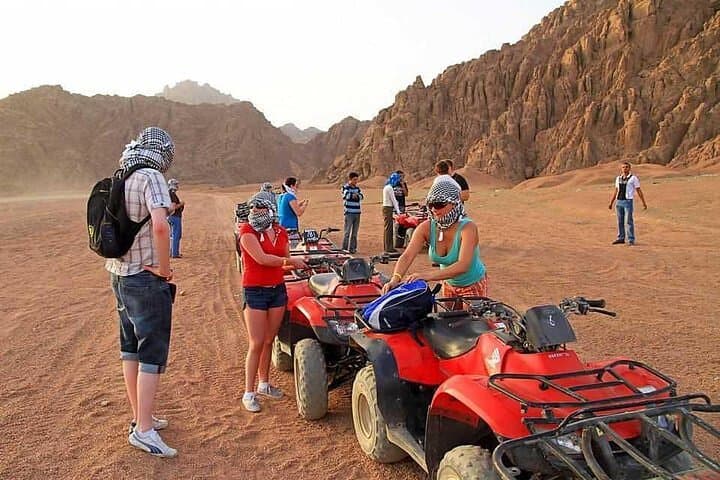
The sun has already begun its slow descent when the minivan drops you at the riverbank and a motorboat shuttles the small group across the Nile. On the west bank, the sand takes on a warm bronze glow; wind-swept ridges and scrubby foothills of the Theban Plateau watch like quiet sentries. A line of simple ATVs waits, engines ticking as guides run through safety basics before sending riders out toward Wadi Ziad.
The sun has already begun its slow descent when the minivan drops you at the riverbank and a motorboat shuttles the small group across the Nile. On the west bank, the sand takes on a warm bronze glow; wind-swept ridges and scrubby foothills of the Theban Plateau watch like quiet sentries. A line of simple ATVs waits, engines ticking as guides run through safety basics before sending riders out toward Wadi Ziad.
This stretch of the west bank sits above layers of Pharaonic history: tombs and temples carved into limestone, and valleys formed by ancient floods and episodic rainfall. The stony flats hold a geology of compacted sand, alluvial deposits and quarried limestone that ancient Egyptians once exploited. Local guides often point out Wadi Ziad’s colorful stones and the worn faces of trackways that have carried people for millennia.
Expect one to two hours of riding across mixed desert terrain — hard-packed tracks, loose sand and small rocky sections — with time carved out to watch the sun drop behind the West Bank ridgeline. The guides provide helmets, a bottle of water and a simple briefing; the transfer includes pickup and return to your hotel or Nile cruise.
Practical pointers: arrive with closed-toe shoes, sunglasses and a light layer for post-sunset chill. Stay hydrated and follow the guide’s line; desert light changes fast, and shadows can hide soft sand. The experience is short, accessible and best timed to coincide with sunset for maximum contrast between cool evening air and the glowing desert below.