THE ADVENTURE COLLECTIVE® · Independent discovery and booking for outdoor travel

A private, full‑day tour linking Dendera’s Hathor temple with the royal tombs of the Valley of the Kings and Tutankhamun. Expect guided context, short drives, uneven ancient stone, and hands‑on logistical support from Luxor‑based guides.
A private, full‑day tour linking Dendera’s Hathor temple with the royal tombs of the Valley of the Kings and Tutankhamun. Expect guided context, short drives, uneven ancient stone, and hands‑on logistical support from Luxor‑based guides.
You step into morning light on the Nile’s east bank as an air‑conditioned car hums to life outside your hotel; the city slips away and the desert opens toward the pale profile of Dendera, then the carved entrances of the West Bank. The day moves at a human pace — short drives, deliberate walks through shadowed halls, and moments spent staring at stone ceilings that still hold paint.
Verified experiences and guided adventures in the surrounding area.
Operated by Eyes of Egypt · Luxor, Luxor Governorate
You step into morning light on the Nile’s east bank as an air‑conditioned car hums to life outside your hotel; the city slips away and the desert opens toward the pale profile of Dendera, then the carved entrances of the West Bank. The day moves at a human pace — short drives, deliberate walks through shadowed halls, and moments spent staring at stone ceilings that still hold paint.
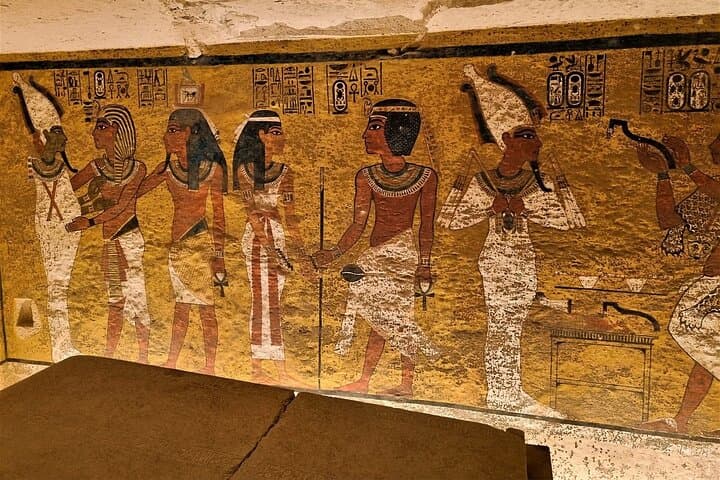
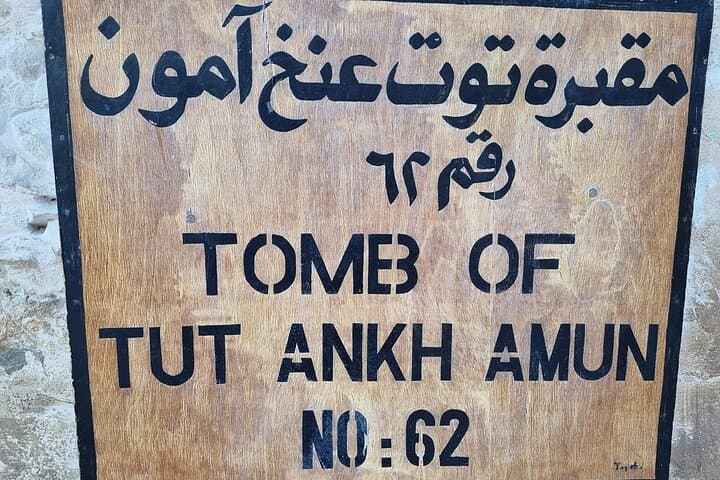
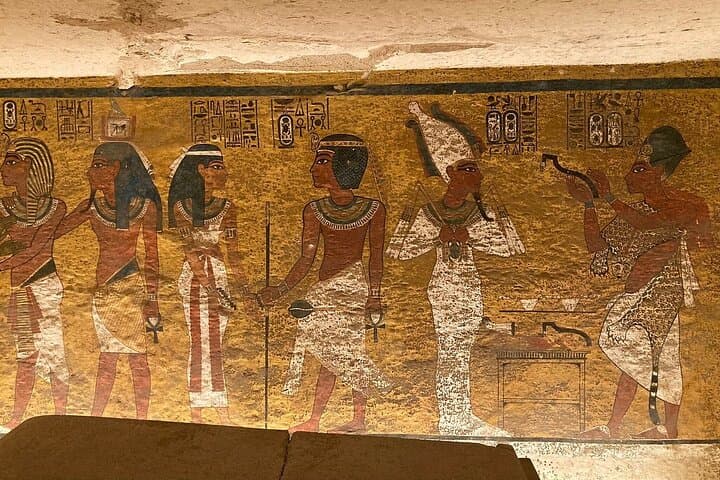
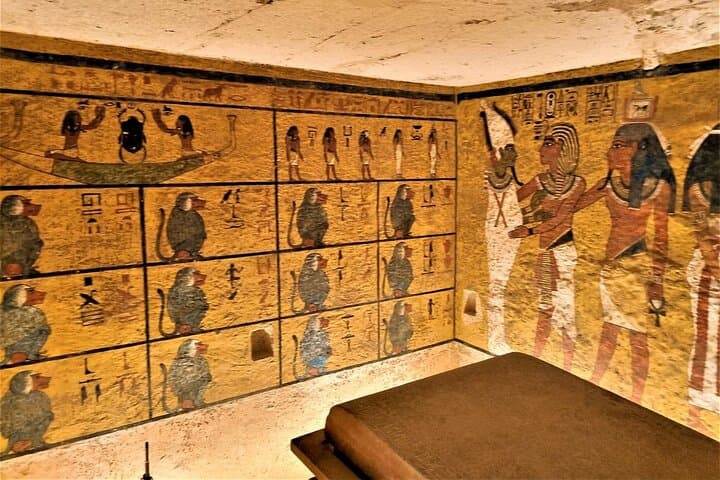
Dendera’s Hathor Temple dates mainly to the Ptolemaic and Roman periods and preserves one of Egypt’s most intact astronomical ceilings. The Valley of the Kings, carved into the Theban plateau, houses tombs of New Kingdom pharaohs and the small, famously ornate tomb of Tutankhamun — opened to modern eyes in 1922 — where climate‑controlled displays protect fragile remains and pigments.
Geology matters here: limestone cliffs and alluvial plains shaped how tombs were cut and temples sited, so expect uneven steps, carved chambers, and rooftop viewpoints that look across flat agricultural land back toward Luxor.
Practical notes: the tour runs about 7–9 hours with private pickup and transport; Dendera is about 60 km north (roughly 1.5 hours). Entrance procedures vary — guides will direct you to ticket counters or present included tickets — and many tombs restrict photography. Wear sturdy closed‑toe shoes, a sun hat, and layers for temperature swings; bring cash for incidental fees, tips, and small vendors. Start early to avoid heat and crowds, and follow your licensed guide’s instructions to help preserve fragile surfaces. Expect a culturally rich, physically easy day with historical depth and clear logistical support.
easy.
7–9 hours.
Suitable for travelers in average health; involves walking on uneven ground, stairs, and short standing periods.
The tour listing notes entrance to the Valley of the Kings, Tutankhamun, and Dendera; guides will either present included tickets or direct you to local counters for processing.
Dendera is about 60 km north of Luxor with an approximate driving time of 1–1.5 hours depending on traffic and stops.
Access and photography rules vary; Tutankhamun’s original finds are displayed with strict conservation rules — expect limited photography and follow site signage and your guide’s instructions.
Yes — the tour is classified as physically easy with wheelchair‑accessible transport options, but some temple and tomb areas include steps and uneven surfaces that may limit full access.
Dendera’s main temple is largely Ptolemaic and Roman, while the Valley of the Kings is the New Kingdom royal necropolis; Tutankhamun’s modern rediscovery in 1922 transformed Egyptology.
Tomb interiors are fragile—visitor numbers and photography are controlled to protect pigments and soft materials; follow guide instructions to minimize impact.
Eyes of Egypt operates guided outdoor trips and adventures with an emphasis on safety, stewardship, and memorable experiences.
You step into morning light on the Nile’s east bank as an air‑conditioned car hums to life outside your hotel; the city slips away and the desert opens toward the pale profile of Dendera, then the carved entrances of the West Bank. The day moves at a human pace — short drives, deliberate walks through shadowed halls, and moments spent staring at stone ceilings that still hold paint.
You step into morning light on the Nile’s east bank as an air‑conditioned car hums to life outside your hotel; the city slips away and the desert opens toward the pale profile of Dendera, then the carved entrances of the West Bank. The day moves at a human pace — short drives, deliberate walks through shadowed halls, and moments spent staring at stone ceilings that still hold paint.
Dendera’s Hathor Temple dates mainly to the Ptolemaic and Roman periods and preserves one of Egypt’s most intact astronomical ceilings. The Valley of the Kings, carved into the Theban plateau, houses tombs of New Kingdom pharaohs and the small, famously ornate tomb of Tutankhamun — opened to modern eyes in 1922 — where climate‑controlled displays protect fragile remains and pigments.
Geology matters here: limestone cliffs and alluvial plains shaped how tombs were cut and temples sited, so expect uneven steps, carved chambers, and rooftop viewpoints that look across flat agricultural land back toward Luxor.
Practical notes: the tour runs about 7–9 hours with private pickup and transport; Dendera is about 60 km north (roughly 1.5 hours). Entrance procedures vary — guides will direct you to ticket counters or present included tickets — and many tombs restrict photography. Wear sturdy closed‑toe shoes, a sun hat, and layers for temperature swings; bring cash for incidental fees, tips, and small vendors. Start early to avoid heat and crowds, and follow your licensed guide’s instructions to help preserve fragile surfaces. Expect a culturally rich, physically easy day with historical depth and clear logistical support.