THE ADVENTURE COLLECTIVE® · Independent discovery and booking for outdoor travel

A full-day private tour from Luxor that visits Abydos—one of Egypt’s oldest cult centers—and the Ptolemaic temples of Dendera. Expect flat but exposed walking, rich reliefs, and a guided narrative that stitches centuries of ritual together.
A full-day private tour from Luxor that visits Abydos—one of Egypt’s oldest cult centers—and the Ptolemaic temples of Dendera. Expect flat but exposed walking, rich reliefs, and a guided narrative that stitches centuries of ritual together.
Morning light slices across the Nile plain as a private minibus pulls away from Luxor, the driver threading through palm-lined villages while an Egyptologist points out ruins visible from the road.
Verified experiences and guided adventures in the surrounding area.
Operated by Traegy · Luxor, Luxor Governorate
Morning light slices across the Nile plain as a private minibus pulls away from Luxor, the driver threading through palm-lined villages while an Egyptologist points out ruins visible from the road.
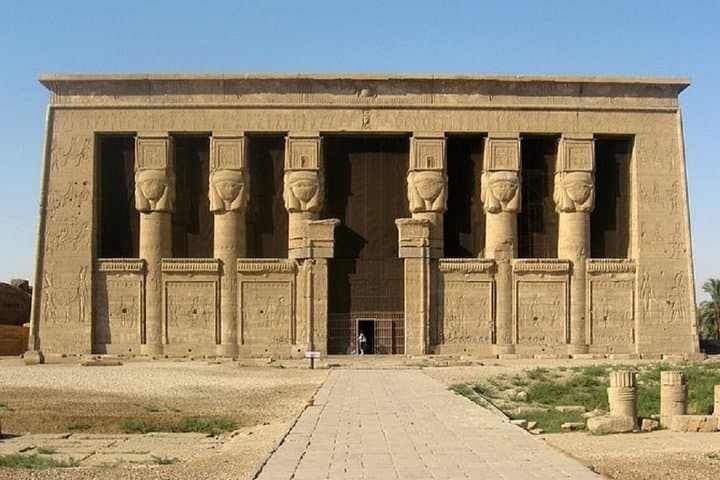
The day moves between two very different kinds of ancient devotion. Abydos rises from low desert—an early cult center whose multi-level limestone construction and ritual stairways reflect a long history of royal worship and the cult of Osiris. Dendera, later and greener, sits closer to the Nile: its frescos and Hathor-centered chapels show Ptolemaic-era artistry layered onto much older sacred ground. Geologically the route follows the Nile Valley’s alluvial strip, with the desert plateau pressing in on the west and east—so the walking is flat but exposed to sun and dust.
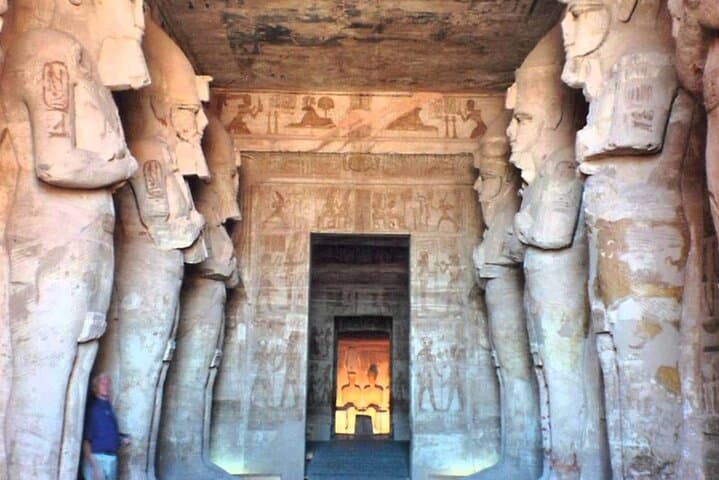
Culturally, both sites reward patience: hieroglyphic panels, procession reliefs, and reused blocks tell a story of continuity—New Kingdom kings, Ptolemies, and local priests leaving visible marks.
Practical edge: expect a full-day outing that begins early (pick-up around 7 AM) and returns to Luxor in the evening. Entrance fees are commonly paid at the sites—confirm whether tickets are included when booking. Wear sturdy, closed-toe shoes for uneven temple floors; bring sun protection, a refillable water bottle, and modest clothing for respectful temple access. Cameras are allowed in many outdoor areas; check with your guide about restricted interiors. If you want cleaner shots, aim for late afternoon light at Dendera when shadows bring relief to carved reliefs.
The tour balances easy driving with hands-on exploration—an accessible way to see two complementary chapters of ancient Egyptian religious life in one day.
easy.
8–12 hours.
Suitable for most fitness levels; participants should be able to walk on uneven ground for short stretches.
Not always; many operators require entrance fees to be paid at the sites—confirm with the booking provider before departure.
Drive times vary by traffic and stops—plan on roughly 1–2 hours to Dendera and up to 2–3 hours to Abydos from Luxor each way.
The tour is family-friendly with vehicle transport, but temple surfaces are uneven and include steps; assistance may be needed for limited mobility.
Photography is generally allowed in exterior and many interior areas, but rules vary by structure—ask your guide about any restricted zones or additional photo permits.
Abydos is one of Egypt’s oldest cult sites associated with Osiris and royal ancestor rituals; Dendera’s surviving monumental structures date mainly to the Ptolemaic and Roman periods but rest on much older sacred ground.
Both sites are managed by Egypt’s antiquities authorities; visitors should stick to paths and avoid touching reliefs to help preserve fragile plaster and paint.
Traegy operates guided outdoor trips and adventures with an emphasis on safety, stewardship, and memorable experiences.
Morning light slices across the Nile plain as a private minibus pulls away from Luxor, the driver threading through palm-lined villages while an Egyptologist points out ruins visible from the road.
Morning light slices across the Nile plain as a private minibus pulls away from Luxor, the driver threading through palm-lined villages while an Egyptologist points out ruins visible from the road.
The day moves between two very different kinds of ancient devotion. Abydos rises from low desert—an early cult center whose multi-level limestone construction and ritual stairways reflect a long history of royal worship and the cult of Osiris. Dendera, later and greener, sits closer to the Nile: its frescos and Hathor-centered chapels show Ptolemaic-era artistry layered onto much older sacred ground. Geologically the route follows the Nile Valley’s alluvial strip, with the desert plateau pressing in on the west and east—so the walking is flat but exposed to sun and dust.
Culturally, both sites reward patience: hieroglyphic panels, procession reliefs, and reused blocks tell a story of continuity—New Kingdom kings, Ptolemies, and local priests leaving visible marks.
Practical edge: expect a full-day outing that begins early (pick-up around 7 AM) and returns to Luxor in the evening. Entrance fees are commonly paid at the sites—confirm whether tickets are included when booking. Wear sturdy, closed-toe shoes for uneven temple floors; bring sun protection, a refillable water bottle, and modest clothing for respectful temple access. Cameras are allowed in many outdoor areas; check with your guide about restricted interiors. If you want cleaner shots, aim for late afternoon light at Dendera when shadows bring relief to carved reliefs.
The tour balances easy driving with hands-on exploration—an accessible way to see two complementary chapters of ancient Egyptian religious life in one day.