THE ADVENTURE COLLECTIVE® · Independent discovery and booking for outdoor travel

Two days of private, guided exploration across Luxor’s east and west banks—Karnak and Luxor Temples by the Nile, then the Valley of the Kings, Hatshepsut’s temple and the Colossi of Memnon. Plan for heat, separate tomb fees, and early starts to get the most from each site.
Two days of private, guided exploration across Luxor’s east and west banks—Karnak and Luxor Temples by the Nile, then the Valley of the Kings, Hatshepsut’s temple and the Colossi of Memnon. Plan for heat, separate tomb fees, and early starts to get the most from each site.
Morning light slices across the Nile as your boat slips into Luxor’s slow current—sandstone cliffs and cultivated riverbanks slide by while the city’s ancient stones wait inland. Day one leads you ashore to the east bank: the long colonnades of Karnak open like a fanged gate, and Luxor Temple sits close to the river, its courtyards threaded with the footprints of millennia.
Verified experiences and guided adventures in the surrounding area.
Operated by Egypt Tours Travel · Luxor, Luxor
Morning light slices across the Nile as your boat slips into Luxor’s slow current—sandstone cliffs and cultivated riverbanks slide by while the city’s ancient stones wait inland. Day one leads you ashore to the east bank: the long colonnades of Karnak open like a fanged gate, and Luxor Temple sits close to the river, its courtyards threaded with the footprints of millennia.
This two-day private itinerary stitches together key chapters of Thebes. Karnak’s layered temples record pharaonic expansions; Luxor Temple marks religious festivals and coronations; across the river the West Bank holds the Valley of the Kings with painted tomb chambers, Hatshepsut’s terraced mortuary temple at Deir el-Bahari, and the mute Colossi of Memnon. Geologically, you’ll move from Nile alluvium and green gardens to limestone cliffs that provided the funerary backdrop for royal burials.
Local culture is immediate: licensed Egyptologist guides explain hieroglyphic narratives, while small market stalls and museum displays reveal daily life across centuries. Note that many tombs rotate open to protect fragile paintings; entrance to some sites and specific tombs typically requires separate tickets.
Practical guidance: start early to avoid midday heat, carry cash for entrance and camera fees, and wear closed-toe walking shoes for uneven temple floors and desert paths. Sun protection and a refillable water bottle are essential; the tour includes air-conditioned transport and onboard accommodations but not all admissions. Respect site rules—no flash photography in tombs—and leave time for quiet observation between highlights. With straightforward planning, this customized 48-hour loop delivers concentrated history, dramatic stonework, and the steady company of the Nile.
easy.
2 days (≈48 hours).
Suitable for most fitness levels; expect moderate walking on uneven stone surfaces and short desert walks.
Admissions to most major sites are not included by default; certain tombs and special chambers usually require additional on-site tickets.
The listing notes wheelchair-accessible options, but some tombs and temple areas have steps or uneven surfaces—check specific accessibility needs in advance.
Yes: a qualified Egyptologist guide is included to provide historical context and explain hieroglyphs, architecture and site significance.
Photography policies vary; flash is often prohibited inside tombs to protect pigments, and some tombs have separate camera fees—ask your guide on arrival.
Luxor sits on the site of ancient Thebes, the political and religious capital during Egypt’s New Kingdom; its temples and royal tombs record centuries of pharaonic rule.
Tourism pressure and humidity threaten painted tomb interiors—follow rules like no-flash photography and avoid touching surfaces to help preserve fragile antiquities.
Egypt Tours Travel operates guided outdoor trips and adventures with an emphasis on safety, stewardship, and memorable experiences.
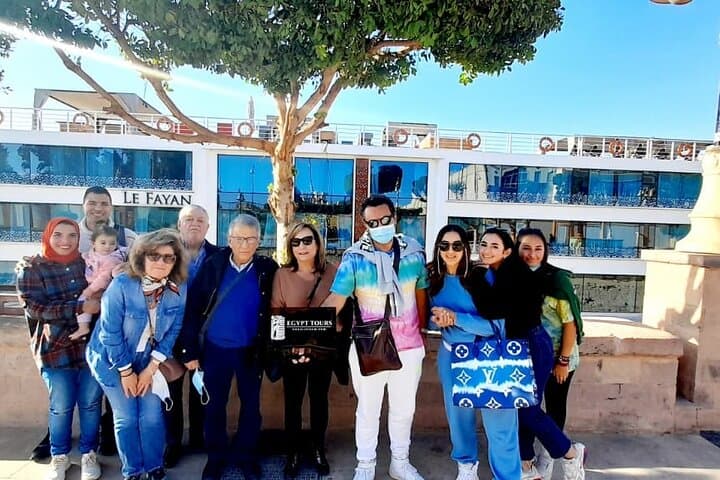


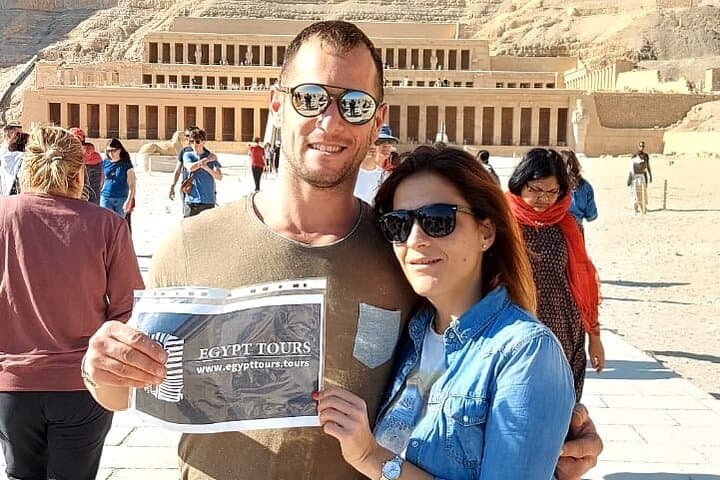
Morning light slices across the Nile as your boat slips into Luxor’s slow current—sandstone cliffs and cultivated riverbanks slide by while the city’s ancient stones wait inland. Day one leads you ashore to the east bank: the long colonnades of Karnak open like a fanged gate, and Luxor Temple sits close to the river, its courtyards threaded with the footprints of millennia.
Morning light slices across the Nile as your boat slips into Luxor’s slow current—sandstone cliffs and cultivated riverbanks slide by while the city’s ancient stones wait inland. Day one leads you ashore to the east bank: the long colonnades of Karnak open like a fanged gate, and Luxor Temple sits close to the river, its courtyards threaded with the footprints of millennia.
This two-day private itinerary stitches together key chapters of Thebes. Karnak’s layered temples record pharaonic expansions; Luxor Temple marks religious festivals and coronations; across the river the West Bank holds the Valley of the Kings with painted tomb chambers, Hatshepsut’s terraced mortuary temple at Deir el-Bahari, and the mute Colossi of Memnon. Geologically, you’ll move from Nile alluvium and green gardens to limestone cliffs that provided the funerary backdrop for royal burials.
Local culture is immediate: licensed Egyptologist guides explain hieroglyphic narratives, while small market stalls and museum displays reveal daily life across centuries. Note that many tombs rotate open to protect fragile paintings; entrance to some sites and specific tombs typically requires separate tickets.
Practical guidance: start early to avoid midday heat, carry cash for entrance and camera fees, and wear closed-toe walking shoes for uneven temple floors and desert paths. Sun protection and a refillable water bottle are essential; the tour includes air-conditioned transport and onboard accommodations but not all admissions. Respect site rules—no flash photography in tombs—and leave time for quiet observation between highlights. With straightforward planning, this customized 48-hour loop delivers concentrated history, dramatic stonework, and the steady company of the Nile.