THE ADVENTURE COLLECTIVE® · Independent discovery and booking for outdoor travel

A full-day private flight from Sharm El Sheikh to Luxor delivers the Valley of the Kings, Hatshepsut’s temple, Carter’s House and Karnak with an Egyptology guide. Expect long hours, uneven surfaces in tombs, and authentic local touches like lunch with a family and a short Nile motor-boat ride.
A full-day private flight from Sharm El Sheikh to Luxor delivers the Valley of the Kings, Hatshepsut’s temple, Carter’s House and Karnak with an Egyptology guide. Expect long hours, uneven surfaces in tombs, and authentic local touches like lunch with a family and a short Nile motor-boat ride.
Morning light arrives over the Nile as the plane touches down in Luxor and a private Egyptology guide is waiting to lead the group into millennia of stone and sand.
Verified experiences and guided adventures in the surrounding area.
Operated by Here Egypt Tours · Luxor, Luxor Governorate
Morning light arrives over the Nile as the plane touches down in Luxor and a private Egyptology guide is waiting to lead the group into millennia of stone and sand.
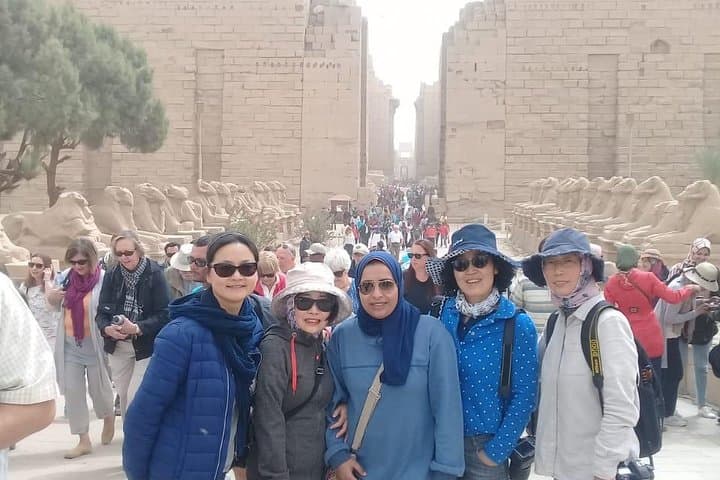
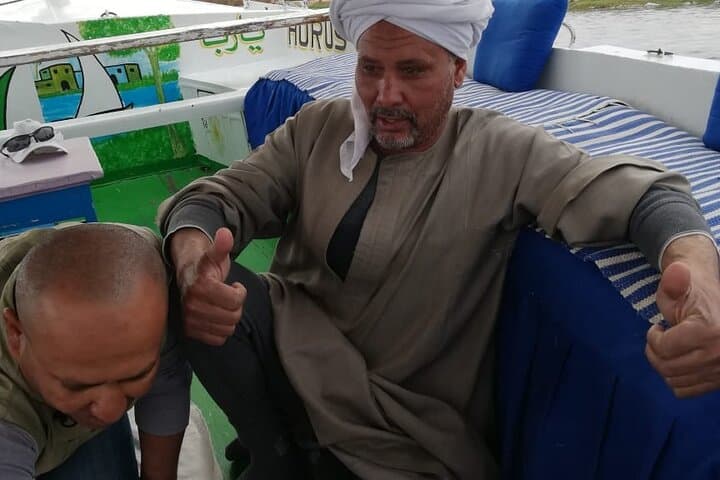
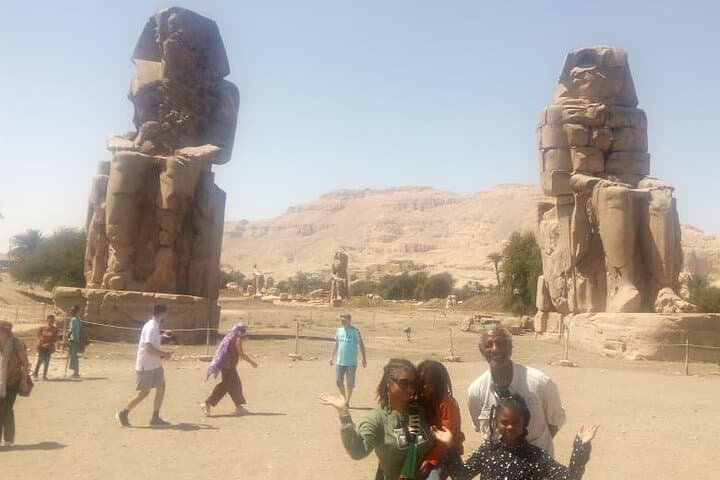
The day begins with a short river crossing to the West Bank and the Valley of the Kings, where carved corridors slope into cool darkness and royal tombs keep their quiet. Visitors then move to Queen Hatshepsut’s terraced mortuary temple, a precise stone statement amid ochre cliffs, and to Carter’s house, where relics and notes recall the scramble of discovery. Crossing back to the East Bank, the rhythm slows over a simple lunch with a local family and a brief sail on a Nile motor boat, the river daring you to look up from the water to islands, fields, and date palms. The final act is Karnak: a forest of columns and open courts that reveal the scale of New Kingdom ambition.
Geology here is straightforward—soft limestone cliffs on the west, Nile alluvial plains on the east—and history presses close: pharaonic tombs from the 16th–11th centuries BCE and temples reworked over centuries. Culturally, expect warm hospitality, bargaining in the bazaars, and tea breaks at public cafes.
Practical guidance: this is a long, full day (13–14 hours) with uneven steps and tight tomb passages; sun protection, steady footwear, and a light daypack matter. Carry a photocopy of your passport for tickets, bring cash for small purchases and tips, and plan for early pickup and a late return to Sharm El Sheikh.
moderate.
13–14 hours.
Suitable for travelers in average fitness—able to climb stairs, walk uneven surfaces, and handle long periods on feet.
Yes—round-trip flights Sharm El Sheikh–Luxor and door-to-door private transfers are included in the tour price.
The itinerary states that all sites mentioned are included, but some tombs (like certain special-access tombs) can require extra fees—confirm with the operator when booking.
The tour is described as suitable for all fitness levels, but tombs have narrow, steep passages; travelers with limited mobility should check specific site access in advance.
Carry Egyptian pounds for small purchases and tips; tipping guides and drivers is customary—budget modest amounts per person for guide, driver, and local hosts.
Luxor sits atop ancient Thebes, the political and religious heart of Egypt’s New Kingdom; many temple façades and tombs date from the 16th–11th centuries BCE.
High visitor numbers stress fragile tomb paintings and sandstone; stay on paths, avoid touching surfaces, and support local conservation fees when asked.
Here Egypt Tours operates guided outdoor trips and adventures with an emphasis on safety, stewardship, and memorable experiences.

Morning light arrives over the Nile as the plane touches down in Luxor and a private Egyptology guide is waiting to lead the group into millennia of stone and sand.
Morning light arrives over the Nile as the plane touches down in Luxor and a private Egyptology guide is waiting to lead the group into millennia of stone and sand.
The day begins with a short river crossing to the West Bank and the Valley of the Kings, where carved corridors slope into cool darkness and royal tombs keep their quiet. Visitors then move to Queen Hatshepsut’s terraced mortuary temple, a precise stone statement amid ochre cliffs, and to Carter’s house, where relics and notes recall the scramble of discovery. Crossing back to the East Bank, the rhythm slows over a simple lunch with a local family and a brief sail on a Nile motor boat, the river daring you to look up from the water to islands, fields, and date palms. The final act is Karnak: a forest of columns and open courts that reveal the scale of New Kingdom ambition.
Geology here is straightforward—soft limestone cliffs on the west, Nile alluvial plains on the east—and history presses close: pharaonic tombs from the 16th–11th centuries BCE and temples reworked over centuries. Culturally, expect warm hospitality, bargaining in the bazaars, and tea breaks at public cafes.
Practical guidance: this is a long, full day (13–14 hours) with uneven steps and tight tomb passages; sun protection, steady footwear, and a light daypack matter. Carry a photocopy of your passport for tickets, bring cash for small purchases and tips, and plan for early pickup and a late return to Sharm El Sheikh.