THE ADVENTURE COLLECTIVE® · Independent discovery and booking for outdoor travel

Fly from Sharm El Sheikh to Luxor and spend a single, expert-led day among Karnak, the Valley of the Kings, Hatshepsut’s temple, and the Colossi of Memnon. This private tour maximizes time on-site with a local Egyptologist and private transfers.
Fly from Sharm El Sheikh to Luxor and spend a single, expert-led day among Karnak, the Valley of the Kings, Hatshepsut’s temple, and the Colossi of Memnon. This private tour maximizes time on-site with a local Egyptologist and private transfers.
You step off the small morning flight and the air of the Nile Valley greets you: dry, warm, and threaded with the faint scent of river mud. The ancient city of Thebes unfolds in stone — columns and clipped silhouettes against a pale sky — and your Egyptologist takes you straight into the story.
Verified experiences and guided adventures in the surrounding area.
Operated by Saray El-Nile · Luxor, Luxor Governorate
You step off the small morning flight and the air of the Nile Valley greets you: dry, warm, and threaded with the faint scent of river mud. The ancient city of Thebes unfolds in stone — columns and clipped silhouettes against a pale sky — and your Egyptologist takes you straight into the story.
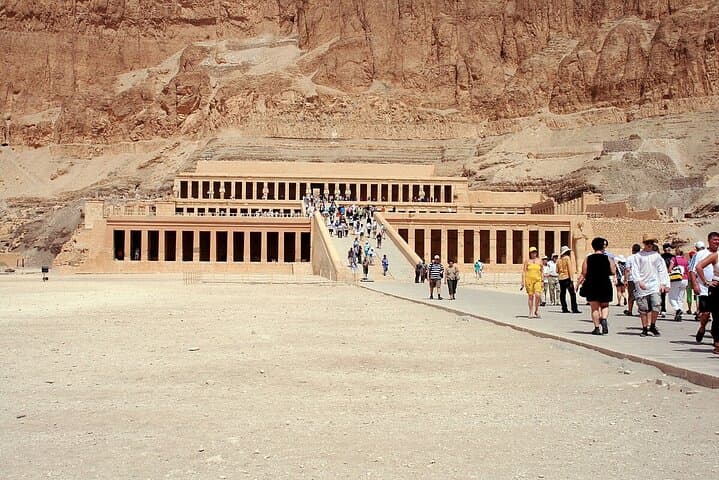
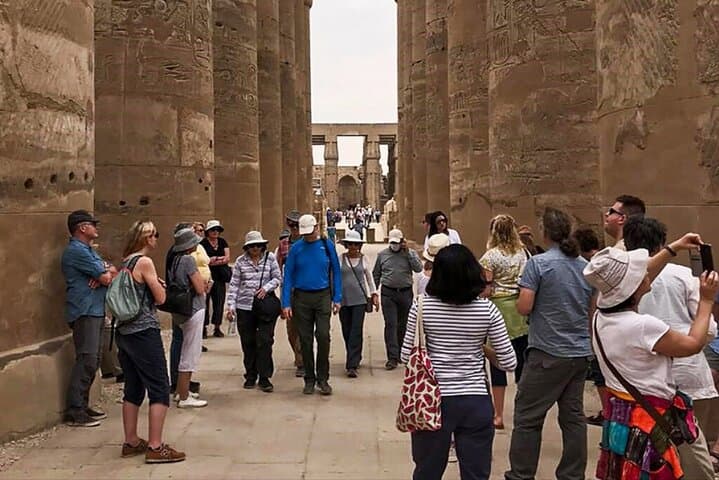
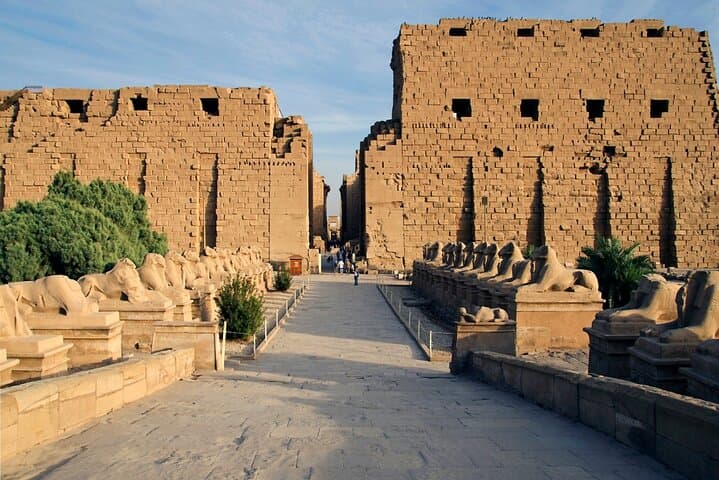
Start at Karnak, where avenues of towering columns and carved reliefs push history into the present; the temple complex reads like a city-sized ledger of pharaohs and rituals. Cross the Nile to the West Bank and descend into the Valley of the Kings, where sealed tombs hold funerary paintings and cool, sealed corridors that bear witness to burial rites. Nearby, Hatshepsut’s terraced mortuary temple cuts directly into limestone cliffs, its geometry a deliberate, human reply to the desert’s horizontality. Pause at the Colossi of Memnon to frame the desert light on their weathered faces.
Geologically, Luxor sits on layered Nile sediments with limestone cliffs on the West Bank — a landscape that shaped sacred architecture and burial choices. Culturally, the day ties modern Egyptian life to millennia-old rituals: markets, Nile-side lunches, and guide stories that humanize names like Ramses and Tut.
Practical guidance: this is a long but low-impact day—expect 10–11 hours door-to-door with several hours of walking on uneven ground and warm temperatures. Bring sun protection, steady walking shoes, and a photocopy of your passport for museum entrances. Plan for brief photo stops and limited time in each site; prioritize which tombs you most want to see with your guide. Hydrate before and during the tour, and budget cash for tips and small purchases. With careful planning, a single day in Luxor becomes an efficient, vivid immersion into ancient Egypt.
moderate.
11 hours.
Able to manage several hours of walking on uneven ground and short stair climbs; comfortable with a long travel day.
Entrance fees are typically not included; check your itinerary and budget for site tickets such as Karnak, Valley of the Kings, and Hatshepsut’s temple.
The flight from Sharm El Sheikh to Luxor is about 50–70 minutes; with airport transfers and site visits expect a total day of roughly 11 hours.
Children can join but supervision is needed in tombs; limited mobility travelers may find uneven ground and stairs challenging—contact the operator for accessibility options.
Carry some Egyptian pounds for small purchases and tipping; modest tips to guides, drivers, and site assistants are customary and appreciated.
Luxor occupies the site of ancient Thebes, the political and religious heart of New Kingdom Egypt where many pharaohs built temples and tombs between 1550–1070 BCE.
High visitor numbers and flash photography impact fragile wall paintings and surfaces; respect barriers, avoid touching, and minimize plastic waste to support preservation.
Saray El-Nile operates guided outdoor trips and adventures with an emphasis on safety, stewardship, and memorable experiences.
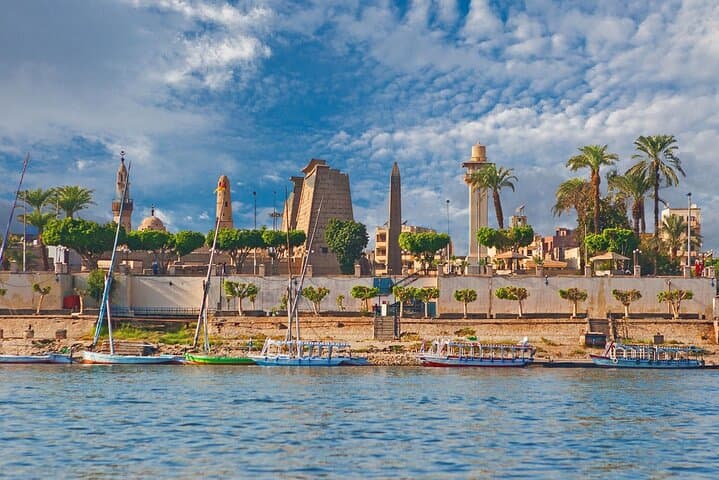
You step off the small morning flight and the air of the Nile Valley greets you: dry, warm, and threaded with the faint scent of river mud. The ancient city of Thebes unfolds in stone — columns and clipped silhouettes against a pale sky — and your Egyptologist takes you straight into the story.
You step off the small morning flight and the air of the Nile Valley greets you: dry, warm, and threaded with the faint scent of river mud. The ancient city of Thebes unfolds in stone — columns and clipped silhouettes against a pale sky — and your Egyptologist takes you straight into the story.
Start at Karnak, where avenues of towering columns and carved reliefs push history into the present; the temple complex reads like a city-sized ledger of pharaohs and rituals. Cross the Nile to the West Bank and descend into the Valley of the Kings, where sealed tombs hold funerary paintings and cool, sealed corridors that bear witness to burial rites. Nearby, Hatshepsut’s terraced mortuary temple cuts directly into limestone cliffs, its geometry a deliberate, human reply to the desert’s horizontality. Pause at the Colossi of Memnon to frame the desert light on their weathered faces.
Geologically, Luxor sits on layered Nile sediments with limestone cliffs on the West Bank — a landscape that shaped sacred architecture and burial choices. Culturally, the day ties modern Egyptian life to millennia-old rituals: markets, Nile-side lunches, and guide stories that humanize names like Ramses and Tut.
Practical guidance: this is a long but low-impact day—expect 10–11 hours door-to-door with several hours of walking on uneven ground and warm temperatures. Bring sun protection, steady walking shoes, and a photocopy of your passport for museum entrances. Plan for brief photo stops and limited time in each site; prioritize which tombs you most want to see with your guide. Hydrate before and during the tour, and budget cash for tips and small purchases. With careful planning, a single day in Luxor becomes an efficient, vivid immersion into ancient Egypt.