THE ADVENTURE COLLECTIVE® · Independent discovery and booking for outdoor travel

Fast domestic flights and a private Egyptologist make it possible to see Luxor’s highlights in a single day. This full‑day itinerary pairs the Valley of the Kings and Hatshepsut with Karnak and Luxor Temple for a concentrated tour of ancient Thebes.
Fast domestic flights and a private Egyptologist make it possible to see Luxor’s highlights in a single day. This full‑day itinerary pairs the Valley of the Kings and Hatshepsut with Karnak and Luxor Temple for a concentrated tour of ancient Thebes.
You lift off from Cairo before dawn and watch the Nile shrink into a green ribbon below; by mid-morning the desert opens and Luxor's temples rise from the sand like memory made stone. The day begins with a hotel pickup around 4–5:30 a.m., a short domestic flight, then the west bank—where the Valley of the Kings is carved into limestone ridges and the coffers of pharaohs sleep beneath tawny cliffs.
Verified experiences and guided adventures in the surrounding area.
Operated by Special trips · Luxor, Luxor Governorate
You lift off from Cairo before dawn and watch the Nile shrink into a green ribbon below; by mid-morning the desert opens and Luxor's temples rise from the sand like memory made stone. The day begins with a hotel pickup around 4–5:30 a.m., a short domestic flight, then the west bank—where the Valley of the Kings is carved into limestone ridges and the coffers of pharaohs sleep beneath tawny cliffs.
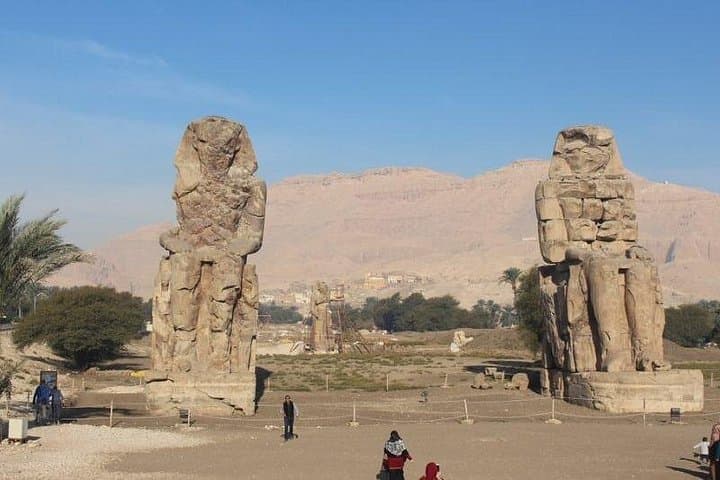
History here is literal: 63 registered royal tombs in the valley, the terraced mortuary temple of Hatshepsut cut into a cliff face, and the twin Colossi of Memnon standing guard over the plain. Cross to the east bank after lunch to walk Karnak’s processional avenue and Luxor Temple’s night-lit pylons; Karnak remains the largest ancient religious site in Egypt, its hypostyle hall marked by columns the height of trees.
Geology and Nile culture shape the experience—the soft limestone of the Theban hills, the river that carved the agricultural floodplain, and modern town life clustered along the corniche.
Practical edge: expect a long day (roughly 13–15 hours), lots of standing, and steps in tombs. Carry your passport (required for domestic flights), comfortable walking shoes, sun protection, and a refillable water bottle. Tombs ban flash photography and can be cool underground; move slowly, respect limited access to fragile paintings, and confirm whether site entry fees are included when you book. Timing is everything—early flights maximize daylight and avoid Cairo traffic—so plan for an intense, unforgettable day that delivers Egypt’s greatest sights in compact form.
easy.
13–15 hours.
Suitable for most fitness levels but requires stamina for a long day of walking, standing, and climbing stairs.
Yes—this private day tour includes round‑trip domestic flights between Cairo and Luxor as part of the package.
Confirm at booking; entrance fees for some tombs or optional sites are sometimes not covered, so verify with the operator before travel.
Hotel pickup is early morning; the flight is roughly 1 hour, but allow additional time for airport procedures and transfers—expect a full 13–15 hour day.
Photography is generally permitted in open temple areas, but flash photography is commonly prohibited inside tombs to protect ancient pigments—obey onsite signage and guide instructions.
Luxor occupies the site of ancient Thebes, a political and religious capital of New Kingdom pharaohs whose mortuary complexes and tombs define the area.
Sites are fragile—stay on marked paths, avoid touching reliefs, and follow local guidelines to reduce wear on ancient stone and painted surfaces.
Special trips operates guided outdoor trips and adventures with an emphasis on safety, stewardship, and memorable experiences.
You lift off from Cairo before dawn and watch the Nile shrink into a green ribbon below; by mid-morning the desert opens and Luxor's temples rise from the sand like memory made stone. The day begins with a hotel pickup around 4–5:30 a.m., a short domestic flight, then the west bank—where the Valley of the Kings is carved into limestone ridges and the coffers of pharaohs sleep beneath tawny cliffs.
You lift off from Cairo before dawn and watch the Nile shrink into a green ribbon below; by mid-morning the desert opens and Luxor's temples rise from the sand like memory made stone. The day begins with a hotel pickup around 4–5:30 a.m., a short domestic flight, then the west bank—where the Valley of the Kings is carved into limestone ridges and the coffers of pharaohs sleep beneath tawny cliffs.
History here is literal: 63 registered royal tombs in the valley, the terraced mortuary temple of Hatshepsut cut into a cliff face, and the twin Colossi of Memnon standing guard over the plain. Cross to the east bank after lunch to walk Karnak’s processional avenue and Luxor Temple’s night-lit pylons; Karnak remains the largest ancient religious site in Egypt, its hypostyle hall marked by columns the height of trees.
Geology and Nile culture shape the experience—the soft limestone of the Theban hills, the river that carved the agricultural floodplain, and modern town life clustered along the corniche.
Practical edge: expect a long day (roughly 13–15 hours), lots of standing, and steps in tombs. Carry your passport (required for domestic flights), comfortable walking shoes, sun protection, and a refillable water bottle. Tombs ban flash photography and can be cool underground; move slowly, respect limited access to fragile paintings, and confirm whether site entry fees are included when you book. Timing is everything—early flights maximize daylight and avoid Cairo traffic—so plan for an intense, unforgettable day that delivers Egypt’s greatest sights in compact form.