THE ADVENTURE COLLECTIVE® · Independent discovery and booking for outdoor travel

Fly from Sharm El Sheikh to Luxor and visit Karnak, Luxor Temple, Hatshepsut’s mortuary, and the Valley of the Kings in one intensive day. This private tour pairs efficient transfers with expert interpretation for travelers short on time.
Fly from Sharm El Sheikh to Luxor and visit Karnak, Luxor Temple, Hatshepsut’s mortuary, and the Valley of the Kings in one intensive day. This private tour pairs efficient transfers with expert interpretation for travelers short on time.
You feel the plane lift and the Sinai shoreline shrink as the Nile valley opens below — long, fertile ribbon of green against ochre desert. In a single day this private air transfer drops you into two millennia of stone: Karnak’s avenue of columns, the hush inside Hatshepsut’s terraced mortuary, and the carved tombs of the Valley of the Kings.
Verified experiences and guided adventures in the surrounding area.
Operated by 3 stars travel · Luxor, Luxor Governorate
You feel the plane lift and the Sinai shoreline shrink as the Nile valley opens below — long, fertile ribbon of green against ochre desert. In a single day this private air transfer drops you into two millennia of stone: Karnak’s avenue of columns, the hush inside Hatshepsut’s terraced mortuary, and the carved tombs of the Valley of the Kings.
Luxor occupies a geological seam where the Nile’s annual pulse built thick alluvial soil over limestone plateaus. That contrast—soft river plain against hard desert—shaped settlement and the monumental stonework you’ll see. Culturally, the east bank temples anchored daily life while the west bank hosted the city’s relationship with death and afterlife, giving context to royal tomb decoration and burial architecture.
Expect guided walks of uneven stone, shaded colonnades, and open desert light. The Valley’s tombs are cool but tight; some corridors require stooping. Your guide will parse hieroglyphs, point out astronomical alignments, and explain how later eras reused earlier masonry—pharaonic layers visible at every turn.
Practical notes: flights and transfers make this a long day (roughly 10 hours door-to-door). Bring sun protection, a refillable water bottle, and comfortable low-ankle walking shoes with good traction. Start early to avoid midday heat and allow time for museum-like pacing at Karnak. Photography is allowed in many places, but tripods and flash may be restricted inside tombs. If you’re sensitive to crowds, ask for a private early entry or plan visits in low tourist seasons.
This tour compresses Luxor’s essentials into one efficient, interpretive day — ideal for travelers short on time who want direct access to Egypt’s most vivid archaeological sites.
moderate.
10–11 hours.
Suitable for travelers in average fitness: expect several hours of walking and some stooping in tombs.
The tour runs about 10 hours door-to-door, including flights, transfers, site visits, and a possible lunch stop.
Entrance fees to the mentioned sights are included in this tour’s inclusions per the operator’s description.
The tour notes wheelchair-accessible options, but some tomb interiors have narrow passages and steps; confirm accessibility needs with the operator in advance.
Photography is generally allowed at open sites; some tombs restrict flash or tripods—follow on-site signage and guide instructions.
Luxor stands over ancient Thebes, the Middle and New Kingdom capital where royal funerary practices and temple-building peaked between roughly 1550–1069 BCE.
High visitor numbers stress delicate tomb paintings and archaeological fabric; stick to marked paths, avoid touching reliefs, and use refill stations to reduce single-use plastics.
3 stars travel operates guided outdoor trips and adventures with an emphasis on safety, stewardship, and memorable experiences.
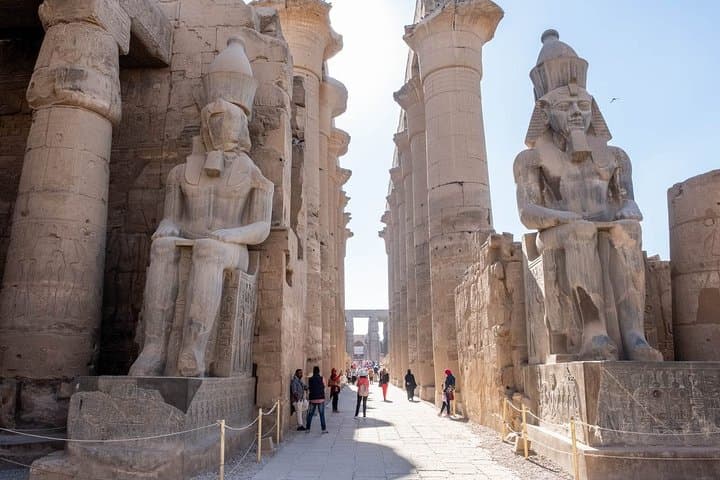
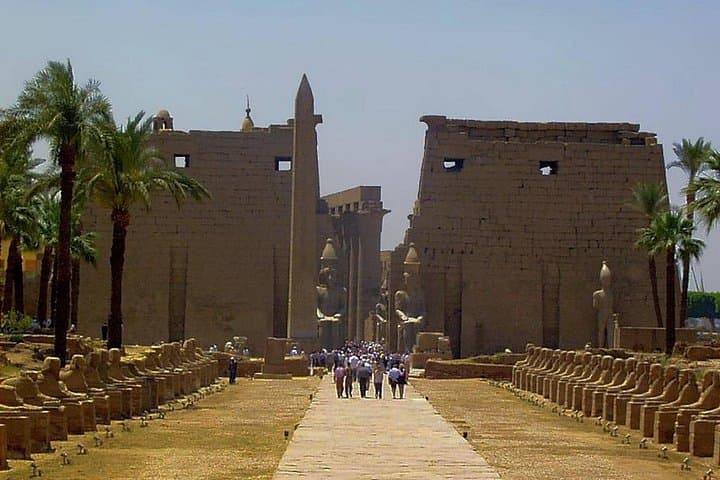
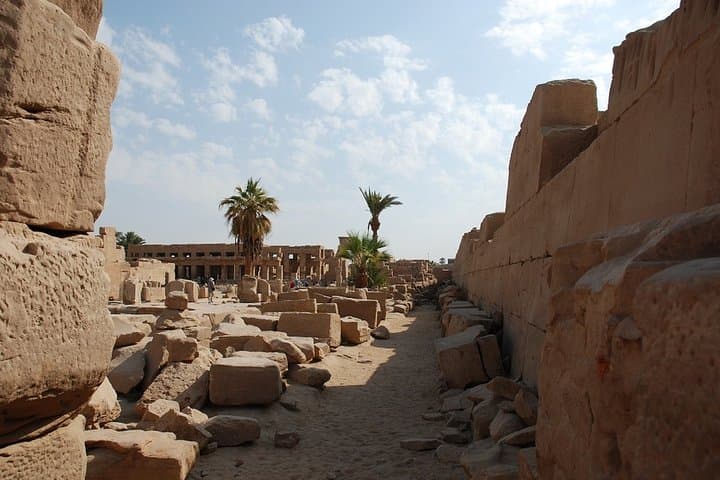
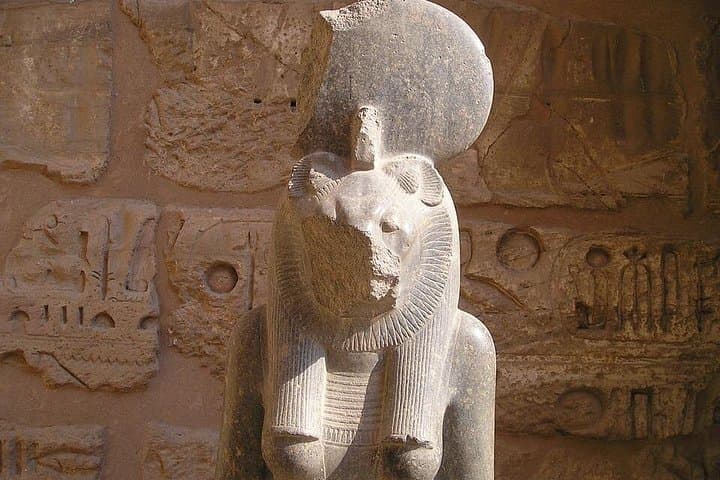
You feel the plane lift and the Sinai shoreline shrink as the Nile valley opens below — long, fertile ribbon of green against ochre desert. In a single day this private air transfer drops you into two millennia of stone: Karnak’s avenue of columns, the hush inside Hatshepsut’s terraced mortuary, and the carved tombs of the Valley of the Kings.
You feel the plane lift and the Sinai shoreline shrink as the Nile valley opens below — long, fertile ribbon of green against ochre desert. In a single day this private air transfer drops you into two millennia of stone: Karnak’s avenue of columns, the hush inside Hatshepsut’s terraced mortuary, and the carved tombs of the Valley of the Kings.
Luxor occupies a geological seam where the Nile’s annual pulse built thick alluvial soil over limestone plateaus. That contrast—soft river plain against hard desert—shaped settlement and the monumental stonework you’ll see. Culturally, the east bank temples anchored daily life while the west bank hosted the city’s relationship with death and afterlife, giving context to royal tomb decoration and burial architecture.
Expect guided walks of uneven stone, shaded colonnades, and open desert light. The Valley’s tombs are cool but tight; some corridors require stooping. Your guide will parse hieroglyphs, point out astronomical alignments, and explain how later eras reused earlier masonry—pharaonic layers visible at every turn.
Practical notes: flights and transfers make this a long day (roughly 10 hours door-to-door). Bring sun protection, a refillable water bottle, and comfortable low-ankle walking shoes with good traction. Start early to avoid midday heat and allow time for museum-like pacing at Karnak. Photography is allowed in many places, but tripods and flash may be restricted inside tombs. If you’re sensitive to crowds, ask for a private early entry or plan visits in low tourist seasons.
This tour compresses Luxor’s essentials into one efficient, interpretive day — ideal for travelers short on time who want direct access to Egypt’s most vivid archaeological sites.