THE ADVENTURE COLLECTIVE® · Independent discovery and booking for outdoor travel

Leave Hurghada before sunrise for a full day in Luxor: Karnak’s pillar forest, Hatshepsut’s terraced temple and three tombs in the Valley of the Kings. This practical guide prepares you for the route, timing, and what to bring for a long but rewarding day.
Leave Hurghada before sunrise for a full day in Luxor: Karnak’s pillar forest, Hatshepsut’s terraced temple and three tombs in the Valley of the Kings. This practical guide prepares you for the route, timing, and what to bring for a long but rewarding day.
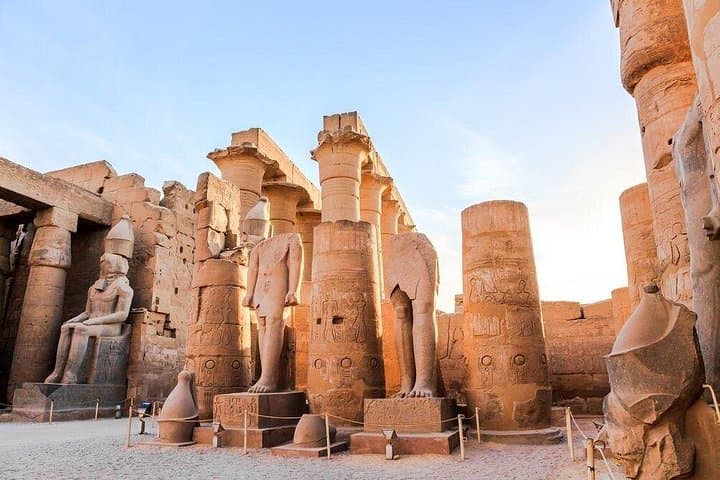
A pre-dawn highway pushes you west from Hurghada into a bright, open expanse where the desert thins and the Nile’s green ribbon appears like a promise. By midmorning you stand before Karnak’s Hypostyle Hall — a forest of stone pillars that still holds the heat and ambition of pharaohs — then cross to the west bank where tombs and terraces cut into dry limestone demand quiet attention.
Verified experiences and guided adventures in the surrounding area.
Operated by LUXOR TOUR GUIDE · Luxor, Luxor Governorate
A pre-dawn highway pushes you west from Hurghada into a bright, open expanse where the desert thins and the Nile’s green ribbon appears like a promise. By midmorning you stand before Karnak’s Hypostyle Hall — a forest of stone pillars that still holds the heat and ambition of pharaohs — then cross to the west bank where tombs and terraces cut into dry limestone demand quiet attention.
Luxor sits on layers of human and geological time: the floodplain that made the Nile valley fertile, the sandstone and limestone carved for tombs, and the urban sprawl built around ancient axes. Culturally, the city oscillates between living agrarian Nile life and curated antiquity; vendors, feluccas and mosque calls share the soundscape with guided groups and film crews.
Your day typically covers Karnak and Luxor Temples on the east bank, lunch at a local restaurant, then the Colossi of Memnon, Hatshepsut’s terraced mortuary temple and a selection of three tombs in the Valley of the Kings. Expect uneven steps, shaded courtyards and sudden wide vistas of the Nile plain.
Practical notes: start early to avoid midday heat, bring a breathable sun layer and at least 1.5–2 liters of water, and carry local cash for small purchases and tips. Comfortable, grippy shoes make the tombs and temple thresholds easier; cameras are welcome but respect signage restricting photos inside certain tombs. The itinerary is long but accessible — an intense, immersive day that pairs archeology with the pace of the Nile.
easy.
6–12 hours.
Suitable for most fitness levels; requires standing, walking short uneven stretches and climbing steps inside tombs and temples.
Yes — hotel pickup and return in Hurghada are included; exact pickup time is given at booking.
Yes, admissions for listed sites (Karnak, Valley of the Kings, Hatshepsut, Colossi) are included in the tour price per the itinerary.
Expect roughly 3.5–4 hours each way by air-conditioned vehicle, depending on traffic and stops.
The provider lists wheelchair accessibility for transportation and many surfaces, but some tomb interiors and temple steps remain challenging—check specifics before booking.
Luxor occupies the ancient city of Thebes, a political and religious capital of Egypt’s New Kingdom where pharaohs built grand mortuary temples and valley tombs between the 16th and 11th centuries BCE.
Conservation efforts focus on limiting touch and flash photography in fragile tombs, controlling visitor numbers, and supporting local site management to reduce wear on ancient stone.
LUXOR TOUR GUIDE operates guided outdoor trips and adventures with an emphasis on safety, stewardship, and memorable experiences.
A pre-dawn highway pushes you west from Hurghada into a bright, open expanse where the desert thins and the Nile’s green ribbon appears like a promise. By midmorning you stand before Karnak’s Hypostyle Hall — a forest of stone pillars that still holds the heat and ambition of pharaohs — then cross to the west bank where tombs and terraces cut into dry limestone demand quiet attention.
A pre-dawn highway pushes you west from Hurghada into a bright, open expanse where the desert thins and the Nile’s green ribbon appears like a promise. By midmorning you stand before Karnak’s Hypostyle Hall — a forest of stone pillars that still holds the heat and ambition of pharaohs — then cross to the west bank where tombs and terraces cut into dry limestone demand quiet attention.
Luxor sits on layers of human and geological time: the floodplain that made the Nile valley fertile, the sandstone and limestone carved for tombs, and the urban sprawl built around ancient axes. Culturally, the city oscillates between living agrarian Nile life and curated antiquity; vendors, feluccas and mosque calls share the soundscape with guided groups and film crews.
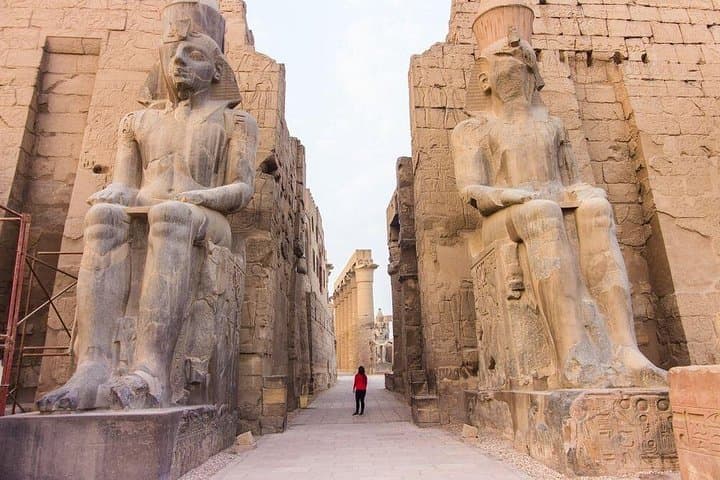
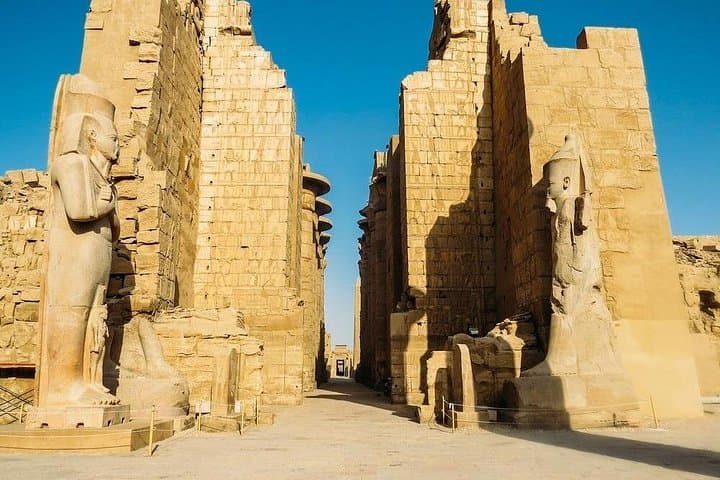
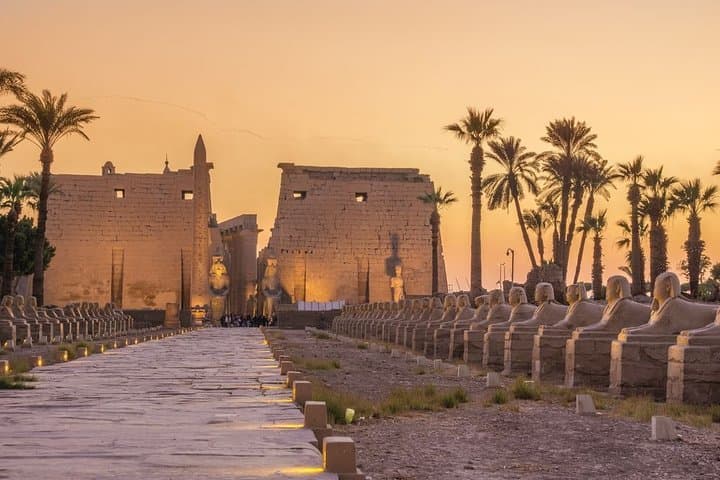
Your day typically covers Karnak and Luxor Temples on the east bank, lunch at a local restaurant, then the Colossi of Memnon, Hatshepsut’s terraced mortuary temple and a selection of three tombs in the Valley of the Kings. Expect uneven steps, shaded courtyards and sudden wide vistas of the Nile plain.
Practical notes: start early to avoid midday heat, bring a breathable sun layer and at least 1.5–2 liters of water, and carry local cash for small purchases and tips. Comfortable, grippy shoes make the tombs and temple thresholds easier; cameras are welcome but respect signage restricting photos inside certain tombs. The itinerary is long but accessible — an intense, immersive day that pairs archeology with the pace of the Nile.